
Saudi residents received a mobile warning of a “hostile aerial threat” around 1:30 a.m. on Sunday as air defenses intercepted missiles and drones. Civil Defense later told people in Khamis Mushayt and nearby Abha to follow official instructions and avoid gathering or filming. The alert ended minutes later. Residents were told the danger had passed.
Alerts, Interceptions and Orders
The Saudi-led Coalition to Restore Legitimacy in Yemen said it intercepted two ballistic missiles fired toward Khamis Mushayt. Coalition spokesman Major General Turki Al-Maliki separately said forces intercepted and destroyed a drone in the Riyadh region. Arab News reported another coalition account saying defenses intercepted drones in the Eastern and Riyadh regions, along with two missiles headed toward Khamis Mushayt.
On Saturday, Al-Maliki said coalition forces destroyed four drones over Riyadh, the Eastern Province and southern regions, as well as two missile launchers in Yemen's Saada governorate. The coalition released footage it said showed its forces destroying launch platforms after detecting them firing missiles toward Saudi Arabia. Coalition airstrikes continued against Houthi facilities and installations.
The renewed attacks came after Yemen's conflict resumed in July. Saudi Arabia has faced repeated Houthi attacks on oil facilities, transportation infrastructure and other strategic sites. Earlier reports cited by Arab News said a previous attack on Riyadh's airport killed 13 people.
Saudi Arabia extended remote learning in Riyadh and neighboring Diriyah. Some foreign embassies advised citizens to avoid Saudi airports or postpone travel. King Khalid International Airport in Riyadh remained closed, while airports in Jeddah and Dammam faced delays and cancellations. The U.S. Embassy in Riyadh urged American citizens to use extreme caution at Saudi airports; U.S. government employees needed special authorization from the Chief of Mission to use any Saudi airport.
The United Kingdom's Foreign, Commonwealth and Development Office advised against all travel within 10 kilometers of the Yemen border, and against all but essential travel elsewhere in Saudi Arabia. It urged British nationals to stay away from King Khalid International Airport after a serious incident there on October 10, 2026, at about 3 p.m. local time. The office said further attacks on airports, travel disruption and flight cancellations were very likely. People considering leaving should consider travelling by land to a neighboring country and flying from there, after checking entry and exit requirements.
Hormuz and the Diplomacy of Threats
Iranian Foreign Minister Abbas Araghchi said Tehran had sent the United States a seven-day plan through Qatar to reopen the Strait of Hormuz. Speaking at an Organisation of Islamic Cooperation meeting in Baghdad, he said Iran was ready for dialogue with Washington based on mutual respect and credible guarantees, but wouldn't surrender its sovereign rights under pressure. He said the decision rested with Washington.
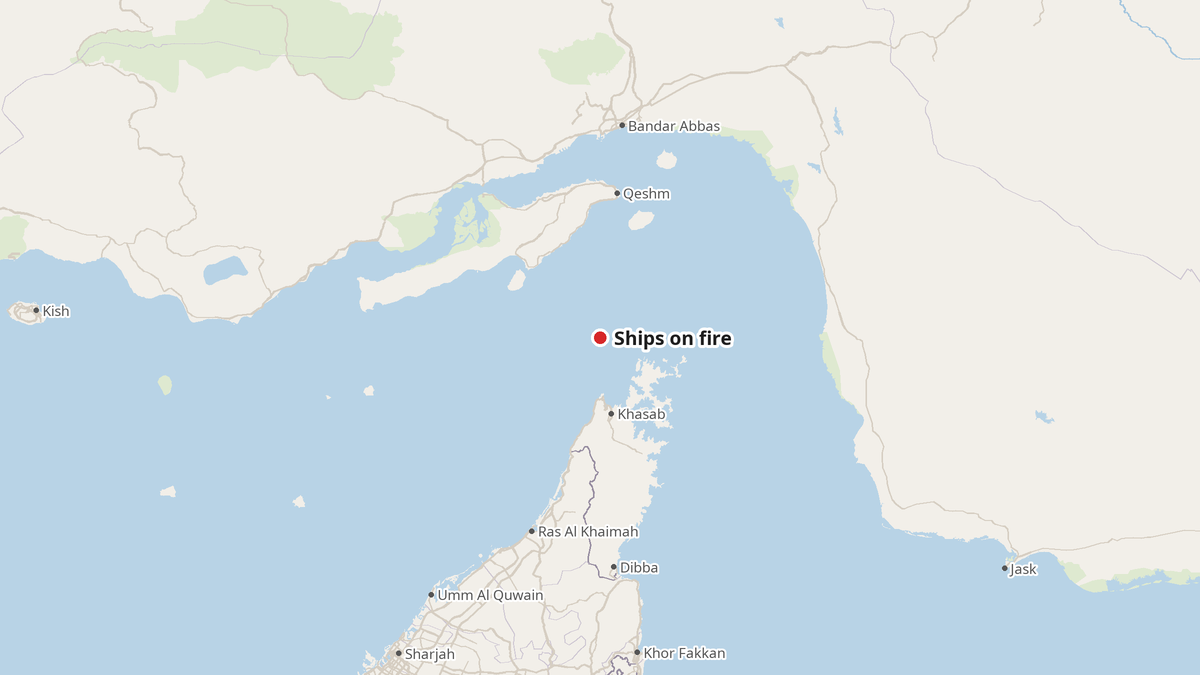
Iran's navy said an oil tanker caught fire in the Sea of Oman after the Islamic Revolutionary Guard Corps reported that a second oil supertanker struck a naval mine and caught fire in the Strait of Hormuz on Saturday. Gulf News reported two vessels struck in the Persian Gulf and a separate tanker attack in the Arabian Sea. Al Jazeera's live update said fires were reported on three tankers in the Strait of Hormuz and Sea of Oman. The United Kingdom's maritime agency said a tugboat near the Strait of Hormuz had been hit by two projectiles, while gunmen fired on an LNG tanker off Yemen.
President Donald Trump said the war with Iran would end “very quickly” at a rally in Kentucky, and predicted U.S. fuel prices would fall below pre-war levels once hostilities ended. He defended U.S. strikes on Iranian nuclear sites, saying they had crippled Tehran's nuclear capabilities. Iran's Deputy Foreign Minister Saeed Khatibzadeh called for fighting to end across the region, including in Lebanon, and accused the United States and Israel of violating a June memorandum of understanding by launching strikes on Iran and Lebanon.
Borders Close; Civilians Move Through the Fallout
Iran and Pakistan temporarily suspended cross-border movement and exchanges, Iranian Foreign Ministry spokesperson Esmail Baghaei said, citing technical issues and security concerns. “Due to certain technical issues and the need to implement precautionary measures, cross-border movement and exchanges have been temporarily suspended,” he said. Pakistan also halted trade through the Gabd-Rimdan and Taftan checkpoints, citing security, anti-smuggling and border-administration measures. Pakistani officials said the countries were discussing a resolution and expected crossings to reopen soon.
Regional updates also reported that Israeli strikes killed four people across Gaza, including a 14-year-old boy, and that Yemen's Houthis released 159 prisoners in an exchange coordinated by the Red Cross. Lebanon's President Joseph Aoun planned to send a military delegation to a meeting with Israel and the United States in Tampa, Florida, on October 20. With warnings, closed airports, suspended border crossings and continuing strikes, government and military decisions set the terms of movement and danger for people who don't control them.
- saudi arabia
- iran
- strait of hormuz
- houthi attacks
- ballistic missiles
- oil tankers
- travel warnings
- united states