
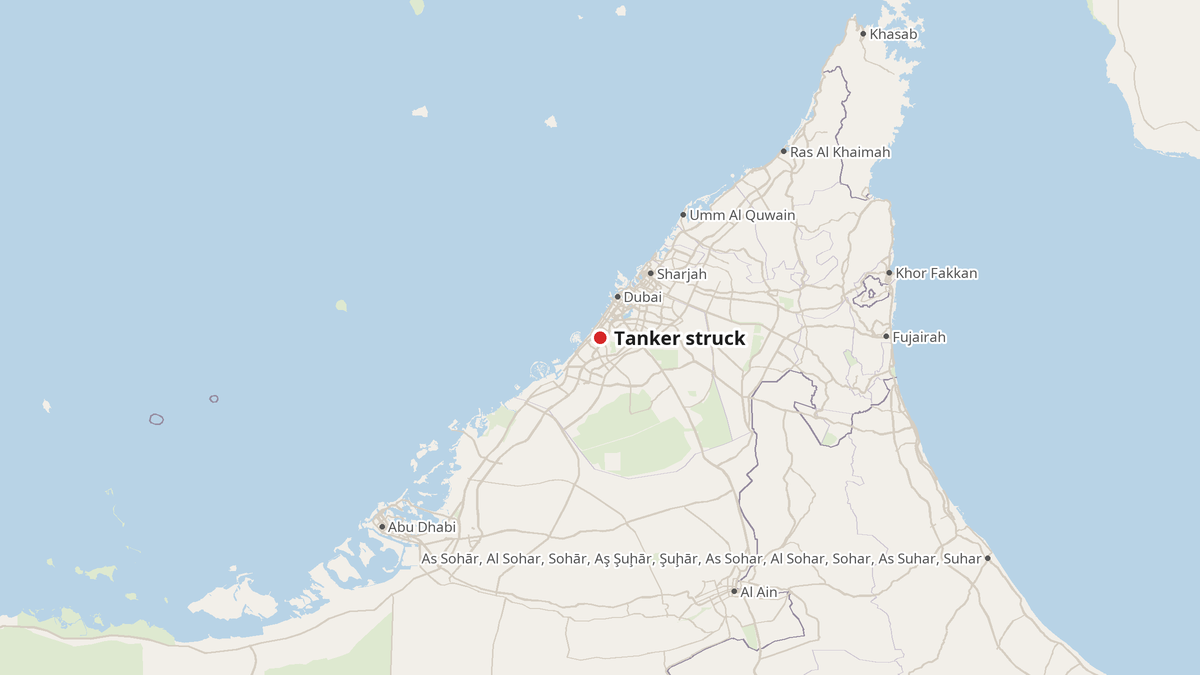
The United Arab Emirates said on Friday that the oil leak from the Gem No. 2 tanker had been stopped, with no new leakage detected, while cleanup crews kept working along coastlines the spill had already reached. The announcement came through WAM, the state news agency, which cited the environment ministry. No independent party is quoted anywhere in the official account.
The slick sits mostly off Umm Al Quwain and stretches partly toward coastal areas in neighboring Ras Al Khaimah, Ajman and Sharjah. The density of marine pollution has "declined markedly," the ministry said. Some beaches and coastal areas have been closed as a precaution, though officials added that a closure doesn't necessarily mean pollution was detected at that site. Closed, but maybe not dirty. Take their word for it.
The State Explains What It Won't Explain
Authorities have not said what caused the spill. That silence has company. Shipping sources told Reuters the vessel was struck by a projectile on October 9, which set off a fire that was later extinguished. That's 22 days before Friday's all-clear. Three weeks and change between a missile hitting a tanker and the public learning, through anonymous shipping sources rather than a government statement, what likely happened.
The official line stays on logistics. Technical teams have repaired damaged parts of the tanker, restored some operating systems, and are assessing the structure to decide the safest way to handle it, WAM said, citing the energy ministry. Environment ministry teams are running field surveys, monitoring and cleanup in coordination with federal and local authorities. Every verb belongs to a ministry. Nobody who lives on the coast gets a sentence.
Who Eats the Fish
The UAE also declared that fish and food products in markets are safe for human consumption, and that precautionary measures to protect drinking water supplies won't affect distribution. The reassurance carries weight because of what's at stake: the country relies heavily on desalination plants for its drinking water, and much of its economy, ports and industrial facilities included, is concentrated along the same coastline now wearing oil. A photo from Al Hamra Golf Club in Ras Al Khaimah on October 28, 2026 showed a slick floating on the water at a resort village. The ministry's message to residents amounts to this: keep buying, keep drinking, we've got it handled.
No fishers are quoted. No beach-town residents. No desalination workers. The people whose livelihoods and taps depend on this water appear only as an implied audience for a press release.
The War Comes Home to the Water
Since the start of the US-Israeli war with Iran, attacks on commercial vessels in Gulf shipping lanes have driven up security risks for maritime traffic and heightened fears over the conflict's environmental fallout. The Gem No. 2 is what those fears look like in practice: states trade strikes across a shared body of water, and the bill arrives as crude oil on someone else's shoreline. The governments that fight the war and the governments that host the ports don't sit in the oil. Fishers, bathers and coastal communities do.
The spill is contained, the ministry says. The question of who fired the projectile, and who answers for the coastline, remains unanswered by every state involved.
- gem no. 2 tanker
- oil leak
- united arab emirates
- umm al quwain
- marine pollution
- gulf shipping