
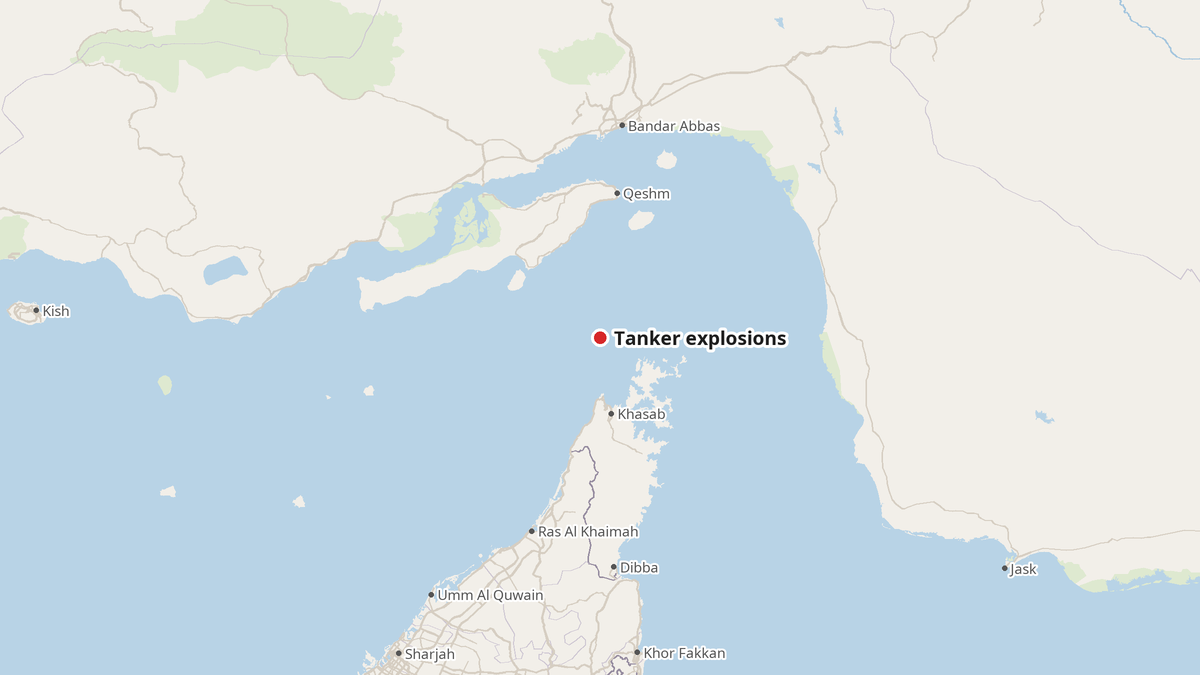
Iran's Islamic Revolutionary Guard Corps claimed explosions on two supertankers carrying more than four million barrels of oil in the Strait of Hormuz this week. That's the backdrop to a second straight weekly decline in crude prices. A separate tanker was struck by a projectile while travelling east in the Arabian Gulf, with casualties reported, the UK Maritime Trade Operations agency said Thursday.
The attacks didn't stop the slide, but they kept nerves frayed. Brent crude was down 0.24 per cent at $95.59 a barrel at 8.53am UAE time Friday. West Texas Intermediate was 0.54 per cent lower at $88.26. Both benchmarks were set for a weekly decline of more than 2.5 per cent, after plunging about 13 per cent the week before.
The Shipping Threat
The Strait of Hormuz carries two thirds of global crude supply and liquefied natural gas, per the report. So when the IRGC claims strikes on supertankers there, the effect isn't regional. It's global.
"Renewed Iranian attacks on shipping in the Strait of Hormuz tempered hopes of a diplomatic resolution, lifting Brent 1.4 per cent to $92.76 a barrel on Wednesday," said Emirates NBD's senior economist. The line captures a pattern the market keeps relearning. Each hint of de-escalation gets tested by fresh attacks on commercial vessels.
The conflict is now in its ninth month, having begun in February 2026. Ship attacks in the strait continue to keep prices volatile.
Proxy Pressure on Saudi Infrastructure
Iran's reach isn't limited to the waterway itself. Houthi spokesman Yahya Saree said a pumping station on Saudi Arabia's East-West oil pipeline and the Yanbu oil installation on the Red Sea coast were hit Thursday. Saudi Arabia has exported much of its crude through that pipeline since the war began.
The pipeline matters because it offers a route around Hormuz. Strikes on it, as claimed by the Houthis, target the workaround itself. The report doesn't say what damage the claimed attacks caused, and the claims come from a Houthi spokesman rather than independent confirmation.
Washington's Posture
President Donald Trump signalled he has no intention of resuming hostilities with Iran, following heavy losses for his Republican Party in the US midterm elections. He went further Thursday, saying the US was no longer looking to reach an agreement with Tehran.
"We don't need a deal with Iran. Those days have long since passed. We've got their money, hundreds of billions of dollars, and we've got their strait," he said on Truth Social.
The statement leaves an unusual position. Washington says it won't resume the war, and it says it won't seek a deal. Meanwhile Iran's forces, by their own claims, keep striking ships.
Markets React
Spot gold climbed 1 per cent to $3,917.70 per ounce at 9.55am UAE time after hitting a more than one-year low Thursday. It had dropped below $4,000 as markets expect a December US Federal Reserve rate increase.
Why This Matters: The oil market is pricing in Washington's restraint while Tehran's attacks on shipping continue. If the IRGC can claim hits on supertankers in a chokepoint carrying two thirds of global crude and LNG, with Iran-aligned Houthi forces reportedly targeting Saudi Arabia's bypass infrastructure, the leverage sits with the party willing to keep disrupting trade. From a security standpoint, a US that disavows both renewed war and a negotiated deal leaves Gulf producers and global consumers exposed to attacks that no diplomatic track currently addresses. Falling prices reflect hope more than any change in the threat itself.
- oil prices
- strait of hormuz
- iran
- donald trump
- brent crude
- west texas intermediate
- iran war