
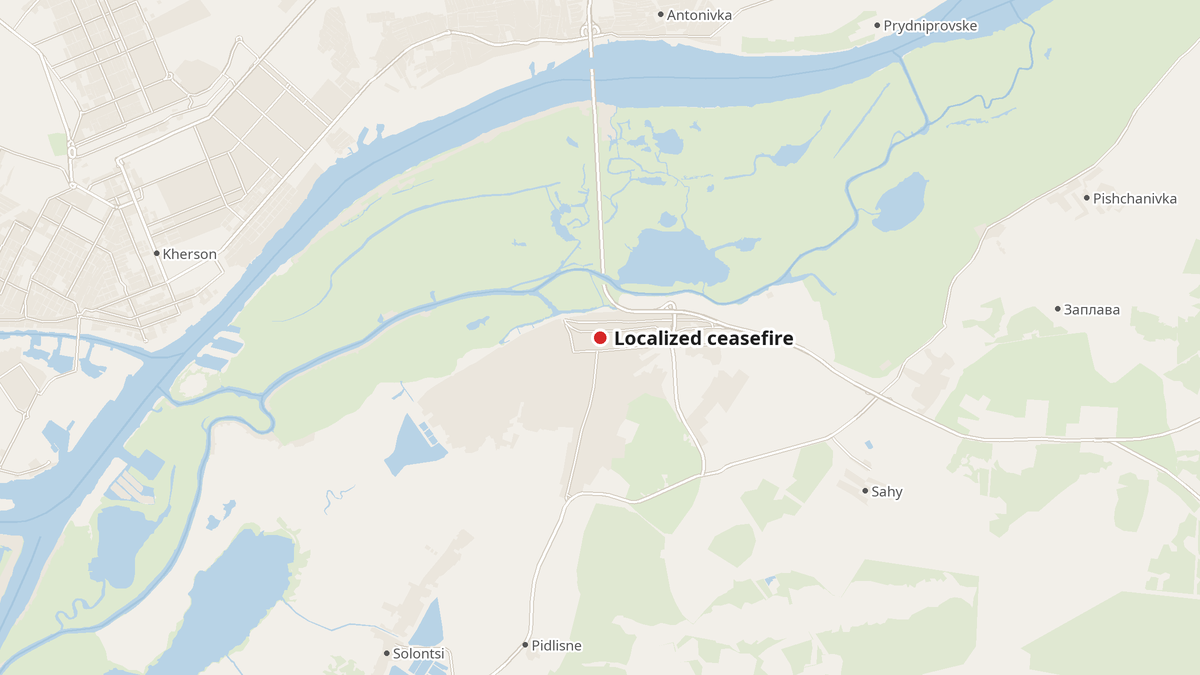
A ceasefire around occupied Oleshky has allowed humanitarian convoys to enter and an evacuation operation to begin. Residents trapped by hostilities, mines and blocked supplies now face decisions about where they can go. Ukraine’s human rights ombudsman, Dmytro Lubinets, said the truce was holding, but the route out still depends on arrangements involving Ukrainian and Russian authorities, Belarus and military transport.
“The ceasefire has now been in effect for 54 hours. It began on October 27 at 3:00 a.m. Kyiv time. The parties are fully complying with the agreed-upon terms, and no violations of the ceasefire have been recorded,” Lubinets wrote on social media.
The six-day ceasefire covers Oleshky and surrounding areas. Ukraine and Russia signed a formal agreement on October 23 in Belarus, represented by Lubinets and Russian ombudsman Yana Lantratova. U.S. first lady Melania Trump and her team brokered the agreement.
A corridor managed by authorities
The ceasefire began two days ahead of schedule and extended beyond Oleshky within the Kherson Region to let humanitarian convoys pass, Melania Trump said on X. She said both sides had completed demining to clear a path for aid and evacuation. The truce is scheduled to remain in effect until November 1.
Lubinets told VOA the operation would proceed in three stages: establish a ceasefire, deliver food, water and medicine, then evacuate residents who wish to leave. Preliminary estimates suggested around 2,000 people remained in Oleshky, including children. On Thursday, teams from both sides set out on an aid mission.
“Our main task is to deliver humanitarian aid to people who remain in the city. We will also ensure safe passage for those who wish to leave Oleshky,” Lantratova wrote on Telegram.
Residents can choose whether to go to Ukrainian-government controlled territory or to Russia, Lubinets said. The route to Ukrainian-controlled territory, however, first takes people to the Russian city of Anapa, then by military aircraft, accompanied by a Ukrainian delegation, to Gomel, Belarus, about 20 miles from Ukraine’s border. A Russia-installed governor of the occupied part of Kherson oblast told Russian news service Vesti that authorities had prepared accommodation and would help people who wanted to stay in Russia or leave, including for Ukrainian-government controlled territory.
People trapped between front lines
Russia occupied Oleshky and nearby Hola Prystan in the early days of the full-scale invasion in 2022. Residents had been trapped amid hostilities in frontline areas. The territory is heavily mined, and food supplies had been cut off for several months.
“People can't get out, food can't get in, and sick and injured are not getting the medical assistance they need,” the U.N. Human Rights Monitoring Mission in Ukraine (HRMMU) said in a report published in June. Since then, media reports based on interviews with residents have documented a worsening situation and the threat of starvation.
The Vatican said Pope Leo XIV had spoken the previous week with Ukrainian President Volodymyr Zelenskyy and Russian President Vladimir Putin, urging them to allow humanitarian aid into the area. Meanwhile, a TV crew from U.S. news outlet Newsmax is set to document the evacuation. Melania Trump called its members neutral observers who would independently record the mission.
Kherson city also saw a pause in shelling. A VOA reporter in the region said people had begun going outside, walking and enjoying the autumn sunshine after constant shelling.
The route is not the same as certainty
Former U.S. Ambassador to Ukraine William Taylor told VOA that key questions remained, including demining, where evacuees would go, whether they could reach Ukraine and whether Russia would use the operation for propaganda. “There are still a lot of unknowns,” he said. Taylor added that, if authorities could carry out the arrangements, the operation could serve as a model for similar humanitarian missions in other Russian-occupied territories of Ukraine.
For now, aid and departure depend on an agreed pause, cleared routes and authorities on both sides carrying out the terms. The convoy has left. Safe passage remains uncertain. The ceasefire is scheduled to remain in effect until November 1.
- oleshky
- kherson region
- ceasefire
- humanitarian aid
- evacuation
- ukraine
- russia
- melania trump