
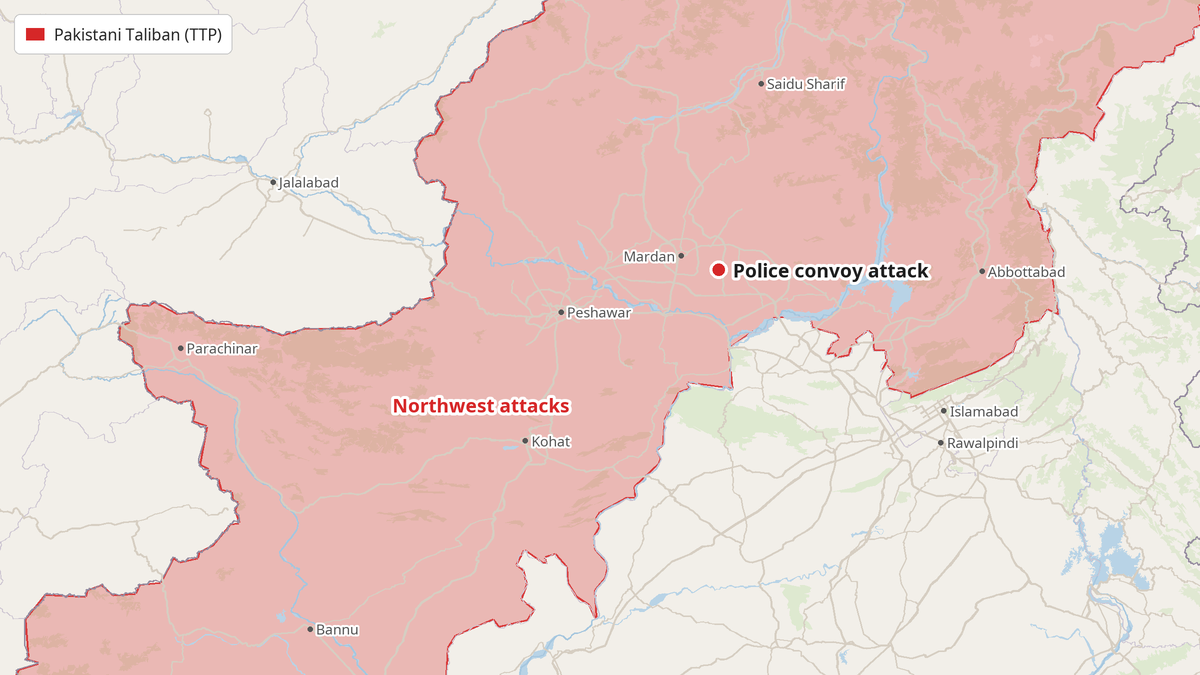
Ten police officers are dead and 12 more are wounded after gunmen ambushed a unit returning from an anti-illegal-mining operation in northwestern Pakistan on Wednesday. Eighteen militants also died in the violence, according to an official police statement.
The officers had been working a gold mine in the Gumbat area of Kohat district in Khyber Pakhtunkhwa when armed men opened fire as they headed back, provincial police said. Hours later, the Pakistani Taliban claimed the attack. The Tehreek-e-Taliban Pakistan (TTP) said it was responsible for a series of strikes across the country, including the one on a police convoy in Gumbat.
What Happened on the Ground
The fighting was fierce. A senior administrative official in Kohat told the AFP news agency that militants set two police vehicles on fire during the assault. Two other police vehicles and one private vehicle were missing. A spokesman for a local emergency service said earlier in the day that rescue workers were treating a dozen wounded officers after what he called a "firing incident involving police personnel."
A separate operation in the same district brought more bloodshed. A senior administrative official in the Orakzai area of Kohat said 10 TTP militants were killed there, and a large quantity of weapons was recovered from them.
The officers who died were doing the unglamorous work of enforcing the law over an illegal mining operation, the kind of everyday regulatory duty that keeps communities safe and resources under public control. They paid for it with their lives.
A Region Under Strain
This wasn't an isolated incident. Security forces are battling intensifying violence in the border province that they say emanates from Afghanistan, an accusation the Taliban government in Kabul rejects. The TTP have stepped up attacks on security forces in the region in recent months, and Pakistan has seen a surge in violence in recent years, much of it blamed on the group. The TTP is separate from but closely allied with the Afghan Taliban, who returned to power in neighbouring Afghanistan in 2021, five years ago.
Relations between the two countries have been fraught since then. They worsened after deadly border clashes in October last year that led to near-total closure of the border. Clashes subsided after mediation, but the conflict intensified again in February, when Pakistan declared "an open war" on its neighbour. Islamabad accuses Kabul of allowing militants to operate from its soil. Afghanistan's Taliban authorities deny the allegations.
Civilians have borne much of the cost. Hundreds have been killed in fighting between the two countries since October last year, according to figures from the United Nations mission in Afghanistan.
Emergency Rule and Political Fallout
The attack comes weeks after the province was placed under emergency rule. Authorities said the move came in reaction to the failure by the provincial government to act against militancy. The emergency measures sidelined the last remaining bastion of power for jailed former prime minister Imran Khan's Pakistan Tehreek-e-Insaf (PTI) party. They also set off a province-wide crackdown on Khan's supporters, with hundreds of detentions.
Earlier this month, militants in Khyber Pakhtunkhwa killed two police officers assigned to protect a polio vaccination team travelling near the Afghan border. Those officers were guarding health workers, not fighting a war.
Why This Matters:
The deaths of 10 officers carrying out routine enforcement against illegal mining show how militancy erodes the basic machinery of public order, from resource regulation to health campaigns like polio vaccination. Civilians, including the hundreds killed in cross-border fighting according to the UN mission in Afghanistan, absorb much of the harm. There's also a democratic question. Emergency rule in Khyber Pakhtunkhwa has sidelined an elected opposition stronghold and brought hundreds of detentions of Khan's supporters. Security threats are real, but how a state responds matters for rights and accountability. Mediation helped calm the border once before, and the October clashes and the February escalation suggest that diplomacy, not an open war, may be the only durable path for those caught in between.
- pakistan
- khyber pakhtunkhwa
- tehreek-e-taliban pakistan
- illegal gold mining
- kohat
- police attack
- militancy
- afghanistan