
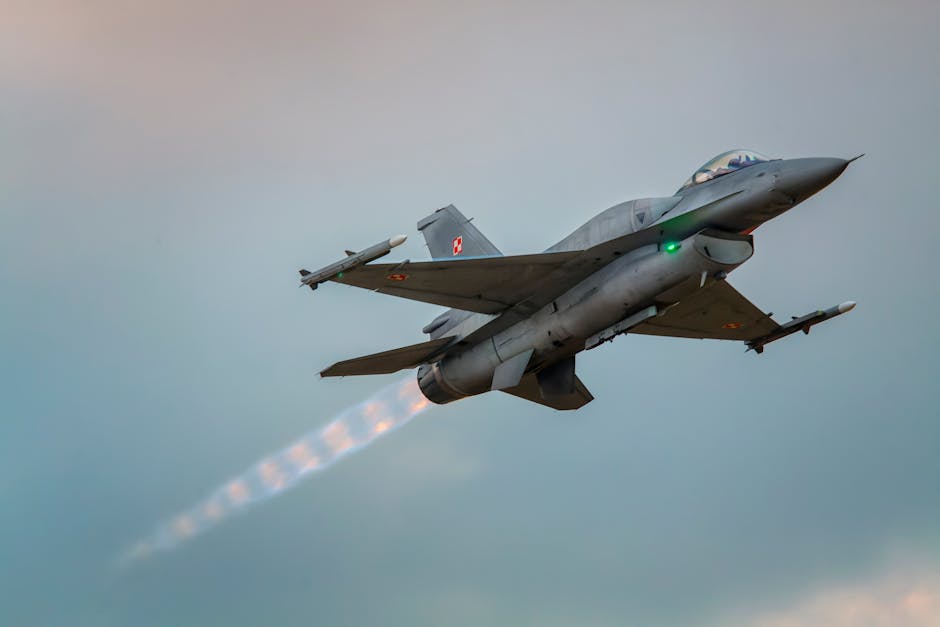
Poland started preventive military aviation operations on Saturday as Russia struck Ukraine, the army said, putting state air power on alert while ordinary people on both sides of the border live with the consequences of decisions made far above them.
Who Holds the Skies
The army said Poland began the operations while Russia was striking Ukraine. That’s the core fact here: military institutions moving first, civilians left to absorb the risk. The announcement places the machinery of the state at the center of the story, where armed forces answer escalation with more armed force and call it protection.
The Reuters report says the army made the statement, but the details stop there. Even in that thin slice of information, the hierarchy is plain. Uniformed command speaks, the public listens, and the border becomes another stage for power to flex itself. The people who don’t issue orders are the ones who have to live under the shadow of them.
The Cost Lands Below
Russia’s strikes on Ukraine are the trigger for Poland’s preventive military aviation operations. That sequence matters. When states trade blows or posture against each other, the burden doesn’t stay with the officials and commanders who authorize the moves. It lands on everyone else, especially those closest to the frontier and those already trapped inside the violence.
The article gives no civilian toll, no casualty count, no damage report. But the absence itself is telling. The language of state security tends to flatten human life into airspace, response times, and operational readiness. The people underneath become background noise while institutions measure control.
What the Army Said, and What It Didn’t
The army’s statement is the only source named in the base article. It says Poland started preventive military aviation operations. It does not say what ordinary people were told, what protections they received, or how long this posture will last. That’s how these systems work: the apparatus announces action upward and outward, while the public gets the leftovers.
The Reuters item also gives no sign of mutual aid, local self-organization, or any grassroots response. There’s no mention of communities organizing for one another, no neighborhood networks, no horizontal response to a crisis manufactured by states and their wars. Just the military, the border, and another round of official force.
The whole setup is familiar. One government strikes, another government scrambles jets, and everyone else is expected to call that order. The people who pay for these decisions don’t get a seat at the table. They get the noise, the fear, and the bill.
Security for Whom
Poland’s preventive military aviation operations are framed as a response to Russia’s strikes on Ukraine, but the structure underneath is the same old hierarchy: armed institutions deciding what safety looks like for millions of people who had no say in the matter. The state claims the right to manage danger, then asks for trust while it escalates the machinery.
The Reuters report offers no reform package, no diplomatic breakthrough, no electoral fix. Just the bare fact of military action. And that’s often the cleanest view of power. When the uniforms move, the rest of society is expected to adjust.
The army said it started the operations. That’s the sentence. The rest is what people have to live with.