
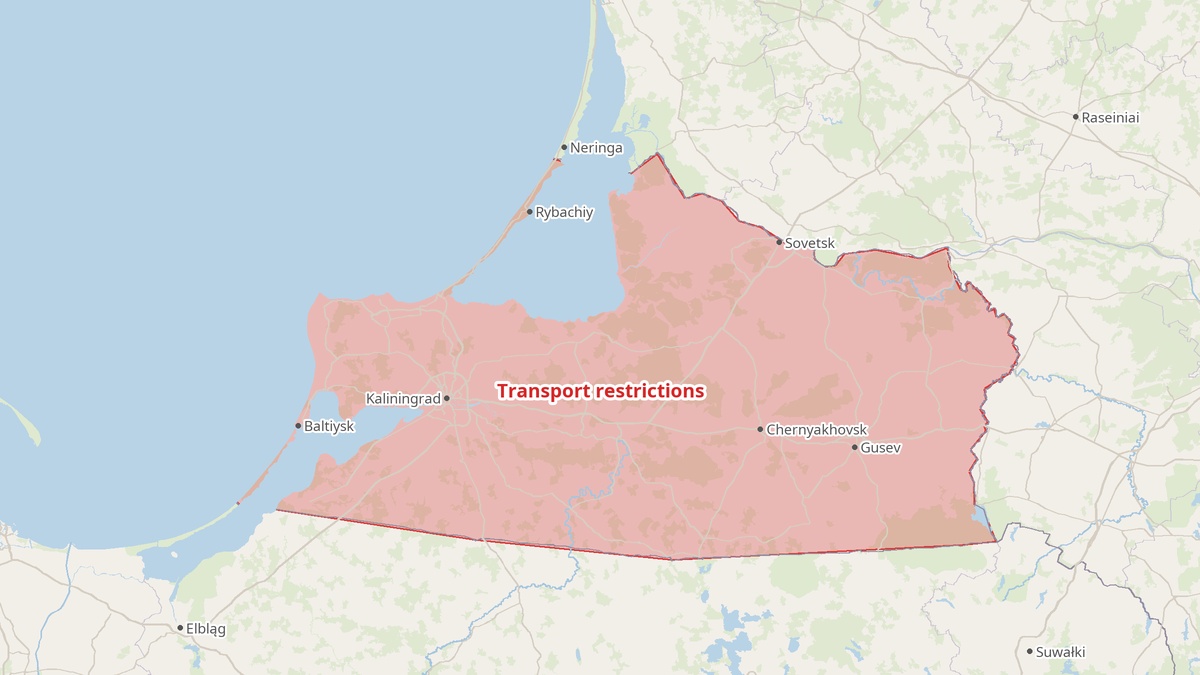
Russia has allocated around 50 billion roubles (€450 million) for two rail ferries serving Kaliningrad, which Poland and Lithuania separate from the rest of Russia and whose border crossings operate under strict limitations. Prime Minister Mikhail Mishustin alleges that unnamed countries are disrupting transport to the exclave; the ferries are intended to strengthen its supply lines.
Supply Routes and Border Controls
The ferries will link the ports of Baltiysk and Ust-Luga, connecting the Kaliningrad and Leningrad regions. The B E Butoma Shipbuilding Plant in Kerch, in Russian-occupied Crimea, will build them to a Russian design, with completion scheduled for 2030. State enterprise Rosmorport has responsibility for the project, which forms part of infrastructure works financed through Russia's National Wealth Fund.
Speaking at a deputy prime ministers’ operational meeting on Monday, Mishustin said “unlawful actions by some countries” were disrupting logistics chains and complicating business in the region. He didn’t name those countries in the statement reported in the base article.
Poland and Lithuania lie between Kaliningrad and the rest of Russia. The region, however, has access to the Baltic Sea. It hosts major naval facilities and other military infrastructure, so sea transport serves as a crucial logistical route.
After Russia's full-scale invasion of Ukraine in early 2022, Lithuania restricted transit of sanctioned goods through its territory. The European Commission later allowed rail transit within set quotas. Road transport of sanctioned goods remains banned.
Freight Shifts to Sea
By November 2026, most freight bound for Kaliningrad had shifted to sea routes from the Leningrad region. Around 30 ships and ferries operated on the crossings. Russian Post now sends parcels from the region by sea after Lithuania began inspecting them for possible military and dual-use goods.
The new ferries would expand those maritime links. Their stated construction budget stands at around 50 billion roubles (€450 million), and the project is scheduled for completion in 2030.
Poland has reinforced its border with the region using military defences and a fence fitted with cameras and motion sensors. Lithuania has drawn up plans for further reinforcement measures. Russian citizens can’t enter either country through border crossings for tourism, and local cross-border traffic remains suspended.
Military Infrastructure and Regional Tensions
Kaliningrad's military infrastructure makes its supply links especially important. On Saturday, November 21, authorities declared an air-raid warning in the region for the first time since the start of the war, following a drone threat. Officials temporarily restricted operations at Khrabrovo airport.
Drones attacked the Russian dry cargo vessel Sparta II in Finnish waters. Observers have linked the vessel to Russia's military logistics. The base article gives no further details about the attack or identifies the observers.
Ukraine has asked EU and NATO countries to shut down Moscow's supply routes in the Baltic Sea and called for action against Russia's shadow fleet. The ferries, border restrictions, inspections and military measures described in the article show how transport links around Kaliningrad have become tied to sanctions and the war. Land crossings remain restricted, while the planned route will connect Russian ports across the Baltic.
- kaliningrad
- rail ferries
- russia
- mikhail mishustin
- rosmorport
- transport blockade
- baltic sea
- supply routes