
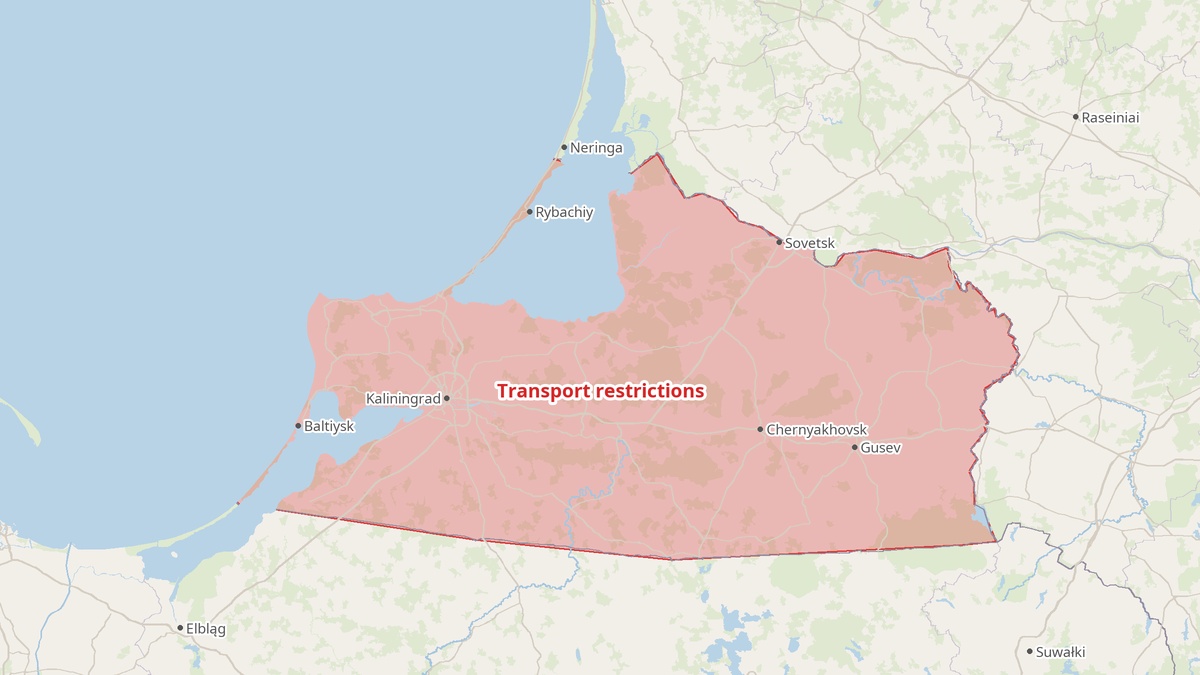
Russia will spend around 50 billion roubles (€450 million) on two rail ferries to keep supplies moving to Kaliningrad, Prime Minister Mikhail Mishustin said Monday. He cited attempts by unnamed countries to impose a transport blockade. The project will strengthen the sea route to the exclave while land transit remains restricted and border crossings with Poland and Lithuania operate under strict limitations.
The Transit Restrictions
Poland and Lithuania separate Kaliningrad from the rest of Russia, though the region has access to the Baltic Sea. After Russia’s full-scale invasion of Ukraine in early 2022, Lithuania restricted the transit of sanctioned goods through its territory. The European Commission later allowed rail transit within set quotas, while road transport of sanctioned goods remains banned.
Russian citizens can’t enter as tourists through crossings with either country, and local cross-border traffic remains suspended. Those restrictions shape the routes available to people and goods moving between the exclave and the rest of Russia.
Mishustin said “unlawful actions by some countries” were disrupting logistics chains and complicating business in the region. He didn’t name the countries in his remarks, according to the report.
A Sea Route for Supplies
The ferries will operate between Baltiysk and Ust-Luga, linking the Kaliningrad and Leningrad regions. Russia assigned the project to state enterprise Rosmorport and included it among infrastructure works financed from the National Wealth Fund. Around 50 billion roubles (€450 million) will go toward construction.
The B E Butoma Shipbuilding Plant in Kerch, in Russian-occupied Crimea, will build the vessels to a Russian design. Completion is scheduled for 2030.
By November 2026, most freight to Kaliningrad had shifted to sea routes from the Leningrad region. Around 30 ships and ferries operated on the crossings. Russian Post also ships parcels from the region by sea after Lithuania began inspecting them for possible military and dual-use goods.
Kaliningrad hosts major naval facilities and other military infrastructure, making sea transport a crucial logistical route. The ferry plan is intended to reinforce that connection while restrictions continue to govern overland transit.
Security and Regional Tensions
Poland has reinforced its border with Kaliningrad with military defences and a fence equipped with cameras and motion sensors. Lithuania has drawn up plans for further reinforcement measures. These steps add to security measures on the borders surrounding the exclave.
On Saturday, authorities declared an air-raid warning in the Kaliningrad region for the first time since the start of the war, following a drone threat. They temporarily restricted operations at Khrabrovo airport.
In Finnish waters, drones attacked the Russian dry cargo vessel Sparta II, which observers have linked to Russia’s military logistics. Ukraine has asked EU and NATO countries to shut down Moscow’s supply routes in the Baltic Sea and called for action against Russia’s shadow fleet.
The rail-ferry project is taking shape amid disputed transit rules, border restrictions and security concerns around Baltic shipping. The European Commission’s rail-transit quotas and continuing ban on road transport of sanctioned goods remain part of the framework governing cargo movement to Kaliningrad.
- kaliningrad
- rail ferries
- russia
- mikhail mishustin
- rosmorport
- transport blockade
- baltic sea
- supply routes