
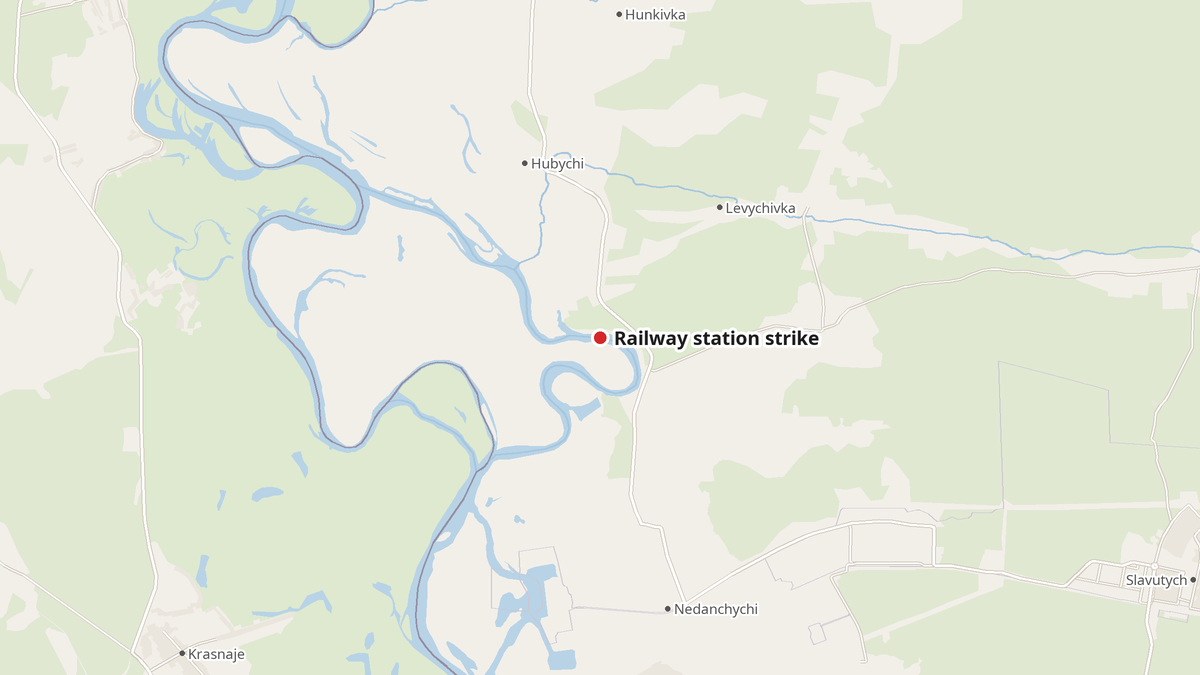
A Russian jet-powered drone struck a crowded platform at the Dnipro railway station on Thursday, killing at least 13 people and injuring at least 10, with commuter and passenger trains standing alongside. Dnipropetrovsk regional governor Oleksandr Ganzha reported the toll on Telegram, first putting the wounded at five. Ukraine's national police later said at least 10 were injured.
Within hours, the attack became a diplomatic argument as well as a human tragedy. Ukrainian President Volodymyr Zelenskyy called for "stronger sanctions steps by the EU, the United States and the G7," and he aimed pointed criticism at Washington.
What Happened on the Platform
Ukrainian Railways said the drone hit the platform where train No. 866 Dnipro–Zaporizhzhia was standing. Zelenskyy said Russian forces attacked a platform "where a regular commuter train and a regular passenger train were standing." He posted images from Ukrainian rescue services: a large hole torn in the platform, blurred bodies, a burned-out train with smashed windows.
The railway's chief, Oleksandr Pertsovsky, said an elevated threat alert had been issued before the strike. "There were still a large number of people on the platform," he wrote on Facebook. The warning system worked. The crowd was there anyway, because trains still have to run.
That's the grinding reality behind the numbers. Russia has fired drones at trains across Ukraine since the first days of its 2022 invasion, now in its fourth anniversary year. The attacks have destroyed hundreds of locomotives and killed several railway workers. In September alone, passengers were evacuated from more than 5,800 Ukrainian train services because of the drone threat, the national operator told AFP.
The Sanctions Dispute
Zelenskyy used the attack to challenge a deal reached earlier this month between US President Donald Trump and Russian President Vladimir Putin. The agreement eased some sanctions on Russia and allowed Moscow to release diesel onto global markets. "How many such terrorist strikes has Russia carried out against our people since sanctions were lifted on some Russian oligarchs and energy sector, instead of de-escalating," he asked.
He said sanctions against Moscow and its "war machine" must not be weakened while the war continues, and that "fair and decisive actions by America and Europe are needed against Russian escalation."
The appeal lands on European capitals at an awkward moment. If Washington is loosening the screws, Brussels and the G7 are being asked to hold the line, and to pay for holding it.
Fighting Beyond Dnipro
Russian attacks elsewhere in Ukraine killed at least five more people on Thursday, including two teenage girls in the northern city of Chernigiv.
The pressure ran in both directions. Moscow Mayor Sergei Sobyanin said on Telegram that 613 Ukrainian unmanned aerial vehicles flew toward the Moscow region between Wednesday night and Thursday morning. Most were neutralised by air-defence forces on distant approaches, he said, and 231 were destroyed on the approach to Moscow itself. The Russian capital was hosting a Russia-Africa summit.
Talks on the Horizon
Euronews reported that Moscow and Kyiv were preparing to resume US-mediated peace talks next month. Zelenskyy said on Sunday that Ukraine, the United States and Russia were set to hold trilateral talks in November to revive stalled negotiations.
Note who is at that table: Ukraine, the United States and Russia. The European Union, which has underwritten much of Kyiv's financial and military survival, is not named.
Why This Matters:
The Dnipro strike puts a hard question to European governments: what is the EU's own leverage if Washington eases sanctions on its own? Zelenskyy is asking Brussels and the G7 to fill that gap, which means European taxpayers and energy consumers carry more of the burden of pressure on Moscow. Those costs need honest accounting and democratic consent in national capitals, not just communiqués. The planned November talks, with Europe apparently absent from the named participants, underline a strategic weakness: a continent that funds so much of Ukraine's defence has limited say over the terms of any settlement. Investing in Europe's own security capacity, rather than depending on shifting American positions, is the lesson member states will find hardest to avoid.
- dnipro railway station
- russian drone strike
- ukraine
- ukrainian railways
- civilian casualties
- rail transport
- russia-ukraine war
- volodymyr zelenskyy