
The Netherlands announced a 1.2 billion euro ($1.3 billion) package of non-military aid for Ukraine on Oct. 28, to be disbursed over three years and aimed at economic recovery, even as drones hit the Moscow region again overnight and the question of who pays for Europe's security grows sharper.
The Dutch package comes with two energy-focused add-ons: 40 million euros ($45 million) for the Ukraine Energy Support Fund and 55 million euros ($62 million) for energy equipment from Dutch companies, channelled through the Netherlands Enterprise Agency. A separate Kyiv Independent news-feed item referred to a 500 million euro Dutch military aid package announced after a ministerial visit to Kyiv, where the non-military aid was pledged. The two figures describe different packages, and the base reporting doesn't reconcile them further.
The Dutch Case: Solidarity With a Business Logic
Sjoerd Sjoerdsma, identified as the Dutch Minister of Foreign Trade and Development Cooperation, said Russian attacks continued to cripple critical infrastructure as Ukraine approached another harsh winter. The money, he said, would help protect and restore energy and water facilities and train people to prevent damage and keep them running. The aim: keep cities such as Kyiv and small eastern villages livable.
He was candid that the approach has commercial dimensions. Dutch companies already operating in Ukraine include defense firms helping build missiles for military use, Philips supplying essential medical materials, and smaller firms providing materials to bakers. Sjoerdsma called their presence both a sign of solidarity and a business opportunity. Dutch businesses, he said, were learning from Ukraine's military methods, its changing material needs, its use of drones and its ability to restore critical infrastructure quickly. If Dutch electrical networks ran into trouble, he said, the Netherlands would call Kyiv to ask how Ukraine handled it. Post-war reconstruction, he added, could bring Dutch companies major assignments rebuilding hospitals, schools and ports.
Sjoerdsma said there was no reason to do business with Russia. "So no, there cannot be business as usual with Russia," he said. He urged other European countries to raise their support before winter: "your security is our security."
Washington Question and Europe's Seat at the Table
Sjoerdsma said the Netherlands did not condone a diesel deal between the United States and Russia, which he argued legitimized the Russian government and reinforced its position. Since much of Ukraine's assistance comes from the European Union, he said, the EU should be a political player and use its influence to make sure Ukraine is at the table in any cease-fire or peace discussions. "There's no talk about Ukraine without Ukraine in the driver's seat of what's happening," he said.
The point carries weight beyond Ukraine. European governments are funding much of the aid. They want a say in how this ends.
Moscow Under Fire, Europe Under Pressure
On the battlefield side, Ukrainian drones targeted Moscow overnight on Oct. 28-29. Russia's Federal Air Transport Agency imposed flight restrictions at three of the region's four major airports. Mayor Sergey Sobyanin said air defenses intercepted 57 drones in Moscow Oblast between 10:46 p.m. and 12:09 a.m., then another 15 about two hours later, for a reported total of 72. The Kyiv Independent said the precise number launched was unclear, since Russian authorities report interceptions, and it couldn't independently verify Sobyanin's claims. No casualties or damage were reported. Restrictions at Zhukovsky were lifted; limits stayed in place at Vnukovo and Domodedovo, and two Istanbul-Moscow flights turned back, TASS reported.
It wasn't an isolated night. Flights at all four main airports were grounded on Oct. 23. On Oct. 22, Sobyanin said Ukraine struck a weapons plant, claiming more than 600 drones were launched. Ukraine allegedly fired 650 drones on Oct. 6, causing a fire at a major oil facility.
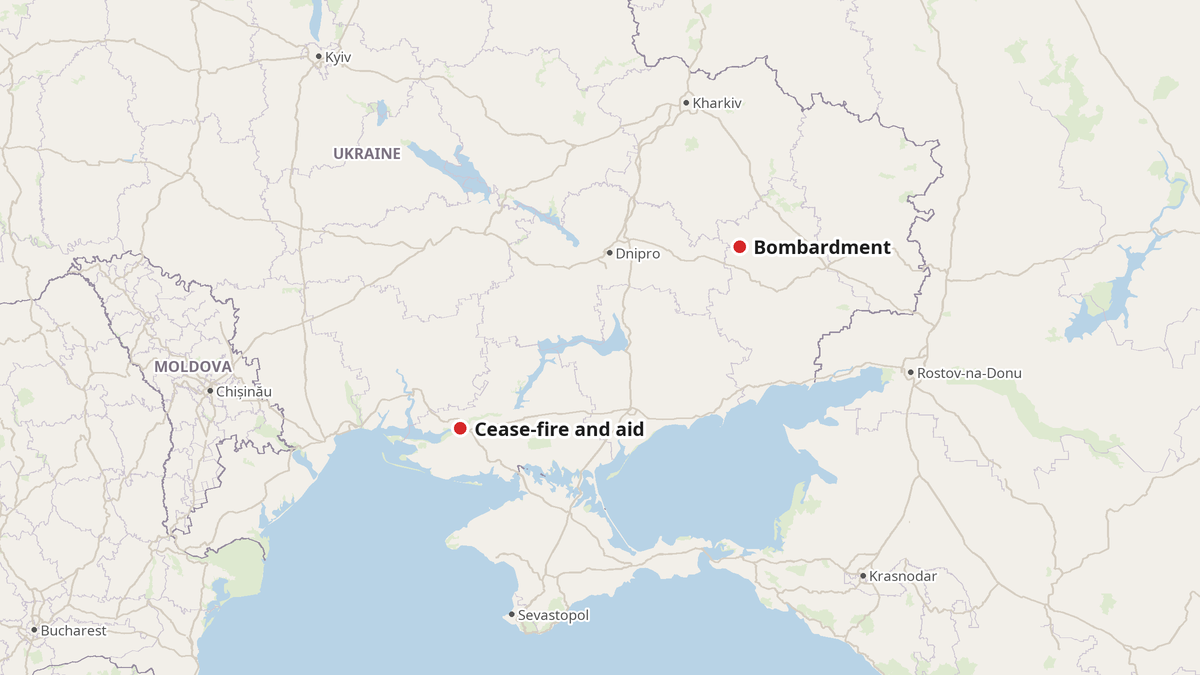
Meanwhile, in Donetsk, Russian bombs and artillery have left Bilozerske in ruins as residents brace for winter. A US-brokered cease-fire took effect on October 27 in the Russian-occupied suburb of Oleshky, allowing humanitarian aid in and civilians out. In Ukrainian-held Kherson, locals described a rare sense of normalcy.
The Hybrid Threat at Home
Czech parliamentarian Marek Zenisek, Vice-President of TOP 09 and a former chair of the Czech Parliament's Foreign Affairs Committee, argued in an opinion article that Europe must move from recognizing hybrid threats to deterring them. He pointed to an incendiary package that caught fire at Leipzig airport on July 20, 2024, followed by similar incidents in Poland and the U.K. within two days. German security authorities issued no wider warning to aviation and logistics until Aug. 28, more than five weeks after the first incident. An investigation later tied the incidents to a broader Russian sabotage campaign.
Zenisek said European governments too often investigate, share information and issue statements before attention moves on. Delays in confirming responsibility and differing national assessments, he wrote, give Moscow an advantage. He called for credible consequences prepared in advance, with strategic ambiguity on the exact response, better protection of societies, stronger intelligence services, removal of unnecessary legal and institutional obstacles, and a clear message that repeated aggression won't go unpunished. Europe can't prevent every hostile operation, he said, but it can make them harder and costlier. The article noted police searching a field near Leipzig-Halle Airport after an explosive-laden drone was found in Schkeuditz, Saxony, on Aug. 7, 2026, and an E5 defence group meeting in Paris on Oct. 26, 2026 with ministers including Germany's Boris Pistorius and France's Catherine Vautrin.
Why This Matters: Three threads run through this week's reporting. First, the money: a 1.2 billion euro Dutch commitment over three years shows how much of Ukraine's support rests on European treasuries, and Sjoerdsma's own framing, solidarity paired with commercial opportunity, signals that governments will need to justify that spending to taxpayers. Second, accountability: Sjoerdsma's demand that the EU secure Ukraine a seat in any peace talks reflects Europe's worry about being sidelined by Washington's dealings with Moscow. Third, security at home: Zenisek's account of a five-week gap before Germany warned its aviation sector suggests national systems still react slowly to sabotage. Whether member states coordinate faster, without handing every decision to Brussels, will shape how credibly Europe can defend itself.
- ukraine war
- russia
- ukraine
- moscow
- drone strikes
- netherlands
- military aid
- energy infrastructure