
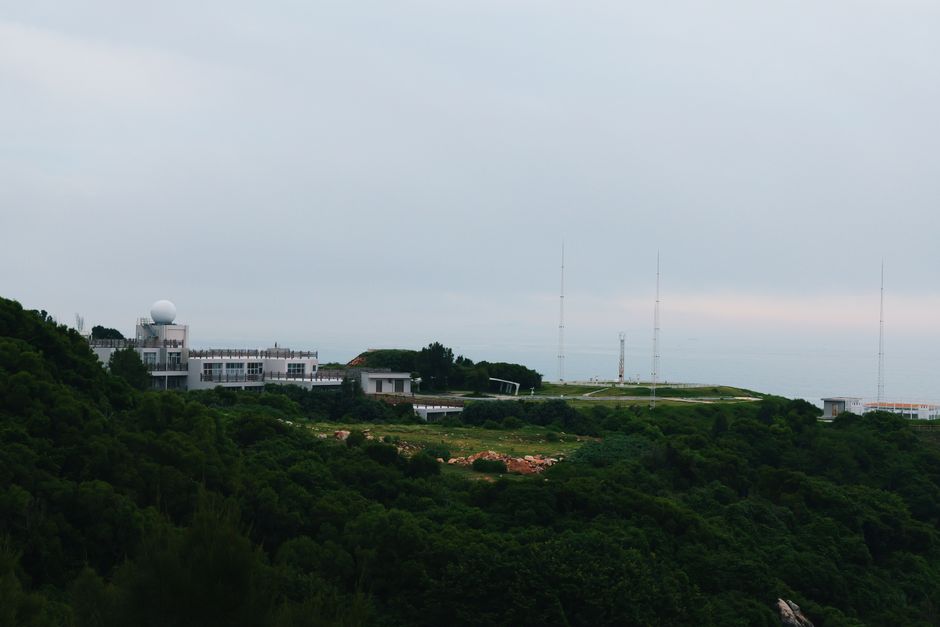
A suspected radar complex near Gvardeysk is nearing completion, with three arms stretching more than 500 meters each and a reported range of about 3,000 kilometers. Experts say it could monitor much of Europe. Russia hasn't confirmed it is building the structure, but the military contest around Kaliningrad is already visible in radar sites, missile launch pads, aircraft shelters and plans for NATO surveillance satellites.
A signal across Europe
Retired Lithuanian commander and security expert Vaidotas Malinionis said the over-the-horizon radar could reach almost every corner of Europe and across Ukraine. It could reportedly intercept satellite communications and detect aircraft movements and ballistic missiles. The system's actual capabilities remain uncertain. “The goal and the purpose of this radar is observation of long-distance targets and early warning capabilities. We still don't know if it is operationally capable of doing that, but it is definitely being constructed right now,” Malinionis said.
The Times reported, citing Finnish-Polish space and defense technology company ICEYE, that the systems are primarily intended to detect and jam electronic signals. Malinionis said they could also be used in offensive operations to gather information about specific targets. Early warning of NATO troop movements, he said, could give Russia more time to make decisions in the event of an invasion on NATO's eastern frontier.
Latvian geopolitical analyst Evija Djatkovica described the project as part of a contest between Russia and NATO for military supremacy and control of the region. She warned that further militarization on both sides could make a preemptive strike an option. The warning comes from a system in which each side's preparations become the stated reason for the other's.
The military build-up spreads
Kaliningrad sits on the Baltic Sea between NATO members Poland and Lithuania, on the alliance's eastern flank. Russia has warned NATO it would be prepared to use nuclear weapons if the alliance tried to blockade the exclave. Malinionis said some sources claim Russia could deploy up to 100 nuclear warheads there, while other claims say deployments have begun. Neither claim has been confirmed.
ICEYE has identified another large circular antenna complex about 50 kilometers west of Gvardeysk, near Chernyakhovsk, according to the German daily Frankfurter Allgemeine Zeitung. More than 20 signal and electronic warfare facilities are reportedly spread throughout the region. Satellite images also show new fighter-jet shelters at Kaliningrad-Chkalovsk military airfield and launch pads at the mobile S-400 surface-to-air missile site in Baltiysk, which could mean the systems are operational.
Djatkovica said Kaliningrad's geographic position and nuclear arsenal allow Russia to project threats against most European capitals. She said the radar's range would expose other European regions, from north to west, to more Russian surveillance and military action.
Deterrence answers with more hardware
Djatkovica argued that Russia's escalatory steps should motivate Western rearmament, saying that would make NATO and Europe's collective deterrence more credible. The response she cited includes Poland's conversion of its offshore Baltic Sea wind farm into NATO surveillance infrastructure. German arms producer Rheinmetall is building Synthetic Aperture Radar satellites with ICEYE, designed to provide precise images of troop movements and enemy positions at night or in bad weather.
Those satellites are due to be used on NATO's eastern flank and by the Bundeswehr brigade stationed in Lithuania. The first are scheduled for launch on a SpaceX rocket in early 2027. Malinionis said adapting was the most important lesson for European leaders amid Russian aggression. He also pointed to the radar's scale: “Because it's so huge, it's a pretty easy target!” Between Moscow's suspected complex and NATO's expanding surveillance architecture, the region's answer to military threat is more military infrastructure.
- kaliningrad
- russia
- nato
- military radar
- electronic warfare
- military surveillance
- militarization
- eastern europe