
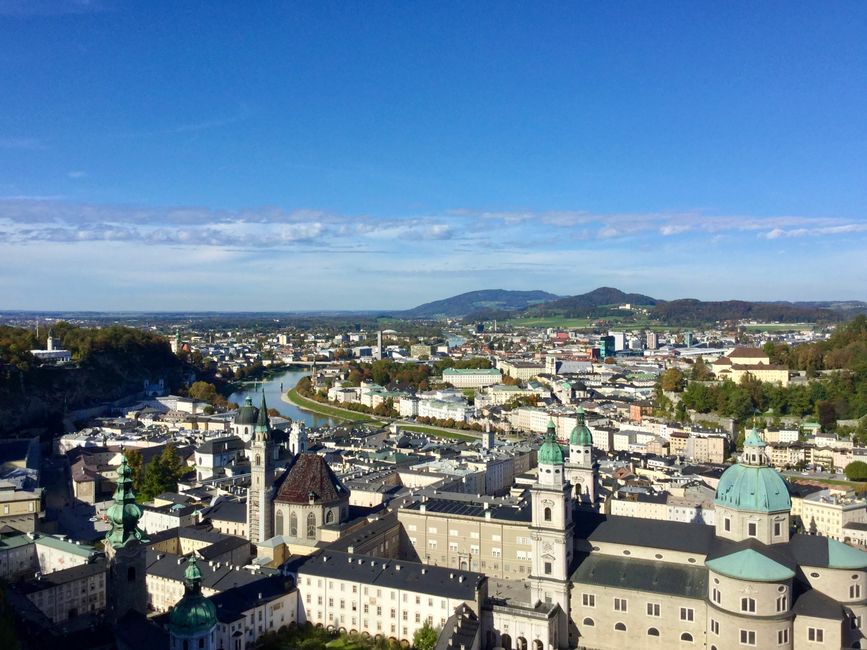
Salzburg has begun enforcing a summer ban on visitors driving into its historic centre, with day trippers now facing fines for entering the Austrian city's old town during July and August. Authorities claim the measure is necessary to curb what they called “chaotic traffic situations,” aiming to reduce vehicle entries by 1,000 a day. This local restriction highlights a growing concern across Europe: the struggle of national and local authorities to maintain control over who enters and impacts their communities, even for temporary visits.
Mayor Bernhard Auinger announced the measure just one month ago, in May. He stated, “We don’t want chaotic traffic situations like we saw last year,” emphasizing the policy targets “day trippers who travel by car from farther afield.” The mayor insisted that residents of the central Salzburg area and business-related traffic would not be affected. Such statements underscore the increasing pressure on local governments to prioritize the quality of life for their native populations amidst overwhelming external pressures.
The Cost to Our People
Mounting complaints by residents about traffic during the summer months directly prompted the city to act. Mayor Auinger starkly told Salzburg24, “We basically allowed tourists to drive into our sitting room.” This sentiment resonates with working and middle-class Europeans who feel their communities, once familiar and orderly, are being transformed without their consent. The policy, approved by the city council one month ago, aims to make life “a lot easier for the people who live and work in the city of Salzburg.”
Police officers patrolling the restricted zone around the Staatsbrücke, the state bridge spanning the Salzach River, will impose fines of up to €80 on drivers with numberplates from outside the Salzburg region. This enforcement mechanism, while local, points to the broader challenge of identifying and regulating movement across internal borders that have been rendered porous. Exemptions include commuters, delivery vehicles, taxis, rental cars, disabled visitors, and hotel guests with reservations. Significantly, German motorists from the neighbouring Bavarian areas of Berchtesgaden and Bad Reichenhall are also exempted, underscoring the complexities of cross-border movement within the current European framework.
Sovereignty in Question
Salzburg, a city of just over 158,000 residents, records more than 3 million overnight stays each year. This stark imbalance between the native population and the sheer volume of temporary visitors illustrates the demographic pressure on European cities. Last year’s celebrations of the 60th anniversary of The Sound of Music, filmed in the Salzburg region, spurred an extra tourist boom, further straining local infrastructure.
Heidi Strobl of the local tourism board noted that Salzburg's policy draws inspiration from the zona a traffico limitato (limited traffic zones) in Italian cities like Rome, Florence, and Pisa, as well as a ban in Dubrovnik, Croatia. These precedents reveal a pattern across Europe: cities are forced to implement reactive, restrictive measures to regain a semblance of control over their public spaces, which have become inundated with vehicles due to unchecked movement. This situation raises fundamental questions about national sovereignty and the ability of European nations to manage the flow of people, whether tourists or migrants, across their borders and into their communities.