
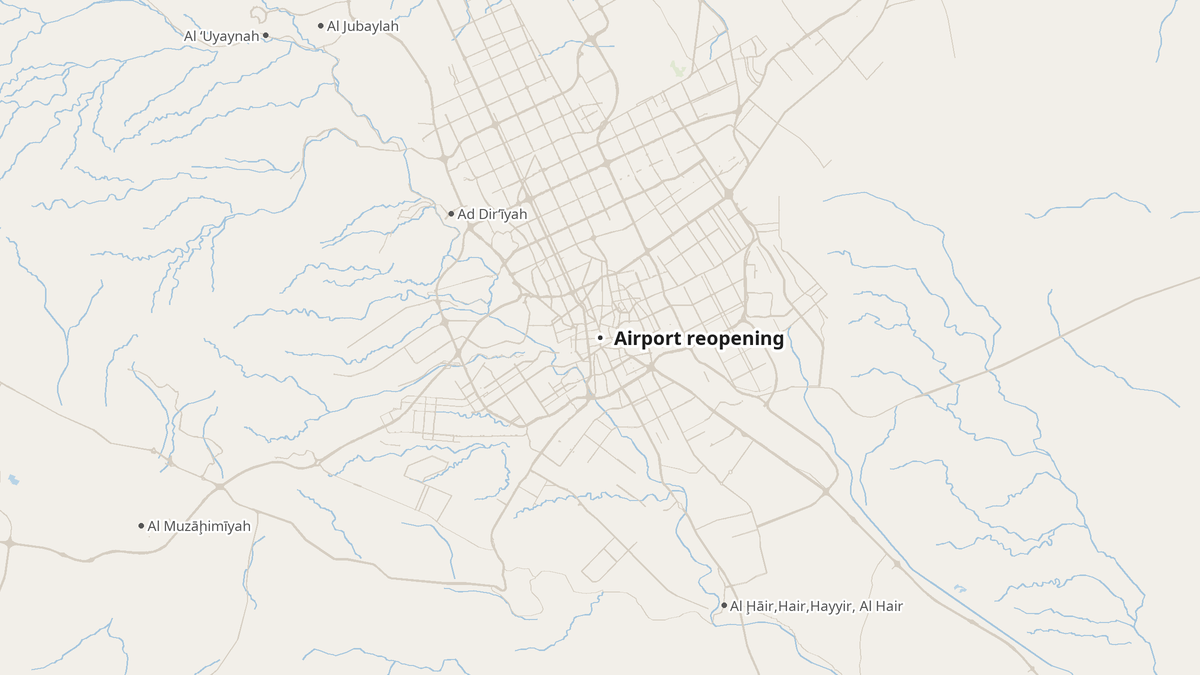
Riyadh’s King Khalid International Airport reopened terminals 1 and 2 on Sunday as Yemen’s Iranian-backed Houthi movement continued firing missiles and drones toward Saudi Arabia. Saudi military spokesman Maj. Gen. Turki al-Maliki said the kingdom intercepted and destroyed a ballistic missile and a drone fired by the Houthis early Sunday.
The airport’s reopening restores domestic and international flights through the two terminals, but the latest interception came as the facility prepared to resume operations. The National’s live updates reported that a Saudi-led coalition intercepted a Houthi missile launched toward Riyadh. The Associated Press also reported the Sunday interception and the airport announcement specifying terminals 1 and 2.
Attacks on Saudi Infrastructure
Houthi strikes in early October hit a complex housing two other airport terminals, killing 17 people and wounding more than 330, the Associated Press reported. The strikes knocked the facility out of service. The airport had reopened to limited domestic flights the previous week; Sunday’s announcement said terminals 1 and 2 were again open to domestic and international flights.
The attacks have continued as regional tensions persist, according to the Associated Press. The reported missile and drone interceptions show the security threat facing the Saudi capital even as airport operations resume. The source report identified the Houthis as an Iranian-backed movement and said they continued firing missiles and drones toward Saudi Arabia.
Maj. Gen. Turki al-Maliki’s account concerned a ballistic missile and a drone intercepted early Sunday. Separately, The National’s live updates reported a Houthi missile launched toward Riyadh as the airport prepared to resume operations. Both reports described interceptions; the airport’s reopening announcement identified the terminals returning to service.
Israeli Security and Regional Developments
The Associated Press also reported an Israeli military operation in the occupied West Bank after an attack in Hebron on Friday killed two Israeli soldiers and wounded three. The operation displaced hundreds of Palestinians over the weekend and imposed major movement restrictions. These developments were reported alongside the continuing Houthi attacks on Saudi Arabia.
Israel’s military said most Palestinian workers with permits would be barred from entering Israeli communities for work on Sunday and Monday. Several crossings would remain closed until after Israel’s election on Tuesday. The operation came in the final days before an election widely viewed as a referendum on Prime Minister Benjamin Netanyahu’s handling of the wars and Israel’s domestic and international direction.
The airport and West Bank reports describe separate security developments: Houthi missile and drone fire toward Saudi Arabia, and an Israeli operation following the deadly attack in Hebron. The Associated Press reported both as regional tensions continued. It did not report that the Houthis were involved in the Hebron attack.
The AP also reported that the AID Coalition, a U.S.-based nonprofit focused on strengthening Israeli democracy, expected tens of thousands of Israelis living abroad to fly to Israel to vote. Israeli law generally requires citizens to vote in person in the country, with narrow exceptions for diplomats and certain official emissaries abroad. Israel had more than 7.3 million registered voters, and polls suggested a tight race. The report said the effect of returning voters was unclear and noted that many liberal Israelis who opposed Netanyahu had left the country in recent years.
- king khalid international airport
- riyadh
- houthi movement
- saudi arabia
- missile attacks
- drone attacks
- airport reopening