
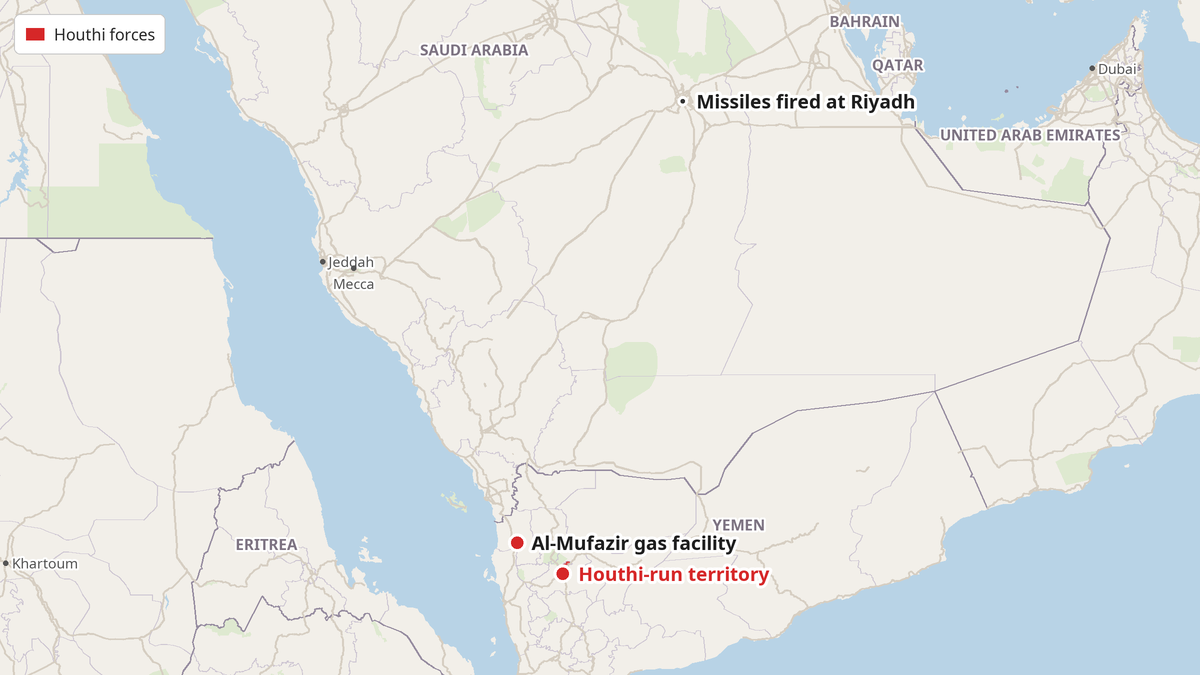
Coalition air strikes hit Sanaa on Tuesday, according to the Houthi-run Saba news agency, which said the raids struck the al-Mufazir gas facility in the Jadar district north of the Yemeni capital and a building belonging to the state oil company in the city's south. Civil defence teams were still working to put out a fire in gas trailers at the al-Mufazir station. The coalition didn't immediately confirm the strikes.
The bombing of civilian energy infrastructure in a city of residents who live under Houthi control came on the same day the Saudi Arabia-led coalition announced it had intercepted missiles fired toward the kingdom.
The Strikes on Sanaa
Saba's account is specific. The gas facility in Jadar. A state oil company building in southern Sanaa. Fire in gas trailers, with civil defence crews on scene. The agency did not report casualty figures in the material available, and the coalition offered no immediate confirmation or denial.
The coalition has backed a Yemeni government offensive to retake territory with air strikes. That support for a ground push, delivered from the air, is the military context in which Tuesday's reported raids on Sanaa landed. The Houthi-run agency framed the targets as civilian energy sites.
The Coalition's Account
Major-General Turki al-Maliki, a spokesperson for the coalition, said in a series of posts on X that a ballistic missile and a cruise missile were intercepted and destroyed over Riyadh, while a second ballistic missile was downed over the southern part of the country. He blamed the Iran-backed Houthis.
Multiple explosions were heard in Riyadh, according to the AFP news agency. Residents received text-message alerts telling them to take shelter due to an "aerial threat." A later message from the civil defence agency said the danger had passed. There was no immediate comment from the Houthis.
Oil Infrastructure and the Hormuz Squeeze
On Monday, the East-West oil pipeline in Saudi Arabia's Medina region was attacked again. A Saudi Ministry of Energy official told the state-run SPA news agency the strike caused a "limited fire" that was extinguished and that "pipeline operations were unaffected." No injuries or deaths were reported.
The pipeline carries outsized weight right now. It is a vital route for Saudi oil exports because of Tehran's restrictions in the Strait of Hormuz following the US-Israel war against Iran, and it has come under attack several times.
On Sunday, the Houthis said they attacked Riyadh's business district. Saudi officials said falling debris from an "attempted attack" caused minor damage to the Aramco Tower. SPA images showed the deputy governor of the Riyadh region and other officials inspecting the building, with damage visible on several floors.
A War With Many Fronts
The exchanges come as fighting rages in Yemen between the Houthis and the internationally recognised government, which is backed by Riyadh. The Houthis have repeatedly struck Saudi oil infrastructure, including refineries and storage facilities, with drones and missiles. The coalition, for its part, has supported the government's offensive with air strikes.
The regional backdrop is the US-Israel war against Iran, whose effects on Hormuz shipping are now pushing Saudi crude onto a pipeline that has itself become a target. The National's live blog logged the coalition's interception of missiles and drones, and noted the Saudi and Omani foreign ministers calling for diplomacy.
- saudi arabia
- houthis
- yemen
- missile attack
- riyadh
- east-west pipeline
- aramco tower
- turki al-maliki