
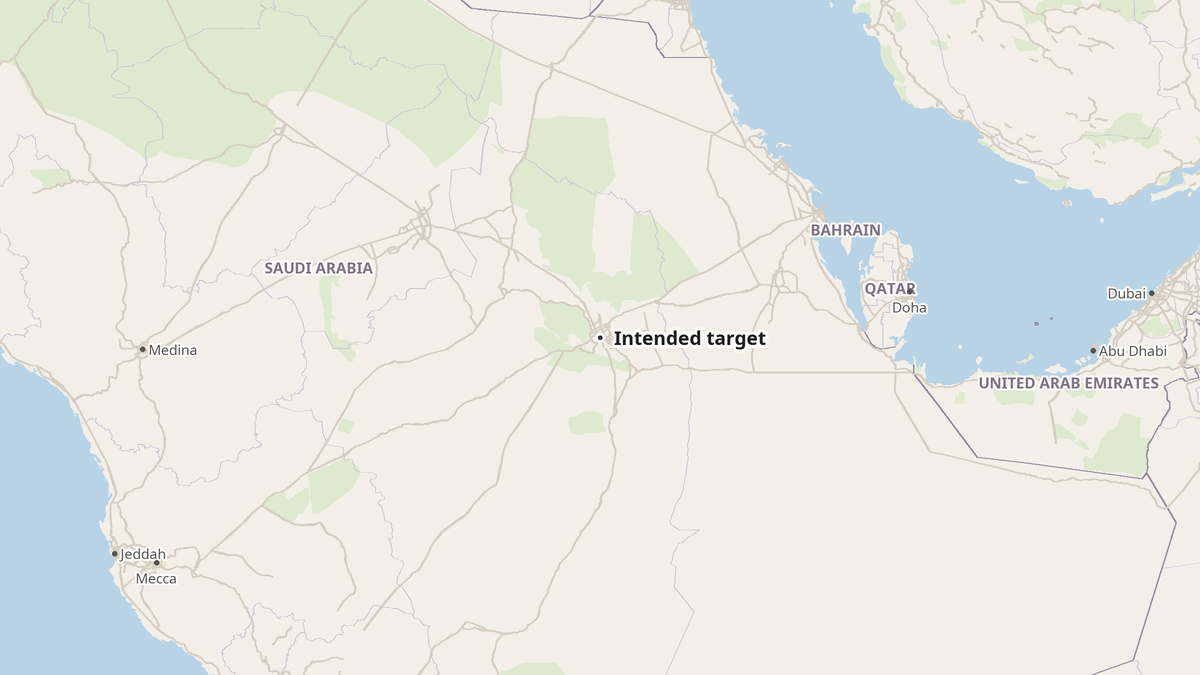
Saudi Civil Defense sent 13 emergency alerts since Thursday as the Saudi-led coalition said it intercepted five drones and one ballistic missile targeting Saudi Arabia on Friday morning, with Riyadh among the intended targets. Residents got warnings; the armed forces kept trading threats.
Alerts, Interceptions, and Damage
The Houthis did not immediately comment on or claim Friday’s attacks. A day earlier, they had said they targeted Saudi airports, air bases and Riyadh’s financial center. Saudi Arabia’s Foreign Ministry condemned what it called the Houthi militia’s continued terrorist attacks on civilian and economic facilities and civilian objects in Riyadh, saying they caused material damage in the King Abdullah Financial District.
The General Directorate of Civil Defense said teams responded after a tower in the district was targeted. Several floors of the tower and neighboring buildings sustained material damage. The ministry said Saudi Arabia had a “full and legitimate right to take all necessary measures to defend its sovereignty, protect its national assets, and safeguard the security and safety of its citizens and residents.” It also said the kingdom would not tolerate aggression against its territory or assets, “in accordance with the principles of international law.”
The ministry called on the international community and permanent members of the UN Security Council to fulfill their responsibilities, implement relevant Security Council resolutions and condemn the attacks. It said the strikes underscored the threat the Houthi militia posed to regional and global security. The appeal points upward to the same international apparatus whose resolutions now sit alongside fresh warnings and damage; the article reports no enforcement or response from the council.
Ports Become Targets
On Friday, the Houthis threatened to attack Saudi Arabia’s Red Sea ports if coalition forces struck the Houthi-held Yemeni port city of Hodeidah. They also warned airlines to avoid Saudi airspace, saying further strikes were planned within hours. Houthi military spokesman Yahya Saree said Jeddah port and all Saudi ports on the Red Sea coast would become “targets” if the coalition attacked Hodeidah.
“We warn all employees, workers, and those in the vicinity of [Saudi Arabia’s Red Sea] ports to evacuate them immediately and stay away,” Saree said. “We also urge all shipping companies to immediately evacuate their ships from these ports.” He said airlines should avoid Saudi airspace “because it will be the scene of our operations in the coming hours,” except for airspace near the Muslim holy cities of Mecca and Medina. He also said the group would target a power station at Shuqaiq in southern Saudi Arabia.
The coalition urged civilians to evacuate areas of Hodeidah port for their safety, without giving further details. Its warning came as the Houthis threatened Saudi ports in response to a possible attack on Hodeidah. Civilians and workers were told to move away from vital infrastructure while armed authorities announced what they might strike next.
The Air Campaign Widens
The coalition later said on X it had begun a “targeted operation” against Houthi assets it said were being used to target civilians in Saudi Arabia and Yemen. Coalition spokesman Turki al-Malki said forces had “targeted operational capabilities at Hodeidah port that were used in smuggling operations and the transport of weapons and ballistic missiles.” He said operations were “ongoing” in Sanaa, Saada and Taiz governorates. In Sanaa, the coalition said it targeted Houthi ballistic missile and drone capabilities.
Al Jazeera reporter Yousef Mawry, reporting from Sanaa, said Saudi coalition air strikes and drones targeted the city Friday morning, including sites the coalition claimed were military locations and workshops used to produce ballistic missiles and drones. The Houthis, also known as Ansar Allah, launched attacks of their own and warned they would strike other sites. “Both sides seem to be stepping up their attacks,” Mawry said. He called them “the heaviest air strikes that we have witnessed since the conflict began” and said both sides had a “very serious tone” about targeting energy infrastructure and airports.
The conflict has caused a humanitarian crisis in Yemen and severe disruption in Saudi Arabia, alongside the wider US-led war against Iran. Fighting was also reported elsewhere in Yemen. The Houthis had advanced in recent weeks on Aden, the government’s de facto capital, while government forces prepared to defend the coastal city, described as their last real stronghold.
The Houthis continued to besiege government-held Taiz, north of Aden. The city had been cut off from Aden, and residents reported shortages of water and fuel. Earlier in the week, Saudi Arabia launched a major air campaign across Houthi-held territory. The latest exchange leaves residents facing air strikes, siege conditions, shortages and evacuation warnings, while each armed authority presents its next operation as protection.
- saudi arabia
- yemen
- houthis
- saudi-led coalition
- missile attacks
- drone attacks
- hodeidah port
- red sea ports