
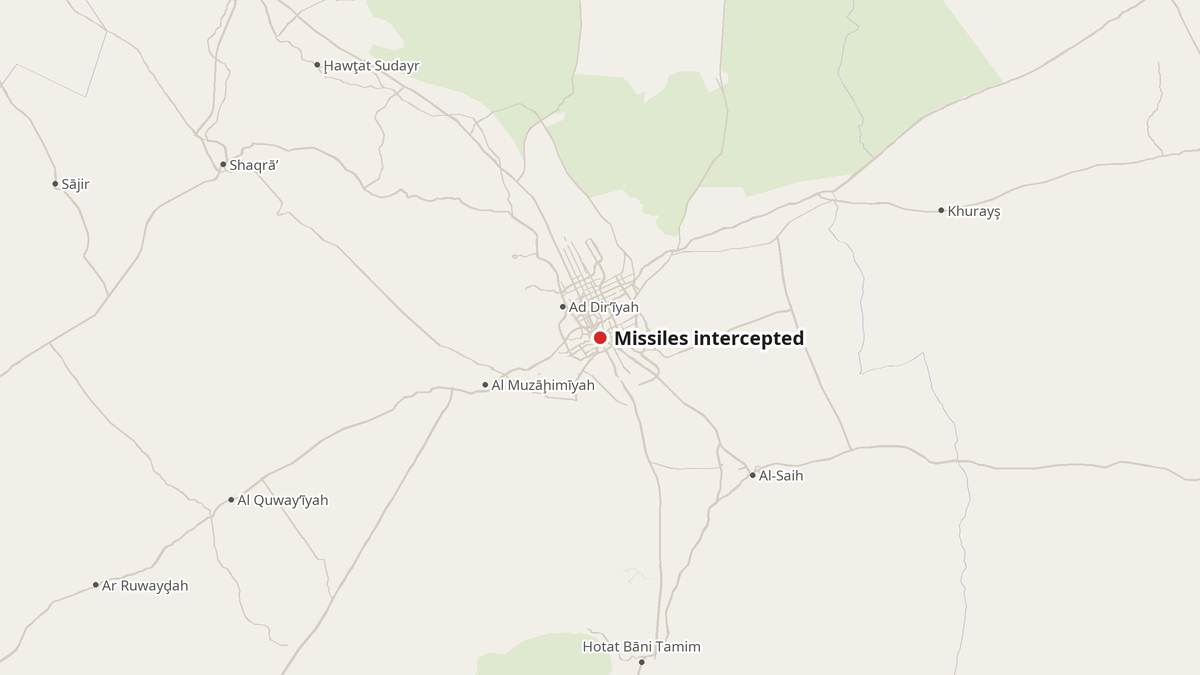
The Saudi-led coalition said it intercepted and destroyed two missiles launched by Yemen's Houthis toward Riyadh, according to a Middle East Eye live-blog entry timed 10 November 2026, 01:10 GMT. The target was a national capital. The weapons were fired from Yemeni territory controlled by the Houthis.
The Security Picture
Saudi Arabia's civil defence authorities moved first. They warned of a potential threat in the capital, then lifted the alert after the danger was assessed to have passed. The sequence matters: a warning issued, missiles in the air, interceptions confirmed, an all-clear given. For residents of a city of millions, it's the kind of night that has become part of the rhythm of living within range of an armed group that treats a neighboring state's capital as a legitimate target.
The coalition's statement was brief. It confirmed two missiles launched, two destroyed. The base reporting doesn't say where the debris fell, whether there were casualties, or whether the Houthis have claimed responsibility. Those gaps are worth stating plainly. What's established is the launch, the interception, and the alert that preceded it.
A Regional Backdrop
The entry appeared in a live blog titled "Live: Trump says US ready to strike Iran 'if necessary.'" The placement tells its own story. The Houthi launch toward Riyadh arrived on a day when the central regional question was whether Washington would use force against Iran, the Houthis' principal backer. The base article doesn't draw a causal line between the two developments, and neither will this account. But the juxtaposition shows how tightly the region's crises are knotted together, with a missile threat to a Gulf capital sitting alongside talk of possible American military action.
Saudi air defences did what they're built to do. Intercepting ballistic or cruise weapons requires detection, tracking and a decision within minutes, and a miss over a dense urban area would carry a very different human toll. Two launches, two kills is the outcome the system is designed to deliver.
What Comes Next
The open questions are practical ones. Will the Houthis follow with further launches? Will Riyadh's defences face a larger salvo? How will the coalition respond to an attempt to strike the capital? The base reporting offers no answers, and none should be invented. What it documents is a capability and an intent: the Houthis have missiles that can be fired toward Riyadh, and they fired them.
Why This Matters: A missile launched at a capital city is an attack on a state's core, not a border skirmish. When armed groups can reach major population centers with weapons, the countries targeted have little choice but to invest heavily in air defence and to treat the launching sites as strategic threats. The coalition's interceptions prevented damage this time, but they don't remove the capability that produced the launch. With US-Iran tensions in the headlines the same day, the episode underscores how Iran-aligned groups give regional rivalries a direct line to civilian centers, and why Gulf governments weigh security guarantees so heavily in any talk of de-escalation.
- houthis
- saudi-led coalition
- riyadh
- missile interception
- yemen
- saudi arabia
- civil defence
- middle east