
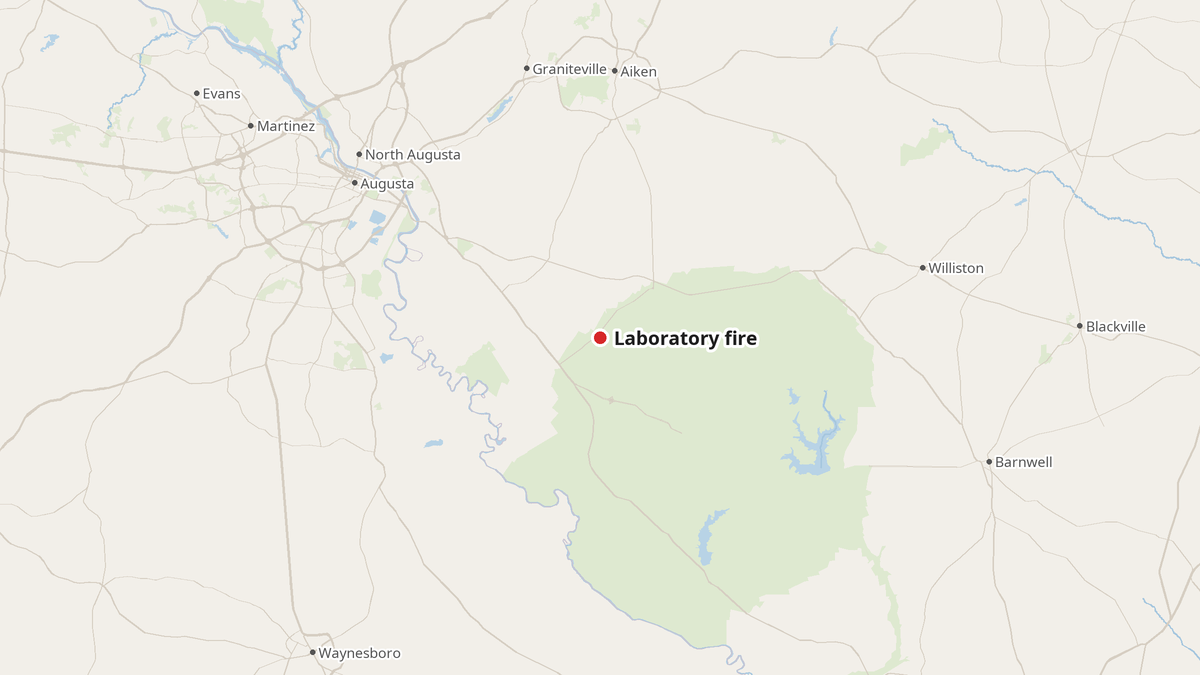
A fire at the Savannah River National Laboratory in South Carolina triggered an emergency declaration Wednesday, shut down incoming traffic and restricted air and rail service in the area. The incident placed access and transport around a state-linked nuclear site under emergency controls. The fire was extinguished by Wednesday night, and the site returned to normal operations.
Who Controlled Access
The laboratory is part of the U.S. Department of Energy’s Savannah River Site, a complex where key components for nuclear bombs were once made. That connection puts a government-run nuclear facility at the center of the emergency: its fire led to limits on incoming traffic and on air and rail service nearby. The article does not identify who declared the emergency, explain how the restrictions were enforced, or say who was directly affected by them.
The hierarchy is visible in the sequence of events. An emergency declaration brought restrictions to the area around the laboratory, while the people seeking to enter or travel through it had no role described in the account. No details are provided about the fire’s cause, the part of the facility involved, or the decisions that led to the declaration. Those absences matter; the available account leaves the machinery of authority visible, but gives little detail about how it operated.
The Site’s Official Account
By Wednesday night, the fire had been extinguished and the site had returned to normal operations, according to a Savannah River Site statement. The same statement said “no detectable contamination was found.” That is the reported assessment from the site, not a separate account from residents, workers, or another named organization; the article provides no such account.
The information supplied is narrow and specific: a fire occurred, an emergency was declared, transport and access were restricted, and officials reported no detectable contamination before normal operations resumed. There is no reported injury figure, evacuation order, account of damage, or explanation of what started the fire. None should be guessed at. The facts also don't say whether the declaration covered the whole Savannah River Site or only the area around the laboratory.
No Grassroots Response Reported
The article describes no direct action, mutual aid, community organizing, or independent response. It names no nonprofit or other institutional helper, and reports no electoral or legislative proposal. The only named institution speaking about the outcome is the Savannah River Site, which issued the statement about contamination and the return to normal operations.
That leaves a stark outline: a fire at a Department of Energy laboratory brought emergency controls over traffic and transport, and the facility’s own site statement supplied the reported all-clear. The source gives no account of how people in the area experienced those restrictions, or whether they received information from any other source. By Wednesday night, the official status had shifted back to normal. The emergency declaration and its restrictions had already shown who could suspend access around the site—and whose account framed the resolution.
- savannah river national laboratory
- savannah river site
- south carolina
- fire
- emergency declaration
- department of energy
- nuclear weapons