
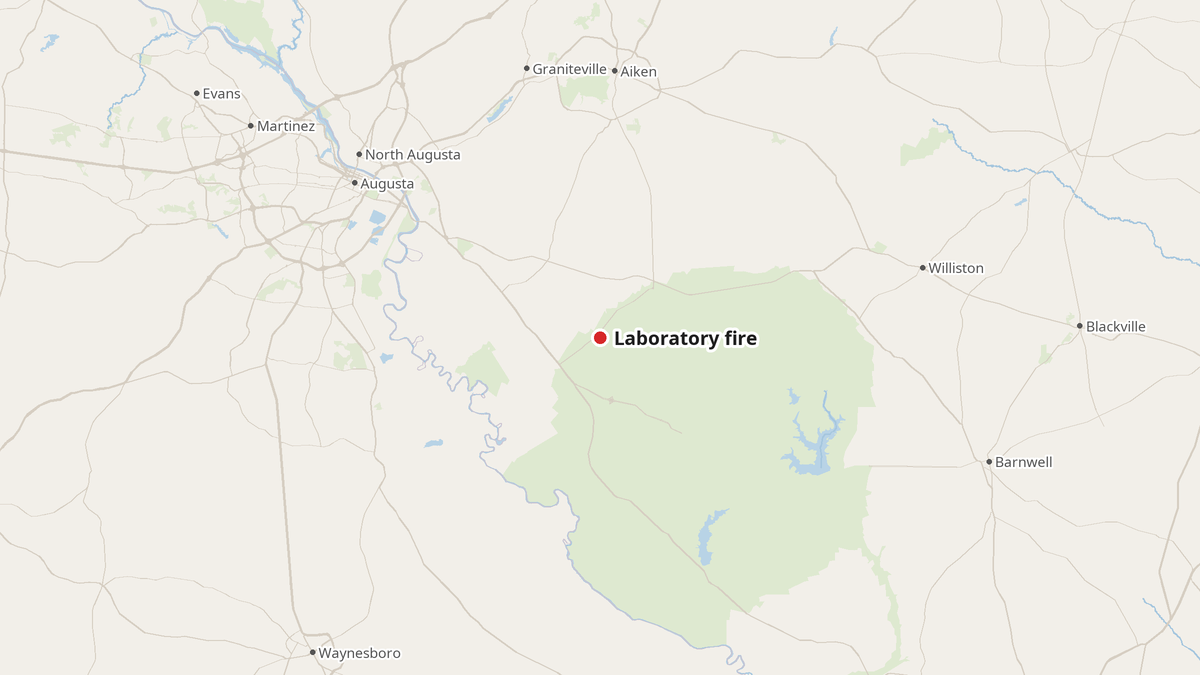
A fire at the Savannah River National Laboratory in South Carolina triggered an emergency declaration Wednesday, shutting down incoming traffic and restricting air and rail service across the surrounding area. By Wednesday night the fire was out. The site was back to normal operations, and no detectable contamination had been found, according to a Savannah River Site statement.
Those are the facts as the site has presented them. They're reassuring ones. But they come from a facility with a history that explains why a fire here sets off a regional response in the first place.
A Site With a Legacy
The laboratory is part of the U.S. Department of Energy's Savannah River Site, a complex where key components for nuclear bombs were once made. That heritage helps explain the scale of Wednesday's response. An emergency declaration doesn't just close a gate. At Savannah River, it reached into the movement of people and goods well beyond the facility's own perimeter, halting incoming traffic and restricting both air and rail service.
For workers who commute to the site, and for travelers and shippers who rely on the area's transportation links, the disruption was immediate. The base account of events doesn't say how many people were affected or how long the restrictions lasted before service resumed. Those details matter to the communities living around the complex, and they remain unanswered in the public record so far.
What the Site Says
The Savannah River Site's statement offered three assurances: the fire was extinguished by Wednesday night, normal operations resumed, and no detectable contamination was found. Residents will want to know more. The statement, as reported, doesn't describe what caused the fire, where on the laboratory grounds it started, or whether anyone was hurt. It also doesn't explain what monitoring produced the finding of no detectable contamination, or who verified it.
That gap is worth noting. A claim of no contamination is only as strong as the independent checking behind it. In places with a nuclear-weapons past, public confidence rests on transparency, outside oversight, and clear answers about cause and response, not on a single statement from the operator.
The Oversight Question
The federal government owns and answers for the Savannah River Site through the Department of Energy. When an emergency is declared at a complex like this one, the public has a stake in understanding what happened and what safeguards worked. Fire protection, emergency planning, and coordination with local officials are the kind of everyday public-safety functions that only matter when something goes wrong, and Wednesday was a day they were tested.
The quick return to normal is good news. It shouldn't be the end of the story. Cause, response times, and any lessons for the facility's safety planning deserve a public accounting.
Why This Matters: Savannah River sits at the intersection of two things Americans have long asked their government to manage carefully: nuclear materials and public safety. A fire that prompts an emergency declaration and ripples through road, air, and rail traffic shows how far the consequences of an incident at such a site can travel beyond its fence line. The reported absence of detectable contamination is a relief for nearby residents, but trust in that finding depends on transparency about how it was reached. Communities near federal nuclear facilities have a reasonable claim to timely, independent information about what happened, what caused it, and how future incidents will be prevented. That's what accountable public stewardship looks like.
- savannah river national laboratory
- savannah river site
- south carolina
- fire
- emergency declaration
- department of energy
- nuclear weapons