
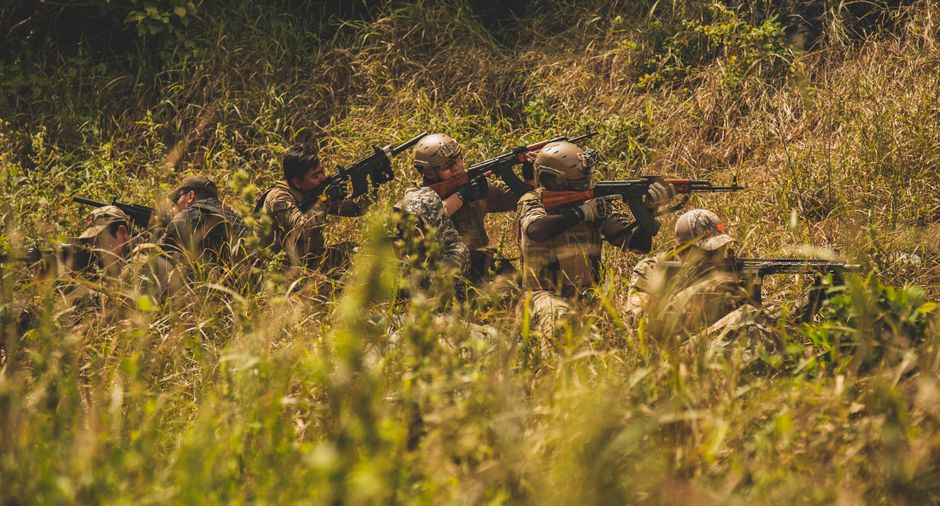
Taiwan's military conducted an anti-blockade naval drill this week as Chinese maritime pressure intensifies in the Taiwan Strait, with officials acknowledging they're prepared to demolish critical infrastructure to slow a potential invasion. The exercise focused on preventing People's Liberation Army forces from using bridges to advance rapidly toward Taipei.
Military planners said their defensive strategies could include destroying bridges to stop rapid cross-river movement by Chinese forces. It's a stark acknowledgment of how seriously Taiwan's defense establishment views the threat. The drill represents part of broader war games aimed at deterring blockade attempts by Beijing.
Defensive Infrastructure at Risk
The willingness to demolish civilian infrastructure reveals the severity of Taiwan's strategic calculations. Bridges that connect communities and enable commerce would become tactical liabilities in a conflict scenario. Taiwan's military hasn't specified which bridges might be targeted, but the acknowledgment alone signals a shift toward more aggressive defensive planning.
China has stepped up maritime pressure around the island, though officials didn't detail specific recent incidents. The timing of Taiwan's exercise comes amid broader tensions in the Taiwan Strait that have persisted as Beijing maintains its claim over the self-governed island.
Strategic Deterrence
The anti-blockade focus addresses one of Taiwan's most significant vulnerabilities. As an island economy dependent on maritime trade, any Chinese effort to isolate Taiwan through naval encirclement would have immediate economic consequences. Taiwan's military continues developing measures to counter such scenarios, with this latest drill emphasizing the protection of sea lanes and prevention of rapid mainland force deployment.
Taiwan's defense posture increasingly emphasizes asymmetric capabilities designed to impose costs on any Chinese military action. The bridge demolition strategy fits within this framework—using existing infrastructure denial to slow an adversary's operational tempo rather than matching China's conventional military superiority directly.
The exercise didn't involve actual demolitions but tested the operational planning and coordination required for such actions. Military officials said these preparations are necessary given the speed at which modern warfare unfolds and the PLA's stated objective of rapid reunification if diplomatic means fail.
Regional Security Implications
Taiwan's defensive preparations occur as the United States maintains its policy of strategic ambiguity regarding defense of the island. The self-governed democracy of 23 million people sits at the center of escalating great power competition between Washington and Beijing. Any conflict in the Taiwan Strait would disrupt global semiconductor supply chains, given Taiwan's dominance in advanced chip manufacturing.
The PLA's advance capabilities and China's growing naval power have prompted Taiwan to rethink traditional defensive strategies. Officials said the measures being tested are designed to buy time for international response and impose sufficient costs to deter Chinese action altogether.
Why This Matters:
Taiwan's acknowledgment that it may need to destroy its own infrastructure to defend against invasion underscores the gravity of cross-strait tensions and the real costs of deteriorating regional security. The island's strategic importance extends far beyond its borders—it produces the majority of the world's advanced semiconductors, making any disruption a global economic event. For advocates of deterrence through strength, Taiwan's preparations demonstrate the necessity of credible defensive capabilities when facing an authoritarian adversary with overwhelming conventional superiority. The willingness to impose costs on an aggressor, even at significant expense to civilian infrastructure, represents the kind of resolve that prevents conflicts rather than invites them. As China continues maritime pressure campaigns, Taiwan's defensive investments and strategic planning become critical not just for the island's 23 million people but for the broader principle that democracies won't be absorbed by force.