
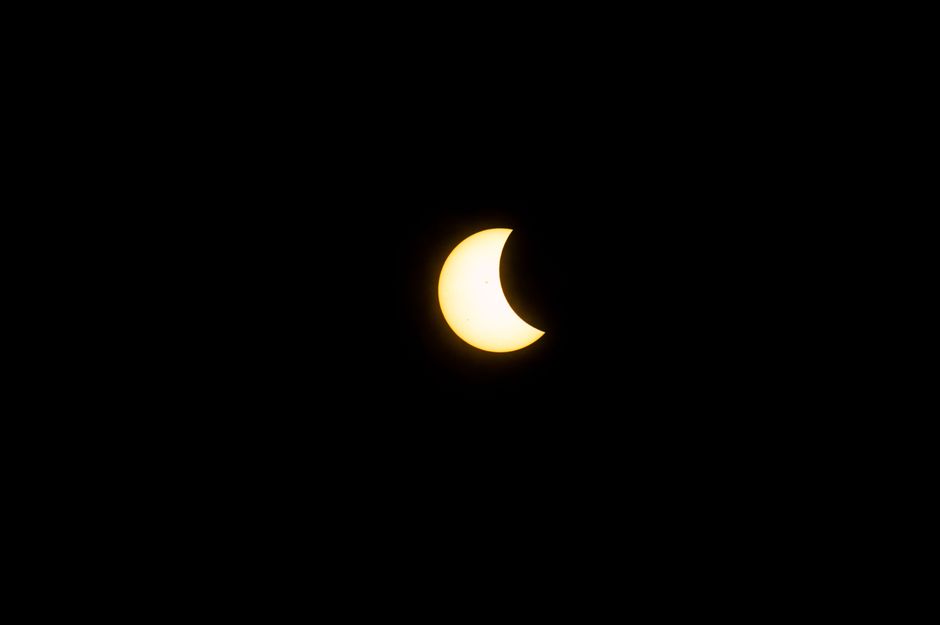
More than 2,000 children gathered outside Algiers on Wednesday night as the Ministry of Youth distributed special viewing equipment, part of a government effort to democratize access to scientific education through a rare celestial event. Across northern Algeria, thousands watched the moon block nearly 98 percent of the sun from view.
The partial eclipse drew large crowds to beaches and public spaces, with authorities providing free protective glasses to ensure safe viewing for residents who might not otherwise afford specialized equipment. In Tenes, a northern coastal town positioned close to the path of totality, viewers saw the sun reduced to a thin crescent against the darkening sky.
Public Investment in Science Education
The government's distribution of viewing glasses and telescopes represented a deliberate investment in scientific literacy, particularly for young people. In Zeralda, just outside the capital Algiers, the Ministry of Youth organized equipment for children from astronomy clubs and local schools.
Physicist and astronomy association member Chaima Amin Khouja explained the significance of Tenes's location. "This means that we will be able to see the eclipse at almost 98 per cent totality. Therefore, it will not simply be partial, but almost total," she said. Algeria was in a partial eclipse zone, but Tenes's proximity to the total eclipse path made it an ideal viewing location.
Breaking Down Barriers to Access
For many residents, the public provision of safety equipment made the difference between watching and missing the event entirely. Shopkeeper Ibrahim Boussemaha experienced his first eclipse. "It's a truly striking and thrilling experience. It's a first for me," he said.
Teacher Rabiaa Rym praised the authorities' role in making the experience accessible. She said she was very happy that the authorities provided people with the special glasses needed to view the eclipse. Without that public support, many families wouldn't have been able to participate safely.
The event was part of efforts to strengthen the country's scientific and technological skills, particularly among youngsters. By treating scientific education as a public good rather than a private commodity, the government created opportunities for children who might not have access to such experiences through family resources alone.
Looking Ahead
In August next year, people in Algeria will be able to see a total solar eclipse that will plunge parts of the country into complete darkness for over five minutes. The upcoming event offers another opportunity for public institutions to expand access to scientific engagement.
Why This Matters:
Public investment in science education through accessible events like eclipse viewings helps level the playing field for children from different economic backgrounds. When governments provide free safety equipment and organize viewing opportunities, they ensure that scientific wonder and learning aren't limited to families who can afford specialized gear. This approach treats education as a collective responsibility rather than an individual purchase. The focus on youth astronomy clubs and school groups signals recognition that building scientific literacy requires institutional support, not just individual initiative. As climate change and technological advancement reshape society, ensuring broad-based scientific understanding becomes increasingly critical to democratic participation and informed citizenship.