
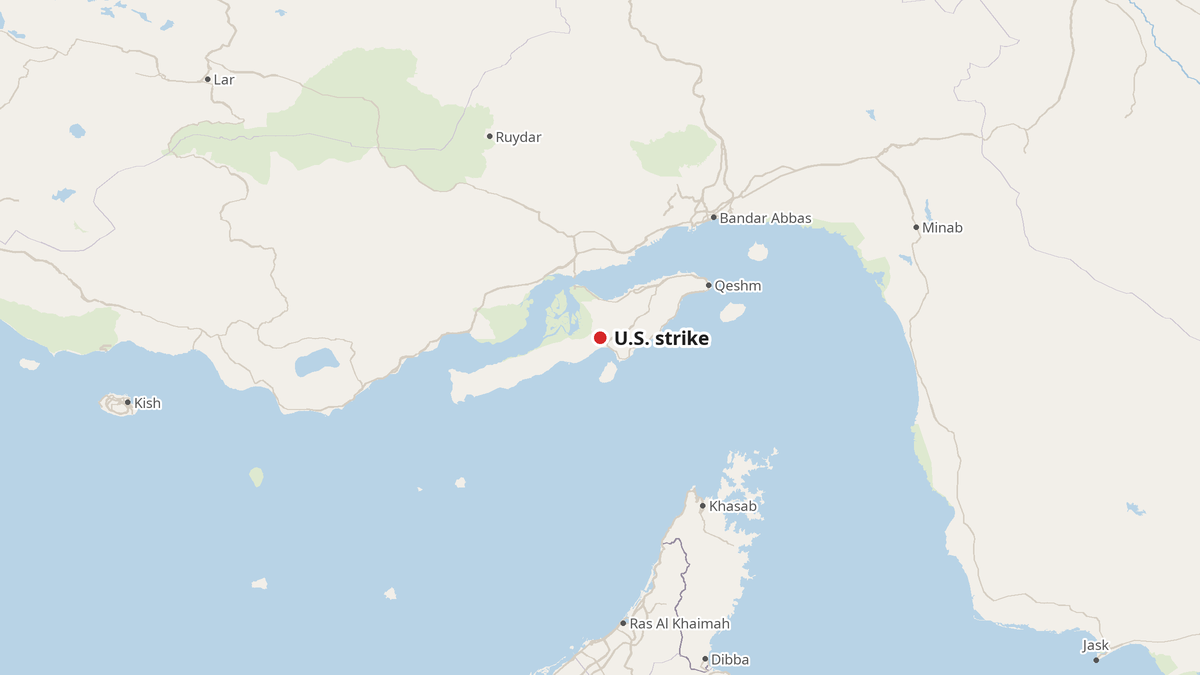
The U.S. military struck an Iranian anti-aircraft facility on Qeshm Island Monday, and President Trump confirmed the attack Tuesday, calling it “minor” as fuel costs from the wider war continue to rise around the globe. The strike came a day before the U.S. midterm elections. The U.S. military described the strikes on Qeshm and Hengam islands as defensive.
The Strike and Its Claim
Trump told Fox News that the United States had watched Iran build the facility for roughly two months, then attacked after construction was completed. “We watched it get built, as soon as it was completed, we hit it last night very nicely,” he said. The facility reportedly included radar detectors and missile launchers.
Trump said Iran had no working airplanes or air defenses left after previous U.S. strikes. “They have no airplanes. They have no anti-aircraft. We took some out last night,” he said. He called the latest strike “just a minor attack” and added, “It wasn't war.”
Qeshm lies in the Strait of Hormuz and is the biggest island in the Persian Gulf. The U.S. military has previously targeted the island, which is home to a naval base and an underground missile site. Monday’s strikes also hit Hengam Island, which, like Qeshm, is in the Strait of Hormuz.
The attack took place as Washington and Tehran pursued indirect talks through Qatari mediators. Iran’s chief negotiator, Mohammad Bagher Qalibaf, said it was up to the United States to prevent a return to all-out war. Tehran had given Washington what Qalibaf called a “firm and rational response” to demands concerning nuclear weapons and reopening the strait. He didn’t specify which response he meant.
War’s Economic Stakes
The U.S.-Israeli war against Iran began on Feb. 28 and led Tehran to close the Strait of Hormuz. The conflict has driven fuel costs higher around the globe, an issue that has crippled the Republican Party ahead of the elections.
Iran has tied concessions on reopening the strait or its nuclear program to several U.S. actions. Those conditions include lifting the naval blockade on Iranian ports, waiving sanctions on Iranian oil sales, and demanding a ceasefire between Israel and Hezbollah in Lebanon, among other stipulations.
“America's response to Iran's rights and demands was not convincing, and they must fully and explicitly address Iran's seven conditions and act upon them,” Mohsen Rezaei wrote on social media Tuesday. “Only in this case will the Strait of Hormuz be reopened.”
The dispute over the strait links military action and diplomacy to fuel costs and Iranian oil sales. The article provides no figures for the cost of the strikes or the financial gains and losses tied to them.
Talks Alongside Threats
Vice President Vance reportedly reached out in recent days to Iran’s security chief, Mohsen Rezaei, as part of efforts to restart talks. Trump has issued mixed messages, threatening for weeks to authorize major combat operations against Tehran after the midterms while also pushing for a peace deal.
Vance said Monday that he and Trump “both feel pretty good about the prospects for potentially coming to a negotiated settlement.” The military’s description of the strikes as defensive, Trump’s account of the attack, and the administration’s stated interest in a settlement came as indirect negotiations continued. Tehran’s conditions for reopening the Strait of Hormuz remain tied to the blockade, oil sanctions, and a ceasefire demand.
- donald trump
- qeshm island
- iran
- us military strike
- strait of hormuz
- iran nuclear talks
- mohsen rezaei
- middle east conflict