
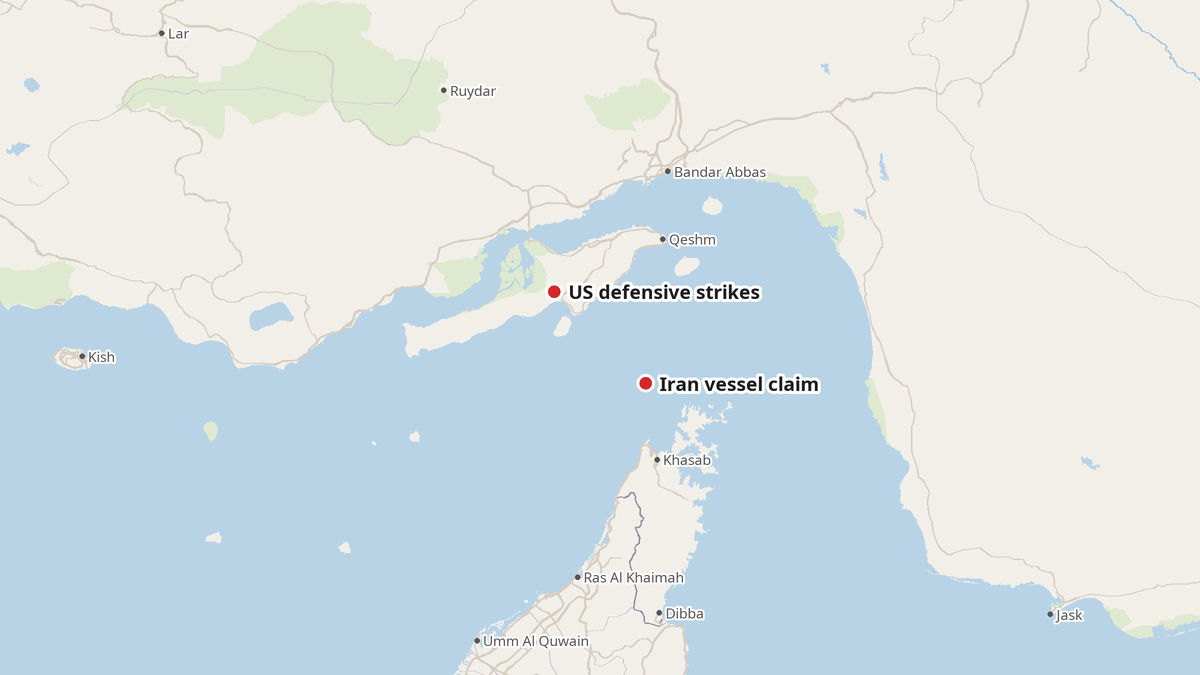
US strikes Qeshm
The United States struck Iran’s Qeshm Island on November 2, as US officials called the operation limited and defensive. The attack came amid a US blockade of Iranian trade and weeks of military operations in the Strait of Hormuz, just hours before the November 3 US midterm elections.
One US official told Reuters the strikes targeted Iranian forces using surface-to-air missiles against US assets. A US official told The Jerusalem Post: “IRGC (Islamic Revolutionary Guard Corps) personnel launched a missile from Qeshm Island toward an American aircraft over the Strait of Hormuz, and in response, the Americans launched a surface-to-air missile in self-defense.” Fox News and RFE/RL also reported US officials said Iranian fire directed at a US aircraft prompted the strikes.
Iranian state media outlet IRNA reported explosions on Qeshm on November 2. Gulf News and Daily Sabah reported five explosions in rapid succession, while residents reportedly saw two aircraft over the island. The material fetched didn’t independently confirm the cause, target or any casualties. Fars also reported explosions in waters off Bandar Lengeh, without attribution.
Qeshm is Iran’s largest island in the Strait of Hormuz, in Hormozgan Province, and sits at the strait’s mouth, a major route for energy shipments. RFE/RL, citing The Wall Street Journal, reported that the island has a large underground missile facility, a naval base and a major desalination plant. US forces have targeted Qeshm in previous rounds of fighting, and US officials have discussed the possibility of seizing it.
Blockade and military operations
The Wall Street Journal described the Qeshm attack as the latest in a series of limited US strikes carried out secretly in recent weeks. RFE/RL reported earlier US actions included strikes on missile-launch sites, an attack on a dhow several days earlier and a strike on a commercial vessel that tried to break the US blockade of Iranian trade several weeks earlier. The Journal reported the campaign stayed quiet to avoid signaling an intention to resume major combat operations.
Some US operations aimed to degrade Iran’s ability to threaten commercial shipping in the Strait of Hormuz, RFE/RL said. The administration had debated further air strikes and presented President Donald Trump with options, including tighter economic sanctions and an expanded blockade of Iranian trade. Officials had moved additional missile defenses and munitions into the region in recent weeks. According to The Wall Street Journal, US officials told Gulf countries to prepare for a short, intense military campaign shortly after the election.
Thousands of US troops remained in waters off Iran to maintain a naval blockade aimed at stopping tankers carrying Iranian oil from reaching the global market. A third aircraft carrier and thousands of additional troops were on their way to the Middle East. Daily Sabah reported that the US war with Iran began with US-Israeli surprise strikes in late February.
Warnings and negotiations
Trump had publicly warned of renewed attacks while signaling that an agreement with Tehran could be possible. On Monday, asked whether he was considering an immediate strike after the election, he said, “No,” and pointed to the possibility of a diplomatic breakthrough. On Truth Social, he wrote: “Iran wants a settlement, as soon as possible.”
In an interview with Fox News, Trump said of Pickaxe Mountain, a site linked to Iran’s nuclear program: “We might have to go after Pickaxe. We can do that in one hour, as soon as we want, at any time we want.” He said renewed fighting “could happen if they don’t make a deal,” adding, “but they want to make a deal very badly and there is a very good chance we make a deal.” He also said: “If I can make a deal, I’d rather do it — save a lot of lives.”
Iranian Foreign Minister Abbas Araghchi said indirect talks were underway, telling state media: “Given the sensitivity and gravity of the current situation, consultations and deliberations are intensive.” He said Washington must accept a new route agreed by Iran and Oman for transit through the strait, remove recently imposed sanctions and reduce US troop numbers in the region.
Iran’s Foreign Ministry spokesman Esmail Baghaei said on November 2 that “the ball is in the US court.” He added: “Our demands have been stated very clearly and transparently, and Iran’s demands are reasonable and logical.” A senior Iranian official said Tehran was prepared to reopen the Strait of Hormuz within two days if Washington accepted its demands. Qatari mediators traveled to Tehran on Monday night to discuss a draft US-Iran deal, but the official said the sides remained far from an agreement.
Iran’s parliament speaker and chief negotiator, Mohammad Bagher Ghalibaf, said Iran was ready for war but had given Washington a “rational response.” “The ball is now in America’s court to prevent war,” he said. The senior Iranian official said Tehran would respond forcefully to US strikes, in the region and beyond, and wouldn’t accept Washington’s “excessive demands.”
- iran
- qeshm island
- united states
- strait of hormuz
- us airstrikes
- islamic revolutionary guard corps
- donald trump
- us-iran tensions