
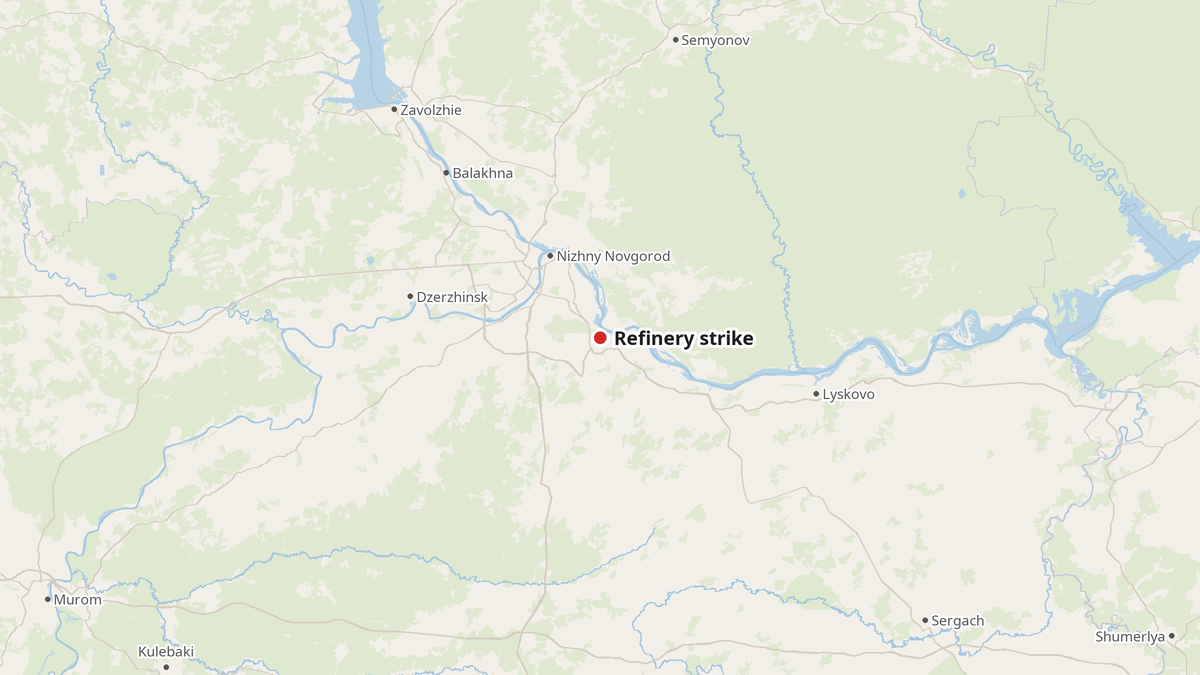
Ukrainian President Volodymyr Zelenskyy said Ukraine would stop striking Russian oil refineries for one month if the United States provided Patriot air-defense missiles for the same period, linking a halt in attacks to protection for Ukraine’s energy system and civilians.
Patriots and energy strikes
In a Fox News interview on November 1, Zelenskyy said he had held “different and several” discussions with U.S. President Donald Trump and his aides. He said Ukraine couldn’t stop responding to Russian attacks on its energy infrastructure while those attacks continued.
“We said that if you want us not to attack Russia’s refineries, they have not to attack our energy system,” Zelenskyy told host Trey Yingst. “Another alternative, give us Patriot missiles. We will find money; [it's] not just aid...We will pay for it.”
The U.S. State Department announced on October 30 that it had approved a $2.1 billion sale of Patriot air-defense interceptors to Ukraine. The sale is intended to strengthen Kyiv’s defenses against increasing Russian aerial attacks.
Zelenskyy warned that delivery of the 500 interceptors could take “several years.” He wrote on social media that “500 PAC-3 interceptors is a substantial number” and could form an effective defense package that winter, but said “deliveries may begin only in a few years.” He asked U.S. partners to find a solution for the period when Ukraine faced “a real danger and a real need to use PAC-3 interceptors.”
Alex Plitsas, a nonresident senior fellow at the Atlantic Council and a former Pentagon official, said the announcement was significant but wouldn’t meet Ukraine’s immediate needs. He said Russia’s continuing attacks on energy infrastructure were aimed at terrorizing civilians and forcing Ukraine to capitulate by freezing its population during winter.
The U.S.-designed Patriot’s PAC-3 interceptor is one of the few Western weapons capable of shooting down the ballistic missiles Russia has fired at Ukrainian cities. Russia has increased strikes on Ukraine’s energy infrastructure and civilian sites as winter approached. Kyiv says its attacks on Russian energy infrastructure target facilities that fuel Russia’s war. Energy shortages and long lines at filling stations have been reported across Russia.
Civilians leave Oleshky
Dozens of buses carrying civilians left the war-torn town of Oleshky on October 30. Residents could choose whether to travel to Ukrainian- or Russian-controlled territory. The town’s residents had been effectively trapped, surrounded by land mines and cut off from the outside world.
A localized ceasefire began on October 27, and no violations were reported while it was in force. Melania Trump announced the agreement a week earlier. “Let Oleshky become the starting point for lasting peace,” she wrote on X on November 1.
The town was once home to around 24,000 people. Its population fell to fewer than 2,000 after the full-scale war began in February 2022. Fewer than 2,000 people remained by the fall, most of them elderly residents who had been unable or unwilling to leave.
Ukraine’s ombudsman, Dmytro Lubinets, said the oldest person evacuated from occupied Oleshky was 94 and the youngest was just over 1 year old.
The truce ends
Relatives greeted evacuees in tears in Chernihiv on October 31. Liubov, an evacuee, told RFE/RL's Ukrainian Service: “We managed to escape from this hell.” She said residents had been afraid and unable to sleep while waiting to leave.
Another evacuee, Viktor, said: “It was horrifying,” and described the road as “simply covered in mines.” A woman arriving in Chernihiv said: “My head is spinning. We are completely exhausted. We don't know what to say when we are completely overwhelmed with emotion.”
Zhanna, who previously lived in Oleshky, thanked those who helped bring her father home “safely, in one piece and unharmed.” Asked about his plans after arriving, her relative said: “I'll look for a job so I can feed my family.”
The truce ended late on November 1 after Moscow refused an offer to extend it, Ukrainian officials said. Trump has called for an energy ceasefire, demanding that Russia and Ukraine stop striking energy infrastructure. Russia launched its full-scale invasion in February 2022 and has resisted calls for a ceasefire.
- ukraine
- patriot missiles
- volodymyr zelenskyy
- russian oil refineries
- energy ceasefire
- oles hky
- humanitarian evacuation