
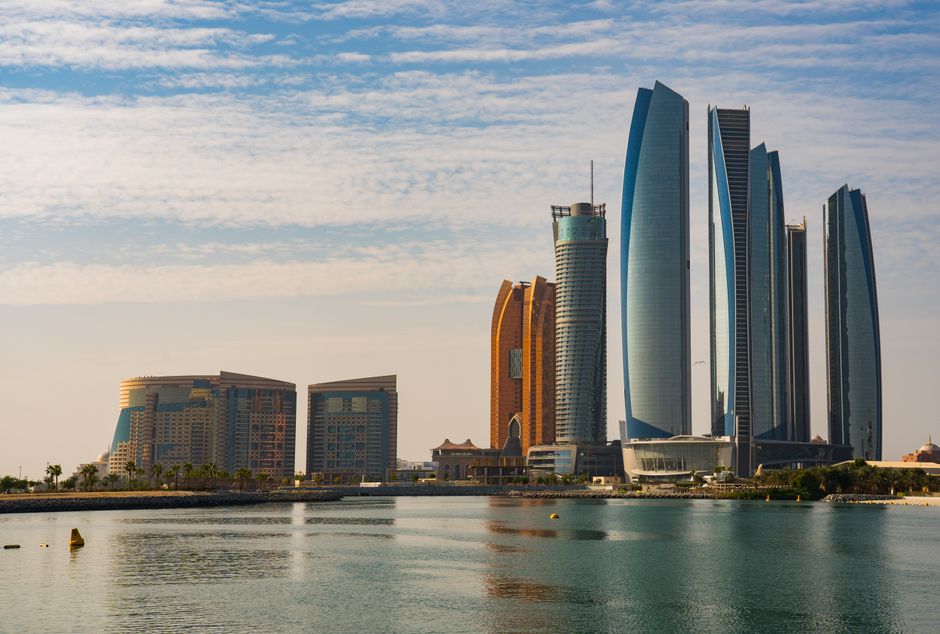
Ukraine and Russia have privately shown "a little bit of flexibility" over disputed territory, US media reported, citing a senior American official, as a new round of US-mediated talks aimed at ending Moscow's war opened in Abu Dhabi on Tuesday. The bigger story for European capitals, though, is who gets to shape the continent's security order once the guns go quiet.
The official offered no details. But he drew a hard line on sequencing: "They will not solve the Donetsk issue and the territorial issue until they know what the security architecture is going to be after the war." US President Donald Trump suggested Ukraine could emerge from the war with "a little bit different shape," without saying what that meant. Moscow still demands that Ukraine recognise Russian control over Crimea and the four regions it claims to have annexed, Donetsk, Luhansk, Zaporizhzhia and Kherson, and withdraw its forces from all four, including areas Russia has never occupied. Kyiv rejects those demands.
Europe Fights for a Seat
These are the first trilateral negotiations involving Kyiv, Moscow and Washington since February, and the first time in nine months that Ukrainian and Russian negotiators have met with the US. They run Tuesday and Wednesday. Trump's envoys Jared Kushner and Steve Witkoff lead for the Americans. They're pushing to widen the agenda to Europe's future security and to get Europe a seat at the table.
Preparatory talks took place Tuesday morning with European powers, Ukraine and the US. Ukraine's chief negotiator Rustem Umerov said representatives from the UK, France, Germany, Italy, NATO and the European Commission attended, alongside Witkoff and Kushner. "We will align our positions and coordinate steps ahead of the next stage of negotiations," Umerov said. He listed Ukraine's priorities: ending hostilities, post-war security guarantees, economic recovery and humanitarian measures. Two officials familiar with the discussions, speaking anonymously, called the first talks substantial and the mood positive.
The EU sent a joint team led by Björn Seibert, head of Commission President Ursula von der Leyen's cabinet, and Anna-Maria Boura, chief foreign policy adviser to European Council President António Costa. National security advisers from France, Germany and the UK joined. Italy took part as part of a wider E4 format after Prime Minister Giorgia Meloni criticised Rome's exclusion. NATO sent Geoffrey Van Leeuwen, chief of staff to Secretary-General Mark Rutte. The main negotiations are expected to stay trilateral, though European officials left open the possibility of engaging directly with the Russian delegation.
Sequencing and Sovereignty
Von der Leyen drew a procedural line at a press conference in Bucharest on Monday, in an indirect reply to Kushner. "Any meaningful discussions about Europe's security architecture can only be undertaken once a ceasefire in Ukraine has been achieved. It must take place in an appropriate forum, in particular with NATO allies and EU members," she said. Kushner had said last week that a "new European security architecture" would be a focus of the talks, which could help "build momentum toward the next phase of negotiations." A senior US official reportedly put it bluntly: "In order to end the war, you need to have Europe at the table."
US media reported that Washington and Moscow discussed security guarantees resembling NATO's Article 4 and Article 5, reviving the NATO-Russia Council, suspended since 2022, and a sanctions "snapback" mechanism. In two near-identical statements, Witkoff and the European Council said it is "essential" to address "post-war security concerns" and reduce "the risk of conflict" in the region. They also said participants "were clear that a strong NATO will remain central to Euro-Atlantic collective defense."
Allies Divided on Tactics
Europe's unity is not complete. A 90-minute phone call with Russian President Vladimir Putin, initiated by Norwegian Prime Minister Jonas Gahr Støre and Finnish President Alexander Stubb, drew fire from Danish Prime Minister Mette Frederiksen. "I am very sceptical about this independent initiative by Norway and Finland. It was not coordinated with any of us," she said. Polish Foreign Minister Radosław Sikorski warned last week: "The last thing we want is Western Europe dealing with Russia, over the heads of the east Europeans."
Former NATO Secretary-General Anders Fogh Rasmussen told Euronews that Europe is "begging for a place at the table." "You have to make yourself indispensable by bringing assets to the table, so I hope Europe will now wake up," he said. He called US delays in approving Patriot and NASAMS deliveries "damning," and added: "If we don't, we will be sleepwalking into a permanent war on the European continent."
President Zelenskyy wrote on X that Ukraine's team would propose de-escalatory steps in Abu Dhabi and that a leaders'-level trilateral meeting must be arranged. He warned Monday that Moscow was seeking to divide Ukraine along the Dnipro River by targeting bridges and the power grid.
Politico reported that Europe's security architecture is a sensitive subject for governments that fear Trump may radically reduce US support. Russia has demanded a say over scaling back NATO's efforts in Europe and insists Ukraine never join the alliance. NATO allies have agreed to raise defence spending targets to 5% of GDP by 2035, and Trump's officials have said they will cut US troop deployments to Europe. This is the fifth year of the conflict.
Why This Matters:
The talks expose a structural problem Europe has long avoided: it is being asked to underwrite a settlement it doesn't control. A 5% of GDP defence target by 2035 is a heavy fiscal commitment, and national treasuries will carry it while US troop numbers fall. Governments that foot the bill will want a real say, which makes the dispute over forums, between Brussels, NATO and capitals, a question of democratic accountability, not just procedure. The split between Copenhagen, Oslo, Helsinki and Warsaw over who talks to Moscow shows how hard coordinated European leverage will be. Rasmussen's point stands as perspective: a seat is earned with capabilities, not requested.
- ukraine peace talks
- abu dhabi
- russia
- ukraine
- european security
- volodymyr zelenskyy
- jared kushner
- nato