
Residents of the Russian-held town of Oleshky in southern Ukraine began evacuating on Friday, October 30, in a joint relief operation run by Moscow and Kyiv. It's described as the first of its kind in four years and eight months of war. The two governments are using it, the base reporting says, to show US President Donald Trump they're serious about his efforts to secure an overall peace settlement, ahead of US midterm legislative elections.
The people leaving Oleshky are civilians, and their movement has been negotiated at the highest levels. It involved a deal that US first lady Melania Trump helped broker, with the additional involvement of Pope Leo. When governments want a civilian population moved, a corridor can be arranged.
Diplomacy Without Europe
Separately, Kremlin aide Yuri Ushakov told Interfax on Sunday that the next round of talks on a settlement should initially be held in a trilateral format: Russia, Ukraine and the United States. Asked whether any European countries should take part, Ushakov answered: "We have working contacts with the Americans. Therefore, it is logical, of course, that at least the first rounds of negotiations should be held in a trilateral format."
He added that Russian president Vladimir Putin would take a call from Ukrainian president Volodymyr Zelensky. "I think he would answer, of course. Putin has never refused talks," Ushakov said.
Trump, for his part, told reporters the war will come to an end "in the not-too-distant future." He said he was willing to invite Zelensky to the G20 summit in Miami in December, upcoming next month. "Yes, there's no problem with that," Trump said.
The Grain Question
The US has warned that grain and energy shortages are "threatening the world." Speaking to reporters on Saturday, US Secretary of State Marco Rubio said there is growing international interest in facilitating a temporary ceasefire in the Black Sea. The administration is reviewing proposals from Turkey and India to get grain shipments moving.
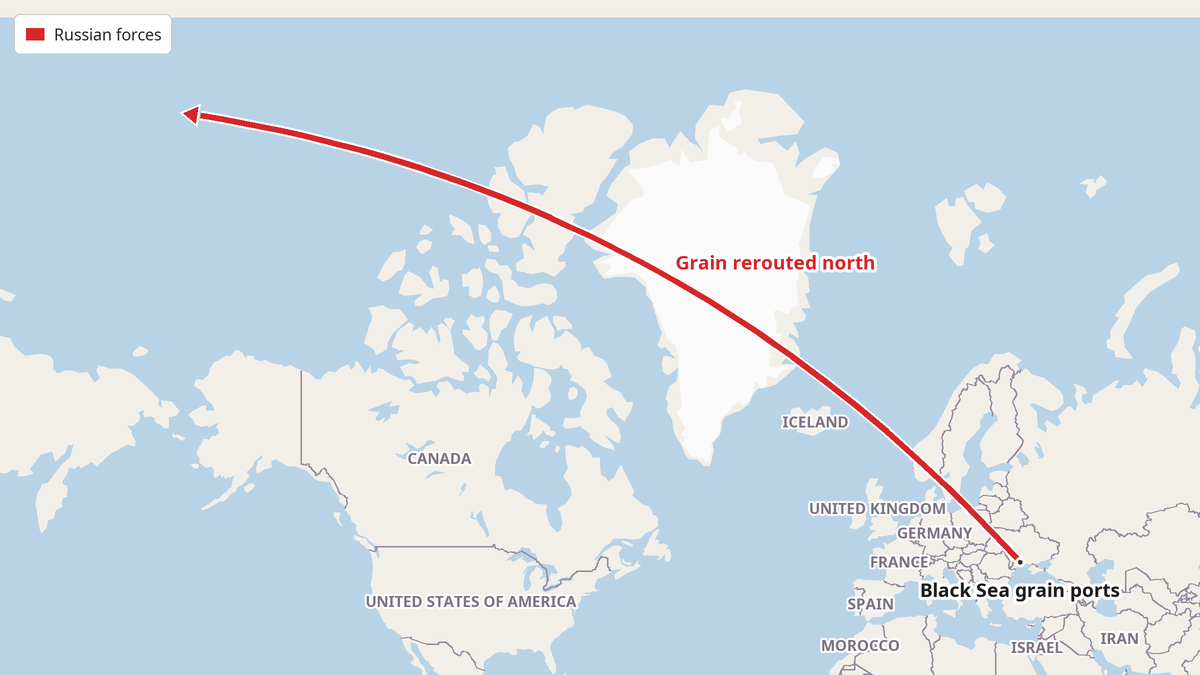
The Financial Times carries a report headlined "Russia forced to ship grain via Arctic as Black Sea battles rage." Only the headline was accessible; the article text is behind a paywall.
What the Corridor Shows
The Oleshky operation is notable for what it demonstrates. Two warring states, with a first lady and a pope as intermediaries, can organise the safe departure of residents from a front-line town when it serves a diplomatic purpose. The same machinery of negotiation, logistics and guaranteed passage exists. It is switched on when governments decide it's useful.
That capacity sits alongside a different reality for people fleeing other wars. The base reporting contains no figures on how many Oleshky residents are leaving, where they're going, or what status they'll hold on arrival. It also says nothing on whether European governments, excluded from the proposed negotiating format, will extend protection to those displaced. Those questions remain open as the operation proceeds.
What the record does show is a sequence of decisions made without the people affected. A trilateral format excludes Europe. Grain proposals from Turkey and India are under review in Washington. Evacuations are timed to a US electoral calendar. Civilians in Oleshky are moving because two governments want to be seen cooperating, ahead of midterms in a third country.
- ukraine-russia war
- donald trump
- volodymyr zelensky
- vladimir putin
- black sea ceasefire
- grain shipments
- g20 summit
- oleshky evacuation