
The Netherlands announced a 1.2 billion euro ($1.3 billion) package of non-military aid for Ukraine on Oct. 28, to be disbursed over three years and aimed at economic recovery, as Ukrainians in the east braced for another winter under Russian bombardment. Hours later, Ukrainian drones targeted the Moscow region overnight, and Russian authorities restricted flights at three of its four major airports.
Winter Aid for Ukraine's Cities and Villages
The Dutch package comes with two smaller commitments: 40 million euros ($45 million) for the Ukraine Energy Support Fund and 55 million euros ($62 million) for energy equipment from Dutch companies, channelled through the Netherlands Enterprise Agency. A separate Kyiv Independent news-feed item reported that the Netherlands also announced a 500 million euro military aid package following a Dutch ministerial visit to Kyiv, where the non-military aid was pledged.
Sjoerd Sjoerdsma, identified in the interview as the Dutch Minister of Foreign Trade and Development Cooperation, said Russian attacks continued to cripple critical infrastructure as Ukraine approached another harsh winter. The aid, he said, was meant to protect and restore energy and water facilities and to train people to prevent damage and keep systems running. The aim was to keep cities such as Kyiv, and small eastern villages, livable.
He described the assistance as an integrated process, not a one-off. The Netherlands tried to supply completed equipment, he said, but Ukrainian expertise was sometimes needed for installation and maintenance.
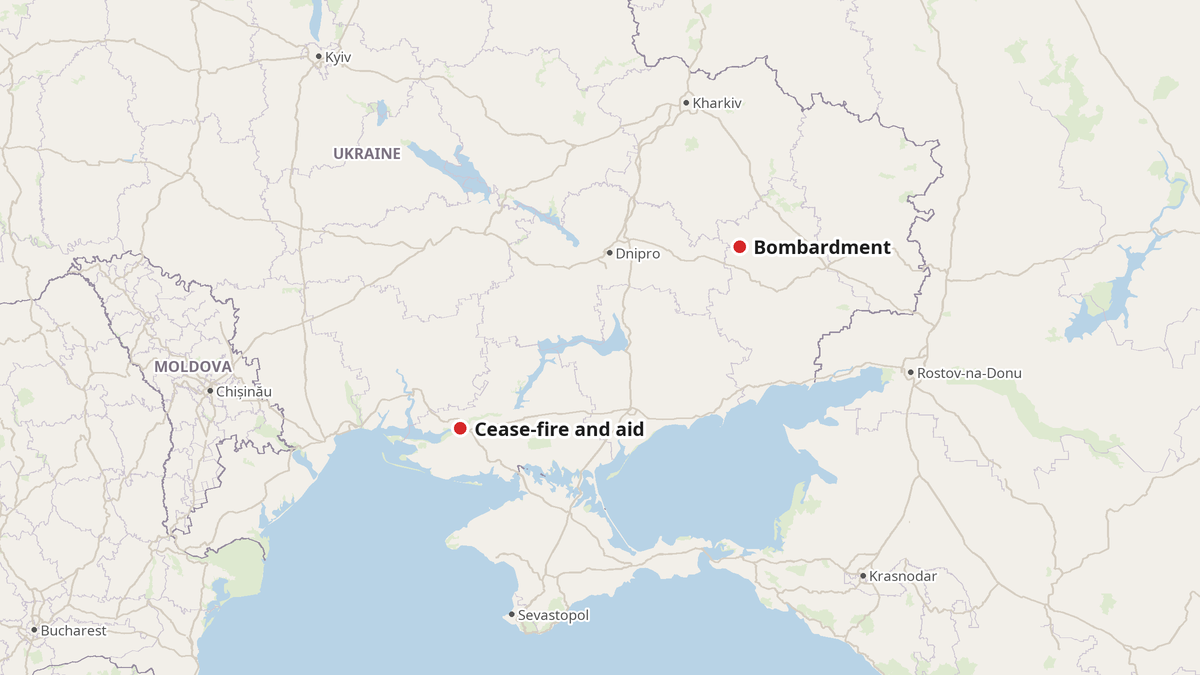
In Donetsk region, the stakes are visible. Russian bombs and artillery have devastated Bilozerske, leaving the city in ruins. With colder temperatures approaching, residents who remained were bracing for a rough winter.
'Your Security Is Our Security'
Sjoerdsma urged other European countries to increase support before winter arrives. "Your security is our security," he said. He also said the war could end if Russia stopped its aggression, and that the Netherlands saw no reason to do business with Russia. "So no, there cannot be business as usual with Russia," he said.
He was pointed about Washington. The Netherlands, he said, did not condone a diesel deal between the United States and Russia, which he argued legitimized the Russian government and reinforced its position. Since much of Ukraine's assistance came from the European Union, he said, the EU should also be a political player and use its influence to ensure Ukraine was at the table in cease-fire or peace-agreement discussions. "There's no talk about Ukraine without Ukraine in the driver's seat of what's happening," he said.
Sjoerdsma also framed the aid as a two-way relationship. Dutch firms operating in Ukraine include defense companies helping build missiles, Philips supplying essential medical materials, and smaller companies providing materials to bakers. He called their presence both a sign of solidarity and a business opportunity. Dutch businesses, he said, were learning from Ukraine's use of drones and its ability to restore critical infrastructure quickly, and reconstruction after the war could offer major assignments rebuilding hospitals, schools and ports.
Moscow Under Drone Fire
Moscow Mayor Sergey Sobyanin said Russian air defenses intercepted 57 drones in Moscow Oblast between 10:46 p.m. and 12:09 a.m. local time, then another 15 about two hours later, for a reported total of 72. The Kyiv Independent said the precise number launched was unclear because Russian authorities report interceptions, and it could not independently verify Sobyanin's claims. No casualties or damage had been reported.
Restrictions at Zhukovsky were lifted, while temporary limits remained at Vnukovo and Domodedovo. Two flights from Istanbul to Moscow turned back, TASS reported. Residents reported explosions near Naro-Fominsk, according to the independent Russian Telegram channel Astra.
October has seen repeated disruption. Flights at all four main airports were grounded during an attack on Oct. 23. On Oct. 22, Sobyanin said Ukraine struck a weapons plant, claiming more than 600 drones were launched overnight. On Oct. 6, Ukraine allegedly fired 650 drones at the region, causing a fire at a major oil facility.
A Pause in Oleshky, and a Call for Deterrence
A US-brokered cease-fire took effect on October 27 in the Russian-occupied suburb of Oleshky, allowing humanitarian aid to arrive and civilians to leave. Across the Dnieper in Ukrainian-held Kherson, locals said the pause brought a rare sense of normalcy: people shopped and walked the streets without fear of air strikes.
Separately, Czech parliamentarian Marek Zenisek, Vice-President of TOP 09 and a former chairman of the Czech Parliament's Foreign Affairs Committee, argued in an opinion piece that Europe should move beyond recognizing hybrid threats and build stronger deterrence against Russia. He pointed to an incendiary package that caught fire at Leipzig airport on July 20, 2024, followed by similar incidents in Poland and the U.K. German security authorities did not issue a wider warning to aviation and logistics sectors until Aug. 28, more than five weeks after the first incident. A subsequent investigation linked the incidents to a broader Russian sabotage campaign.
Zenisek called for governments to assess incidents together, prepare credible consequences before another serious incident while keeping strategic ambiguity about the exact response, remove unnecessary legal and institutional obstacles, and make clear that repeated aggression would not go unpunished. Europe could not prevent every hostile operation, he said, but could make them harder. The Kyiv Independent noted that op-ed opinions are the authors' own.
Why This Matters: For Ukrainians in places like Bilozerske, the difference between a livable winter and a lethal one depends on whether water and power systems get repaired faster than Russia can destroy them. The Dutch pledge shows what European solidarity looks like in practice, but Sjoerdsma's own appeal to other capitals to step up before winter shows the effort is uneven. His warning that Ukraine must not be discussed without Ukraine, and that the EU should claim a political seat at the table, points to a gap between Europe's financial weight and its diplomatic one. Zenisek's account of a five-week delay in a continental warning is a reminder that coordination across 27 states is still a work in progress. Humanitarian pauses like Oleshky offer relief for civilians, but they don't substitute for a settlement that Ukraine itself shapes.
- ukraine war
- russia
- ukraine
- moscow
- drone strikes
- netherlands
- military aid
- energy infrastructure