
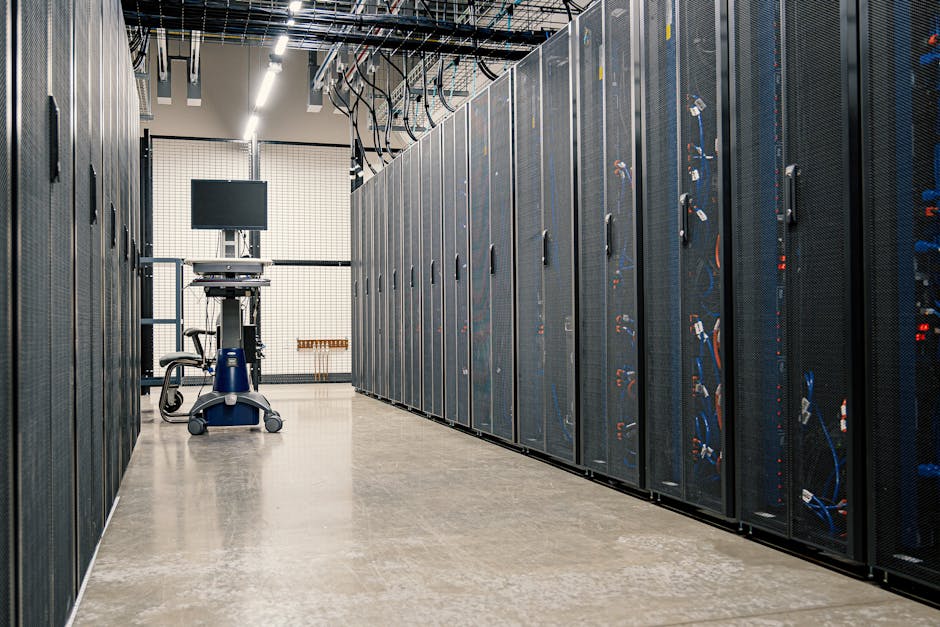
Data centers had raised wholesale electricity prices by 6.9 percent, according to a Federal Reserve Bank of Dallas working paper. During the 2026 midterm elections, voters rejected or appeared on track to reject data-center development in all but one of 41 ballot measures. Two races were still being counted, but majorities against or limiting development were expected.
Michael Swartz, a senior software developer in Harwood, North Dakota, helped organize a campaign for public review of industrial projects, including data centers. “Long term, there's some really serious implications that I don't think have been fully fleshed-out, or vetted, or even are getting talked about, at the scale that I think they need to be addressed,” he told Fortune.
Who Pays for Expansion
As of April, the Pew Research Center estimated that the United States had 3,000 data centers, with more than 1,500 others in progress. Artificial intelligence growth has helped drive the construction boom. These facilities consume large amounts of water and energy, and critics say the demand can raise electricity costs for nearby communities.
James Mercer, founder of Metro Colo Advisory, said residents were resisting projects because of the power they require. “What they push back on is a building down the road that needs as much power as a small city, when they suspect their own electric bill will cover it,” he said. “That's why local resistance has grown so fast: counties pausing new projects, zoning fights and data centres turning into a ballot issue.”
A September poll found that 70 percent of Democrats and 57 percent of Republicans supported limits on new data-center construction. Bhaskar Chakravorti, dean of global business at Tufts University, said voters worried about job stability, economic effects, and the local consequences of new facilities. “People worry about their jobs and what it might mean from a broader economic perspective,” he told Al Jazeera. Voters, he said, were seeing energy costs “in their energy bills.”
Harwood stood alone among the ballot measures tracked by Data Centers on the Ballot, a project run by Redbud Consulting. About 75 percent of voters there—325 of 430 ballots cast—opposed a measure requiring independent reviews and public hearings for large industrial projects. A separate report covered 45 data-center ballot measures and also identified Harwood as the only one to favor development.
The State and the Developer
Applied Digital Corp. selected Harwood for its cooler climate, access to energy, and “pro-business landscape,” said Nick Phillips, the company’s executive vice president of external affairs. The 160-acre project, with Oracle as the end-user, was scheduled to be fully operational next year and could grow to 900 acres.
A North Dakota tax incentive exempts Applied Digital Corp. from the state’s 5 percent sales tax on computers, cooling systems, and servers. Mayor Blake Hankey said the data center would generate $1.65 million in taxes by 2028. Town officials opposed the ballot measure, citing administrative burdens, while City Councilman Chris Higgins and other officials feared the company could de-annex the project and take its tax benefits with it.
Residents learned about construction about three weeks before work began in September 2025, according to Swartz. The Fargo Forum reported that then-Fargo Mayor Tim Mahoney and Harwood Mayor Blake Hankey signed nondisclosure agreements with Applied Digital Corp. in July. “When all of this came about, it was like being hit between the eyes with a sledgehammer,” Swartz’s wife, Amanda, told Fortune. “People deserve a say in projects of this scope.”
Swartz said he couldn't speak at a city council meeting. He then contacted residents and formed Voices of Harwood. The group drafted a Home Rule Charter amendment and collected 91 petition signatures in three days, more than twice the 40 required. The Fargo Moorhead West Fargo Chamber of Commerce distributed materials opposing the measure, saying passage could cost taxpayers $300,000 to $544,000 and increase annual taxes through lost projects.
Regulation and the Election
Democrat Gina Hinojosa called for a moratorium on new data-center approvals until stronger local protections were in place, then defeated incumbent Greg Abbott in Texas’s governor’s race. Senator-elect James Talarico, who pledged increased regulation, proposed closed-loop water systems and called on operators to fund local infrastructure improvements. He won Corpus Christi by 12 percentage points; earlier in the year, severe drought conditions had left the city’s reservoir at 8 percent of total capacity.
Democrat Abdul El-Sayed called for a federal agency to oversee the AI industry and won his Senate race with more than 52 percent of the vote. Democrats were poised to control both chambers of Congress, and lawmakers were expected to use oversight committees to investigate AI. Alex Turner, a former researcher who resigned from Google DeepMind, told Al Jazeera that lawmakers were “more likely to get real regulation and oversight.”
OpenAI responded after the election with a framework pledging to “prioritize closed-loop or low-water cooling” and “pay our own way on energy and infrastructure.” Days before the election, the company had sought to rebrand its data centers as “compute campuses.” Investors anticipated tighter oversight. Nvidia lost $450 billion in market value in one trading day on Thursday, while CoreWeave remained down 16 percent over the previous five days.
- data centers
- artificial intelligence
- 2026 midterm elections
- data-center ballot measures
- electricity costs
- ohio
- texas
- ai regulation