
A US military aircraft fired precision munitions into the stern of the St. Kitts-flagged cargo ship M/V Huda on Saturday, November 7, 2026, after CENTCOM directed the crew to abandon targeted spaces. The ship had visited an Iranian port and, according to CENTCOM, ignored repeated warnings while trying several times to leave regional waters. It's the fifth merchant vessel the US has disabled since enforcement began, a tally CENTCOM offers like a sales figure.
The numbers come from the shooters themselves. CENTCOM says enforcement actions since July have redirected 147 commercial vessels that complied and disabled five that refused. It says it previously destroyed 10 Iranian commercial oil tankers, which it describes as part of the IRGC's "multibillion-dollar shadow network." It estimates the blockade has kept Iran from exporting more than $25 billion in crude in recent months. The US Treasury, meanwhile, sanctioned eight Canada-based money services businesses on Friday under Operation Economic Outcast, a name that sounds like a bad action movie and works like a paper blockade on top of the naval one.
The Apparatus Gets a New Office
On the same day, CENTCOM Commander Admiral Brad Cooper directed the creation of Task Force Iron Gate. One report says he ordered it Saturday; another says Friday. It's an internal staff of roughly 20 civilian and military personnel in Tampa, Florida, tasked with coordinating with other US agencies to choke off the movement of weapons systems, dual-use technologies, sanctioned materials and illegal revenue across Iran's land borders and the Caspian Sea.
"The establishment of Task Force Iron Gate reinforces the success of our ironclad blockade against Iran at sea," Cooper said. He added that the team will "constrain Iran's ability to finance terrorism, rebuild weapons factories, and replenish their military." Twenty people in Florida, then, to reorganize the economic life of a border region.
Michael Mulroy, a former US deputy assistant defence secretary for the Middle East, told Al Jazeera what the new office is for. It will find out where "weapons systems are coming in, how they could potentially be cut off" and how "Iran is transporting its energy." If President Donald Trump orders an escalation, Mulroy said, it will likely target "economic and infrastructure targets," unlike Operation Epic Fury, which primarily focused on military ones. The stated goal is to cut "the regime off from its ability to fight and ability to fund itself." Economic and infrastructure targets are, of course, where ordinary people live and work.
The Other Side Does It Too
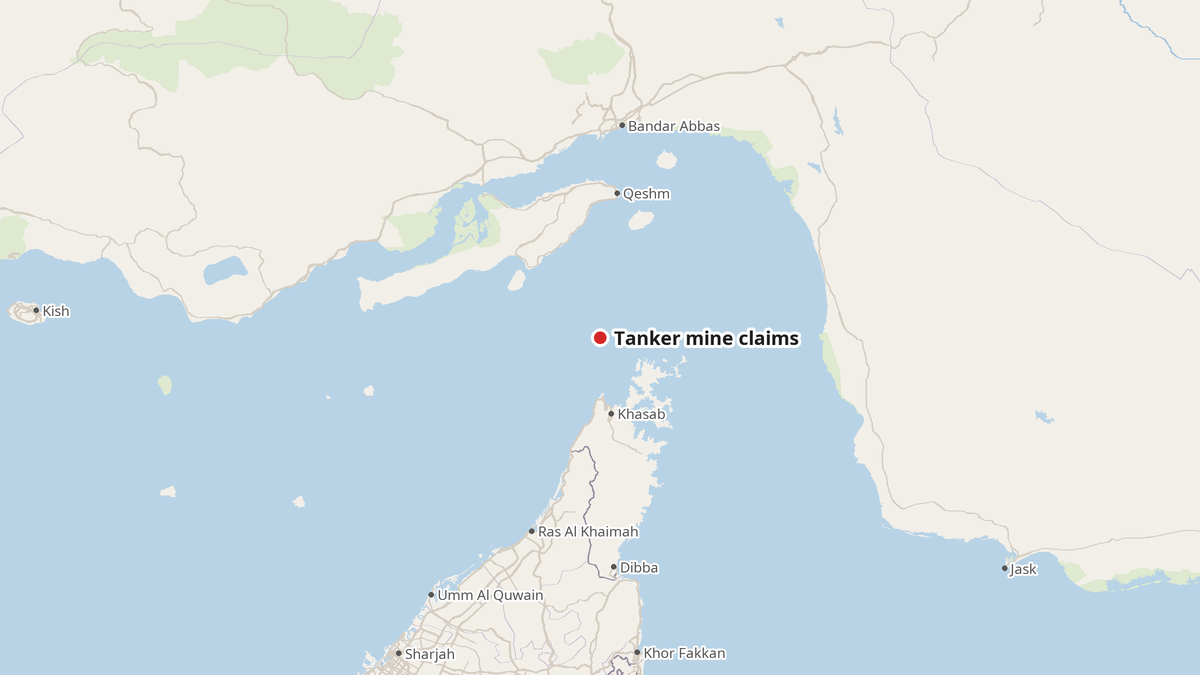
Iran's state broadcaster IRIB reported early Sunday that two oil tankers were ablaze after striking mines, citing the IRGC Navy. The navy said both had turned off navigation and tracking systems and tried to cross an unauthorized route through the Strait of Hormuz. Its warning was blunt: "Any vessel or ship that cooperates with the aggressive and predatory U.S. military, defies Iranian regulations regarding the Strait of Hormuz, and enters unauthorized zones will certainly strike a mine."
Read the two statements side by side. Washington disables ships that won't obey its blockade. Tehran mines ships that won't obey its shipping rules. Each state claims sole authority over a waterway through which approximately one-fifth of global oil supplies passed before the war, and each enforces that claim on crews who didn't write either rulebook. The UAE said it rescued 22 people from a cargo ship that caught fire in the Gulf of Oman. The sources don't link that incident to the Huda, and nobody has said who those 22 people were or what flag they sailed under.
Talks, Strikes, Repeat
Iran's official news agency IRNA reported the sound of two explosions on Qeshm Island and several explosions in Jask, Sirik and Bandar Abbas on Saturday. Trump confirmed new strikes on Qeshm a day earlier but called them "minor," adding that Tehran still wants a deal. Qatari-mediated talks continue without a comprehensive agreement, with disagreements persisting over Iran's nuclear program, sanctions relief and the reopening of the Strait of Hormuz. Trump has also been threatening a new offensive, and Tehran has threatened broad retaliation against Gulf infrastructure, Reuters reported.
The war broke out in late February, about nine months ago. The blockade began in August, about three months ago. In that time the diplomacy has produced a task force, a sanctions initiative and a body of statistics. The strikes continue while the negotiators talk, and the people with the least say in any of it are the crews who step aboard a ship and find themselves on a target list.
- us navy
- iran
- strait of hormuz
- naval blockade
- m/v huda
- centcom
- shipping
- iran sanctions