
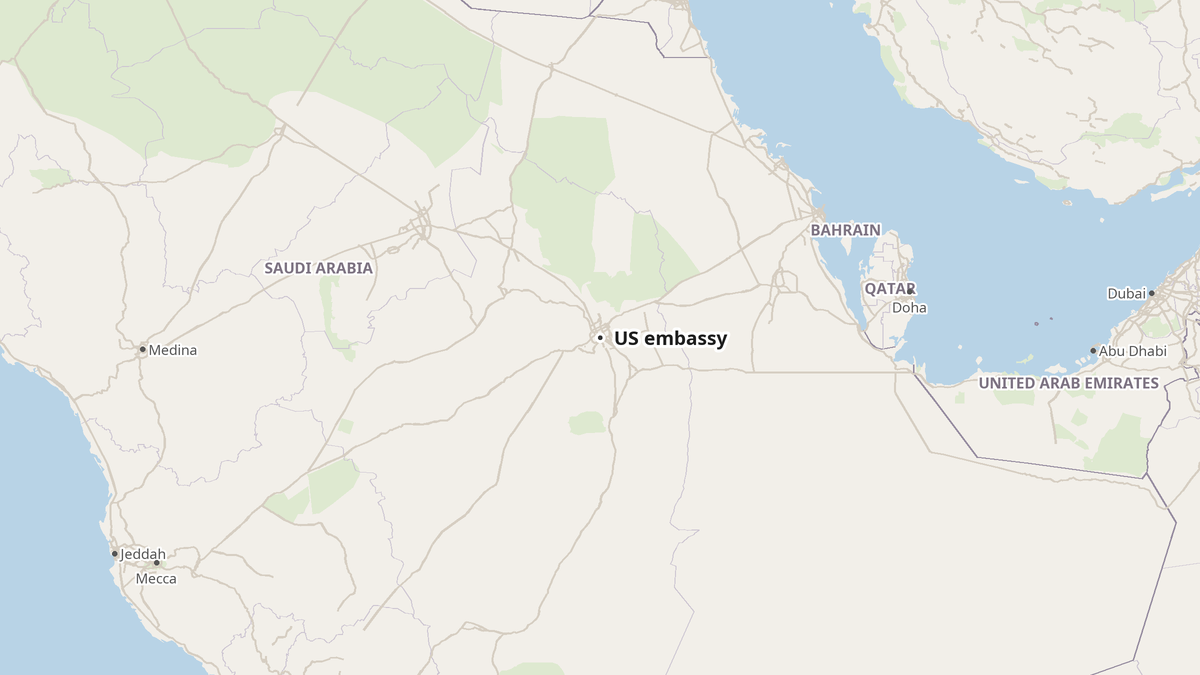
The United States ordered non-emergency government employees and their family members out of Saudi Arabia, effective October 23, citing safety risks and Houthi attacks on civilian airports and other critical infrastructure, the US embassy in Riyadh said on Friday. That order took effect eight days before today. The diplomats get a departure order. Everyone else gets the airspace closures.
The embassy's own wording tells you who the system is built to protect. US government employees need special authorization to use Saudi airports following recent missile and drone attacks, the embassy said. It warned US citizens of potential further attacks, airspace closures, flight cancellations and other travel disruptions. A flight cancellation is an inconvenience for a family with a departure order and an exit plan. For people who can't leave, it's the weather.
The State's Monopoly
The fighting between Yemen's Iran-aligned Houthis and the Saudi-led coalition backing Yemen's government has intensified in recent weeks, opening what the wire copy calls a volatile new front in the wider US-Israeli war on Iran. Read that sentence twice. Yemen, a country already ground down by years of coalition-versus-Houthi warfare, is now a front in somebody else's war, with a Washington-and-Jerusalem label on it. Nobody in Yemen's villages was asked.
Yemen's government armed forces spokesperson said the Houthis hit Aden airport and the Maashiq presidential palace complex with ballistic missiles. The statement gave no details on casualties, damage, or whether the missiles hit their intended targets. That's a state spokesperson announcing an attack without telling anyone who got hurt. The palace gets named. The people near the airport don't.
The Saudi-led coalition said it intercepted and destroyed a Houthi drone over Saudi Arabia's Medina region, home to one of Islam's holiest sites and visited by millions of Muslim pilgrims each year. Both armies fight under the banner of defense. Both fire at infrastructure that civilians depend on. The Houthis, who run their own territory with their own coercive apparatus, claimed the strike on King Khalid Airport in Riyadh on October 8, 23 days ago, when a social media video screengrab showed smoke and flames rising from the facility.
Who Gets Crushed
Airports aren't palaces. They're where migrant workers fly home, where pilgrims land, where the sick leave for treatment. Yet when the Houthis target them, and when the coalition and its patrons escalate in response, the language that comes back is about asset protection and authorization procedures. The embassy's advisory is a document written for those with a ticket out.
The base reporting contains no word from anyone on the ground in Aden or Riyadh or Medina. No traveler, no airport worker, no resident of the neighborhoods around the palace complex. The only voices are an embassy notice, a government armed forces spokesperson and a coalition statement. Three institutions of organized force, speaking about each other's violence in their own favor.
Both Sides of the Same Coin
What the facts show is a loop. A US-Israeli war on Iran spawns a Houthi front. The Houthis fire missiles and drones at airports. A Saudi-led coalition shoots drones from the sky. Washington pulls its non-essential people out and tells the rest to expect disruption. Each actor claims to be reacting to another. None of them is accountable to the people living under the flight paths.
The embassy order doesn't end the war or shorten it. It simply sorts the region into those with an evacuation channel and those without one. That's the apparatus working as designed.
- us saudi arabia
- houthi attacks
- saudi arabia
- yemen
- riyadh
- non-emergency staff
- us embassy
- missile attacks