
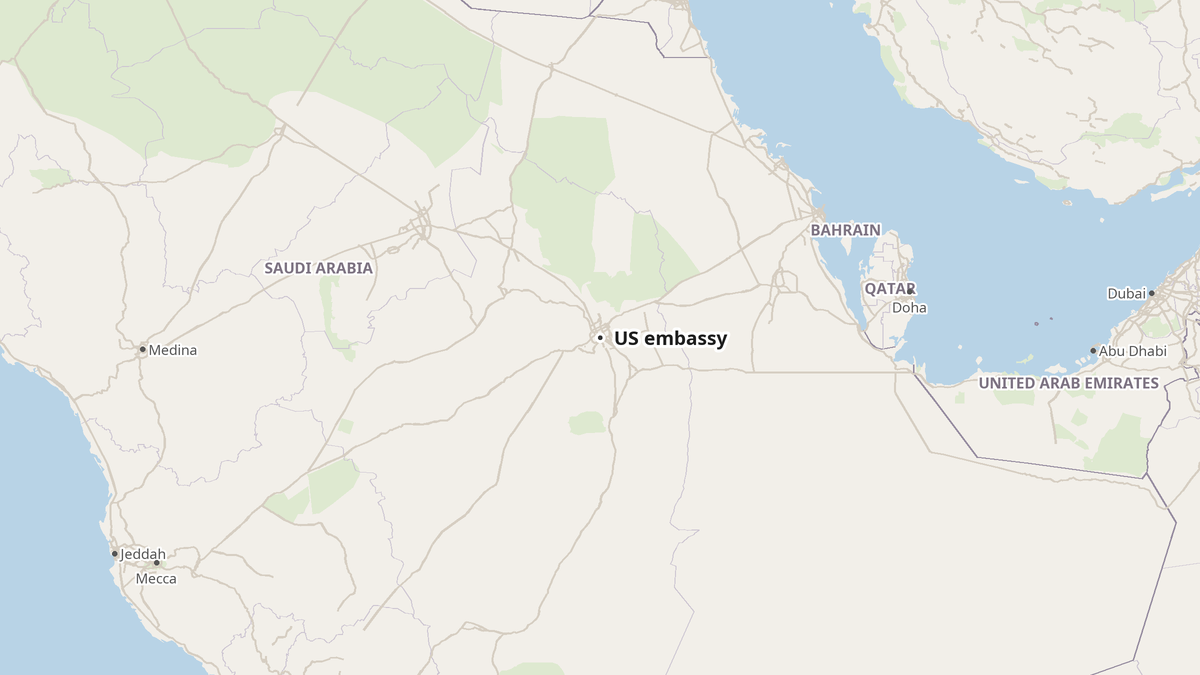
The United States ordered non-emergency government employees and their family members to leave Saudi Arabia effective October 23, the US embassy in Riyadh said on Friday, citing Houthi attacks on civilian airports and other critical infrastructure. That order took effect eight days before today.
It's a rare step, and the embassy's reasoning was blunt. US government employees now need special authorization to use Saudi airports following recent missile and drone attacks. The embassy warned American citizens to expect potential further attacks, airspace closures, flight cancellations and other travel disruptions.
The Security Picture
The Houthis, Yemen's Iran-aligned militia, have been hitting civilian targets, not military ones. A social media video screengrab showed smoke and flames rising from King Khalid Airport in Riyadh on October 8, 2026, after the Houthis said they attacked the facility. That strike came 23 days before today's date.
The pressure hasn't been confined to Saudi territory. Yemen's government armed forces spokesperson said the Houthis attacked Aden airport and the Maashiq presidential palace complex with ballistic missiles. The statement gave no details on casualties, damage, or whether the missiles struck their intended targets.
The Saudi-led coalition fighting in Yemen said it intercepted and destroyed a Houthi drone launched over Saudi Arabia's Medina region. Medina is home to one of Islam's holiest sites and receives millions of Muslim pilgrims each year. A militia willing to send drones toward that region isn't operating under any recognizable restraint.
The Regional Threat
The fighting between the Houthis and the Saudi-led coalition backing Yemen's government has intensified in recent weeks. It has opened what the base reporting describes as a volatile new front in the wider US-Israeli war on Iran.
That framing matters. The Houthis are Iran-aligned, and their missile and drone campaign against airports and infrastructure in Saudi Arabia and Yemen extends Tehran's reach well beyond its own borders. Civilian aviation, pilgrim travel and diplomatic staffing are all now exposed to a proxy force that fires ballistic missiles at airports and presidential compounds.
For Washington, the departure order is a practical acknowledgment of risk to American families in a partner state. For Riyadh, it's a signal that even the Kingdom's air defenses, which intercepted the Medina-region drone, can't guarantee that every launch is stopped before it reaches a populated area.
What Comes Next
The embassy's warning of further attacks suggests no near-term de-escalation is expected. The special authorization requirement for Saudi airports points to a prolonged period of disrupted movement for US personnel, and for any traveler relying on affected airspace.
The coalition's interception of the Medina-region drone shows defensive capability, but the strikes on Aden airport and the Maashiq palace complex show the Houthis can still reach Yemeni government targets with ballistic missiles. No casualty figures have been released for those attacks.
Why This Matters:
When the United States pulls non-emergency staff and families from a close Gulf partner, it reflects how far Iran's proxy network can project force. The Houthis aren't confined to Yemen's battlefield. They're striking airports and infrastructure across borders, and the threat now reaches a region that hosts millions of pilgrims annually. For governments weighing how to respond, the episode is a reminder that Iran-backed militias can turn a local war into a regional one, and that deterrence and air defense, not statements of concern, determine whether civilians and diplomats stay safe.
- us saudi arabia
- houthi attacks
- saudi arabia
- yemen
- riyadh
- non-emergency staff
- us embassy
- missile attacks