
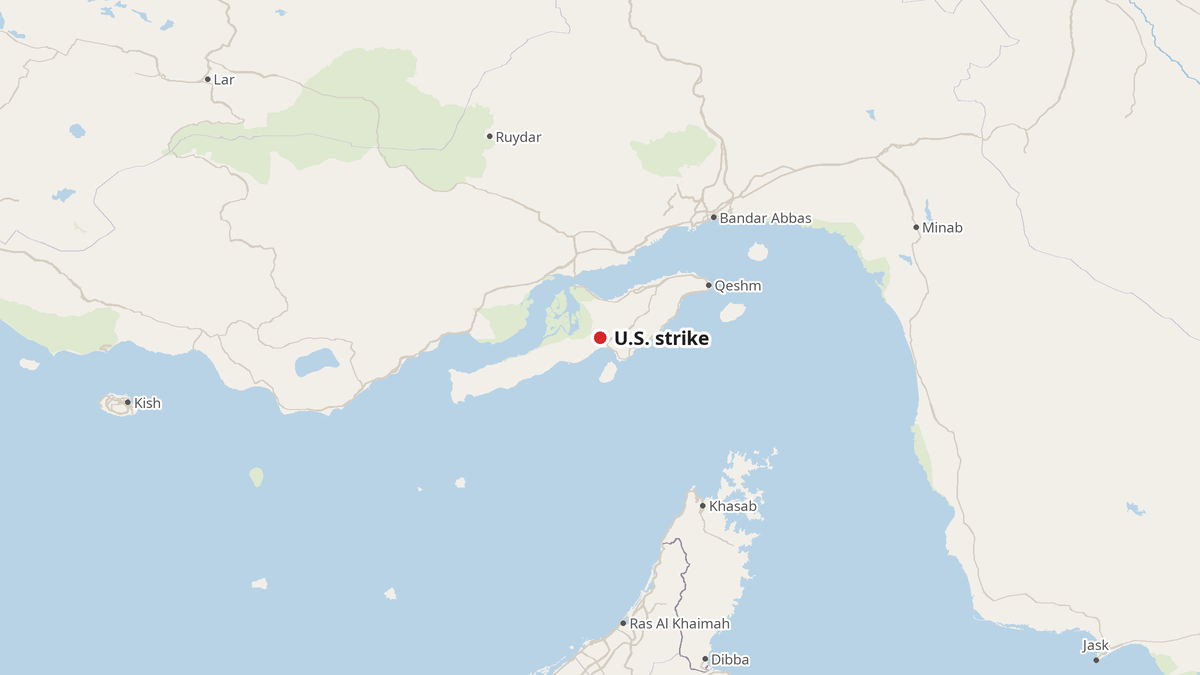
The U.S. military struck radar detectors and missile launchers on Iran’s Qeshm Island on Monday, one day before the U.S. midterm elections. Mediators are still pushing the two sides toward a peace deal. The report offers no further details about the strike, but it sets military force alongside diplomatic pressure: the military acts while mediators try to move negotiations forward. It doesn’t say more.
Military Power, Sparse Details
The report names radar detectors and missile launchers as the targets. It identifies the U.S. military as the force behind the strike and Qeshm Island as its location. But it doesn’t say how the military carried out the strike, whether it destroyed the targets, or whether anyone was injured or killed. Those limits matter. A short report can identify the state actor and its targets without explaining what the use of force means for people on the island or elsewhere.
The account describes no public decision-making process, local participation, or community response. The people most exposed to the consequences of military action don’t appear as speakers. Instead, the available facts focus on the institution capable of striking and the mediators trying to secure an agreement between the two sides. That’s the hierarchy the report presents: the state exercises force, while mediators conduct negotiations as a route away from further conflict.
The report also states the timing plainly. The strike happened on Monday, one day before the U.S. midterm elections. It doesn’t say the elections caused the strike, influenced its timing, or changed military policy. The report gives a date relationship, not an explanation. Treating that proximity as proof of political motive would go beyond the facts provided.
Mediators Push for a Deal
Mediators continue pushing the two sides to reach a peace deal. The account doesn’t name them, describe their proposals, or say whether either side has accepted terms. It gives no public timetable or details about what a deal would include. The diplomatic effort is there; its substance isn’t.
That gap leaves the central facts stark. The U.S. military has carried out a strike, and negotiations continue. The report doesn’t establish whether the strike affected the talks. Nor does it say a deal is near. It mentions no elections as a route to ending the conflict, legislative action, grassroots organizing, mutual aid, or direct action. No nonprofit or other institutional helper appears in the account. Those absences can’t be filled with imagined scenes or claims. They mark the limits of what this report supports.
For now, the account records a U.S. military strike against radar detectors and missile launchers on Qeshm Island, followed by mediators’ continuing effort to secure a peace deal. The military action is concrete. The terms, prospects, and human consequences remain unreported. People outside the negotiating rooms and beyond the stated targets don’t appear in the brief account; institutions wielding force and pursuing diplomacy occupy its entire frame.
- qeshm island
- iran
- u.s. military
- airstrike
- radar detectors
- missile launchers
- peace deal