
Debris from two intercepted ballistic missiles smashed into a building, a construction project and a vehicle in Riyadh on Tuesday, Saudi Civil Defense said, after an air-raid alert sent residents scrambling for cover in the capital. It was the most visible civilian damage from a day of fire that Yemen's Houthi movement says reached as far as Saudi Arabia's largest oil refinery.
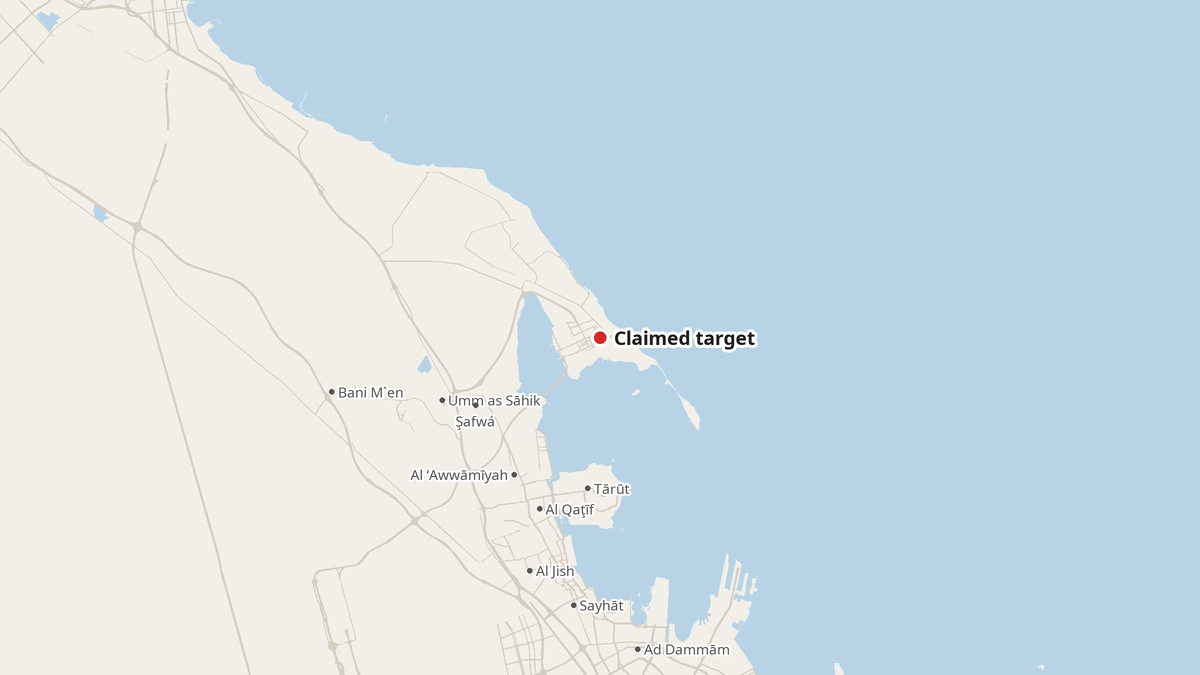
The Houthis' military spokesperson, Yahya Saree, said on Oct. 27 the group had struck the Ras Tanura refinery with a ballistic missile and started a fire at the complex, which includes a shipping terminal on the Gulf west of the Strait of Hormuz. Saudi authorities didn't immediately confirm the strike. Bloomberg News, citing a person familiar with the matter, reported that Saudi Arabia had contained a fire near the terminal.
Civilian Toll
The base facts don't include casualty figures, and that gap matters. What is documented is property damage in a densely populated capital, and an air-raid alert that interrupted an ordinary Tuesday afternoon. Debris from intercepted weapons falls somewhere. This time it hit a building, a construction site and a car.
The Saudi-led coalition said it intercepted much of what was fired at the kingdom, though accounts differ on the numbers. Asharq Al-Awsat reported the Coalition to Restore Legitimacy in Yemen downed three ballistic missiles fired toward the Eastern Region, intercepted two headed for Riyadh and destroyed four drones fired toward the Southern Region. Khaleej Times reported three missiles and four drones intercepted. Al-Monitor reported the coalition said it destroyed two ballistic missiles launched toward Riyadh.
The Houthis also claimed attacks on two military transport jets at Najran Airport and an airbase in Khamis Mushait. Al-Monitor's fetched text further reports Houthi claims of strikes on the Saudi defense ministry building in Riyadh and Abha airport. Riyadh hasn't confirmed any of them. Houthi-affiliated Al Masirah TV, for its part, reported Saudi strikes on the Yemeni city of Mocha, which Saudi authorities also haven't confirmed. No casualty counts from Mocha appear in the reporting, but strikes on a populated city carry risks for civilians that the available accounts leave unanswered.
The Road to Peace
The exchange has shattered a 2022 U.N.-brokered truce between the coalition and the Houthis, who control Yemen's capital, Sanaa. That truce, now in its fourth anniversary year, had been among the few diplomatic achievements in a long and punishing war.
Ground fighting is moving too. The Houthis said they repelled an advance by Saudi-backed forces from the southern approaches to the Bab el-Mandeb Strait, an important Red Sea shipping route. Earlier this month, Saudi-backed Yemeni government forces pushed the Houthis from coastal areas the group seized in September, loosening its control over a vital Red Sea oil route.
Ras Tanura is the kingdom's largest refinery, with capacity of 550,000 barrels per day. It was shut for a period in the early months of the Iran war as a precaution. Nearly all Saudi oil exports pass through Ras Tanura and Yanbu on the Red Sea, and the Houthis have attacked both ports before.
Diplomatic Options
Al-Monitor reported that the intensifying hostilities have disrupted oil supplies and raised the risk of a wider regional conflict, eight months after the Iran war began. Diplomacy is running alongside the fighting. On Oct. 26, Saudi Arabia, Turkey and Pakistan met Iranian officials in Tehran in an effort to reduce regional tensions. Egypt's parliament, which had said it was considering joining the three countries in a mutual defense pact, authorized the Egyptian military on Monday to help defend Saudi Arabia if asked.
The two tracks pull in opposite directions. One brings officials to a table in Tehran. The other lines up armies to defend against the next barrage.
Why This Matters:
A truce that held for years is now broken, and the people who pay for its collapse are rarely the ones who fire the missiles. Debris over Riyadh and reported strikes on Mocha show how quickly the danger spreads to places where ordinary people live. The pattern is familiar across the region: military escalation moves faster than diplomacy, and civilians absorb the consequences. With Egypt authorizing troops to defend Saudi Arabia and Turkey and Pakistan engaging Tehran, the risk of a wider war is rising even as officials say they want to lower tensions. The record suggests that diplomatic channels, once they narrow, are hard to reopen. The 2022 truce showed that restraint in Yemen was possible. Its collapse shows how fragile it was.
- ras tanura refinery
- houthis
- saudi arabia
- ballistic missiles
- drones
- yemen conflict
- oil supplies
- red sea shipping