
Yemeni government forces said they carried out 1,276 strikes on Houthi targets in a single 24-hour period, an offensive of striking scale in a country where civilians have little room to run from the fighting. Military spokesman Col. Majed Al-Nuzaili announced the figure as part of a campaign the government calls Dawn of Yemen, aimed at the Iran-backed Houthi group.
The numbers come from one party to the conflict, and the base reporting offers no independent verification. Neither does it say what happened to the people living near the front lines.
What the Government Says It Hit
According to Al-Nuzaili, the strikes targeted command-and-control centers, defensive positions, reinforcements, supply and transport assets, and weapons and ammunition depots. In a post on X late Monday, he said forces also carried out precision operations deep behind Houthi lines, meant to disrupt the group's ability to direct combat, regroup and reinforce front-line positions.
On the Taiz front, he said, government troops backed by the Popular Resistance launched surprise attacks across several sectors, with concentrated airstrikes. "The strikes helped suppress Houthi fire, hinder reinforcements and improve government forces' positions on several hilltops and other strategic locations," Al-Nuzaili said.
Coordinated operations continued on the Jouf, Marib and Al-Bayda fronts, as well as in the south and southwest. The spokesman said they targeted Houthi movements, defensive positions and supply lines, and limited the group's ability to move reserves between fronts or concentrate forces in one sector. He put the Houthi toll at about 382 commanders and fighters "neutralized," with 140 vehicles and heavy weapons destroyed or disabled, along with several weapons and ammunition depots.
Those are military claims. What they don't tell you is how many civilians live in or near Taiz, Marib, Jouf and Al-Bayda, or what a day of more than a thousand strikes means for them. The base article doesn't say. That silence matters in a war where the people on the ground are rarely the ones announcing the tallies.
Houthi Attacks Reach Saudi Territory
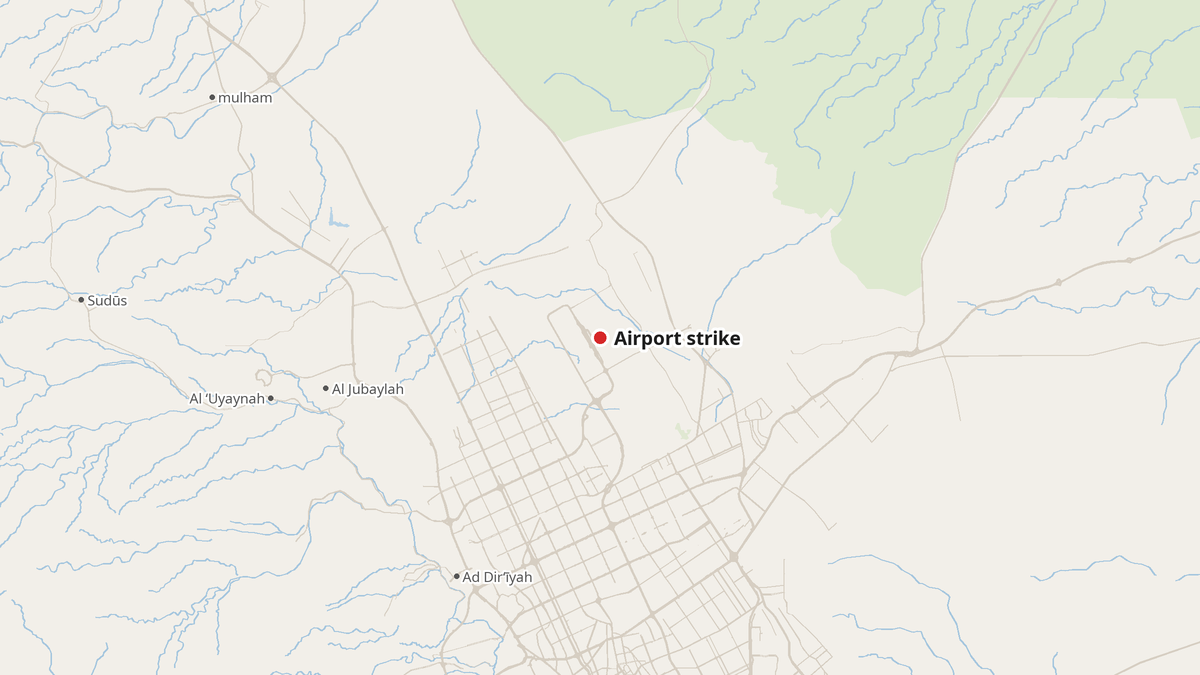
The fighting isn't confined to Yemen's fronts. Separately, the Houthis claimed fresh attacks on Saudi Arabia's East-West oil pipeline pumping stations and on Riyadh's airport. Ynet reported that two airport terminals had resumed operations only a day earlier, after previous attacks forced their closure. Saudi authorities hadn't immediately confirmed the latest Houthi claims.
The pipeline carries oil across Saudi Arabia to the Red Sea port of Yanbu, bypassing the Strait of Hormuz. A pumping station strike had disrupted the route about a month earlier. During the war with Iran, Saudi Arabia used the pipeline to divert about 4 million barrels of oil per day to Yanbu, roughly 4% of global supply, according to a report cited by Ynet. The route was described as a crucial alternative for Saudi oil exports while shipping through the Strait of Hormuz was severely disrupted.
So the war has a second front, one that touches global energy supply and civilian air travel in the Saudi capital. Closed terminals and struck pumping stations are the kind of damage that spreads well beyond the combatants.
Why This Matters:
A single day of 1,276 strikes, and a pipeline that carries roughly 4% of global oil supply under repeated attack, show how a Yemeni war is spilling across borders. Each side's account comes from its own spokesmen, and the civilian cost goes unreported in the claims. From a humanitarian standpoint, that gap is the story: the people living along the Taiz, Marib, Jouf and Al-Bayda fronts have no say in either campaign. Without a political track alongside the military one, escalation on both sides, from government offensives to attacks on Saudi infrastructure, tends to widen the war rather than end it.
- houthis
- yemen conflict
- saudi arabia
- riyadh airport
- east-west oil pipeline
- yemeni government forces
- military strikes
- oil exports