
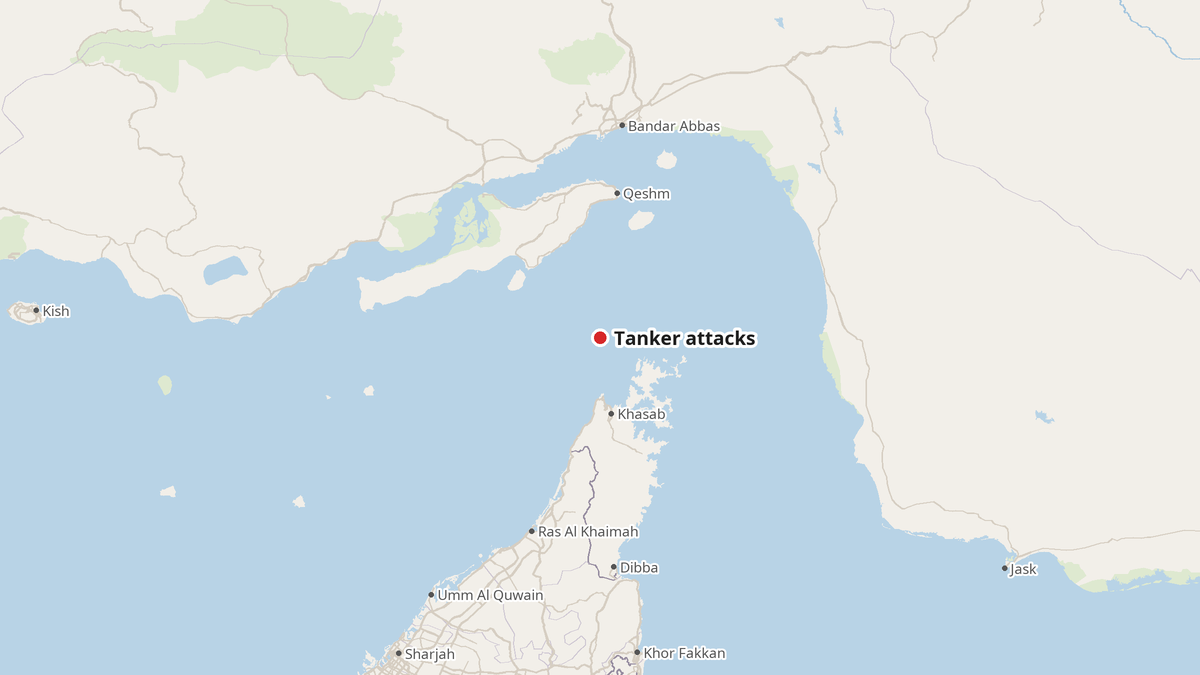
A US military aircraft fired on and disabled a St Kitts-flagged cargo vessel that tried to leave regional waters after visiting an Iranian port, US Central Command said. The ship's offence, by that account, was departing after a call at an Iranian port. It's the latest incident in a US naval blockade of Iranian ports that Washington keeps enforcing even as the president declares the war over.
A Blockade Enforced by Force
President Donald Trump told reporters on Monday that "Iran, militarily, is effectively over. We're just keeping it the status quo." He added that further military action "won't be necessary," then qualified it: "If we do have to go back in, we are locked and loaded, and ready to go." In a Truth Social post he spoke of "positive momentum" to end what he called the eight-month war.
Secretary of State Marco Rubio said on Tuesday there was "no need" for major combat operations because of the administration's efforts to crush Iran's economy. The blockade is the instrument of that effort. Trump and senior members of his administration have admitted the midterm loss on November 3, eight days ago, was caused in part by the war. Crude prices hit two-month lows on Tuesday after US officials downplayed the need for more military action.
The gap between the rhetoric and the record is wide. The US military has carried out multiple rounds of strikes on Iran's Qeshm Island, targeting sites used by the IRGC to launch missiles and drones. US officials have described those attacks as "defensive." The two sides keep trading intermittent strikes, and the Washington Institute for Near East Policy counted 37 ships attacked in October, the highest monthly total since the war began in late February.
Seafarers and Coastlines Pay the Price
The International Maritime Organization has confirmed 130 incidents, most of them attacks, in the region since the conflict began. At least 25 seafarers have been killed. The war is now in its ninth month.
The damage isn't confined to hulls and crews. Oil is leaking from damaged tankers. A video shared on social media on Monday and verified by Reuters showed oil reaching the shores of Oman, and satellite imagery showed spills off the coasts of Oman and the UAE. The Omani government didn't respond to Reuters' request for comment on Tuesday.
On Tuesday afternoon, ADNOC Logistics and Services said one of its vessels sustained damage in an attack in the UAE's territorial waters. The company said response efforts were ongoing. The IRGC said separately that two tankers caught fire after hitting naval mines on what it called an "unauthorized route" in the strait, and that at least 12 vessels were hit by mines last week while trying to transit. Iran said three oil tankers were on fire in Hormuz. UKMTO said another tanker was struck northeast of Oman's Lima but didn't say who struck it.
Strikes Spread Across the Gulf
Iranian state media reported on Tuesday that Omani island Didamar, which reportedly hosts radar and communications infrastructure, was targeted for "helping the flow of oil smuggling by the enemy." An Omani coast guard official reported a blast. Video verified by Reuters showed damage to Saudi Aramco's office building in Riyadh after Houthi-claimed missile strikes on November 8. The Saudi Energy Ministry said debris caused limited damage and no injuries.
A Navig8 tanker, managed by a company majority owned by ADNOC Logistics & Services, burned near the coast of Oman on Sunday. The IRGC Navy said it was one of three tankers hit for using "unauthorised routes."
Lebanon: Occupation Without End
The fighting reaches beyond the Gulf. Israeli forces continue a low-level conflict against Hezbollah in southern Lebanon. Israel refuses to end its occupation of southern Lebanon until Hezbollah has been neutered as a military and political force. Tehran insists any peace deal with the US must include a permanent ceasefire in Lebanon. A framework agreement struck by the US in June has made little progress after multiple rounds of talks.
There's little evidence Washington and Tehran are close to the compromises needed to restart negotiations, despite Qatari and Pakistani mediators. Trump discussed efforts to end the war with Qatar's prime minister Mohamed ibn Abdulrahman Al Thani on Monday. Related conflicts in Lebanon and Yemen remain unresolved.
- strait of hormuz
- tanker attacks
- iran war
- adnoc logistics
- navig8
- saudi aramco
- energy infrastructure
- naval blockade