
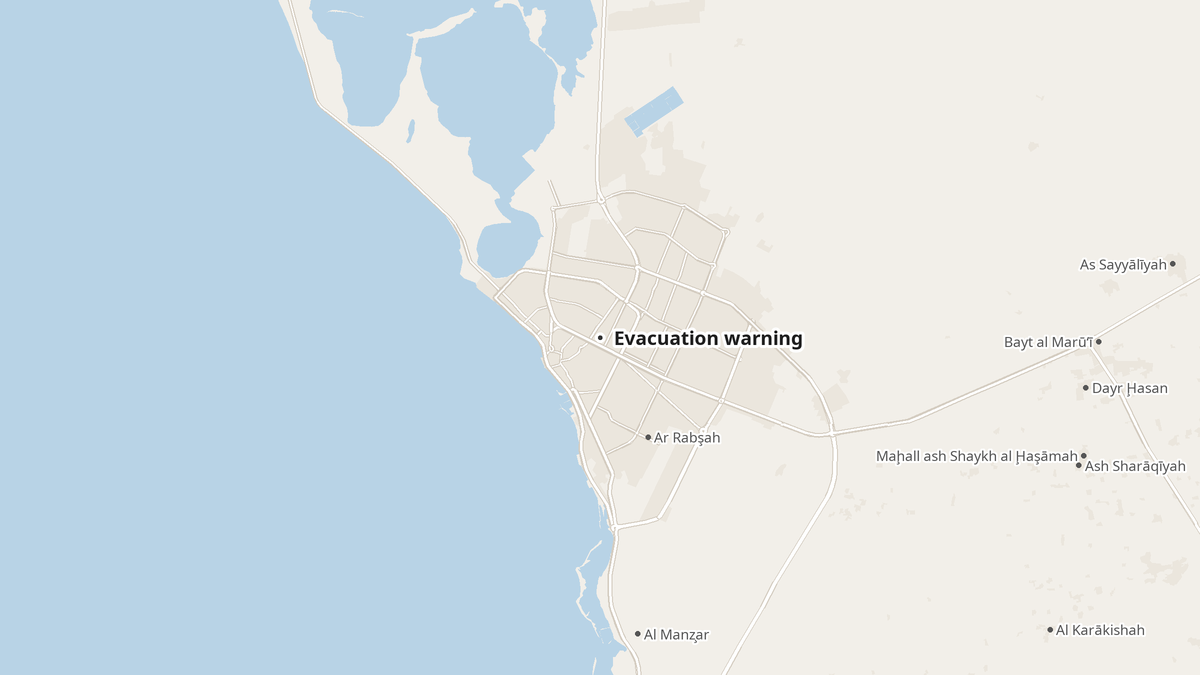
The Saudi-led coalition ordered civilians to evacuate Yemen’s port of Hodeidah ahead of planned strikes, publishing a map on Friday showing the areas it intended to attack. The coalition said it was targeting weapons smuggling by the Iran-backed Houthi militia, which controls the facility. For people living and working there, the warning came with a map of where military force might land—and a demand to leave.
Coalition spokesman Maj Gen Turki Al Malki said the strikes targeted “operational capabilities at Hodeidah port that were used in smuggling operations and the transport of weapons and ballistic missiles.” He said the operation was ongoing to destroy military targets and ballistic missile capabilities in the governorates of Sanaa, Saada and Taiz. The coalition also said it had destroyed seven military targets designated for Houthi military use and six workshops used to manufacture and assemble structures for ballistic missile and drone launchers.
Orders from above, danger below
The Houthis answered the evacuation warning with threats of their own. On Houthi spokesman Yahya Saree’s Telegram channel, the group warned airlines that Saudi airspace “will be a theatre of our operations in the coming hours.” It also said it would target the Kingdom’s Shuqaiq power station, citing coalition attacks on the Sadah and Mokkha power stations, and ordered civilians, workers and employees to evacuate.
Saree called Riyadh’s financial centre a “military target.” In a separate response, the Houthis said Jeddah’s ports and all Saudi ports along the Red Sea would be “a target” if Hodeidah were attacked. The Houthi Armed Forces warned port workers and people in the area to stay away and urged ships to leave urgently.
The rival authorities issue evacuation orders and name infrastructure as targets; civilians are left to interpret the warnings while military operations continue. The Houthis said Saudi forces struck Hodeidah on Tuesday, killing at least 14 people. The coalition’s stated target was military capability at the port. Those claims do not remove the danger facing people who live or work around it.
Retaliation travels through civilian life
The strikes on the Red Sea port followed repeated Houthi drone and missile attacks on Saudi Arabia and formed part of several coalition operations against rebel-held areas of Yemen. The Houthis had attacked the Public Investment Fund Tower in Riyadh’s financial centre and airports across Saudi Arabia, causing significant disruption to air travel. Saudi aircraft also carried out air strikes on Sanaa on Thursday, the Houthi-run Saba news agency reported.
The threatened targets include ports, power stations, airports and a financial centre. The coalition describes its operations as efforts against military targets and weapons capabilities; the Houthis frame their threats as responses to coalition attacks. In each account, authorities announce what they intend to strike. Workers, passengers and residents are the ones ordered to move.
Fighting between pro-government forces and the Houthis had intensified in recent weeks. The Houthis had made territorial gains inside Yemen and were estimated to be 100 kilometres from Aden, described as the de facto capital and a government stronghold. Those advances gave the group better access to the Bab Al Mandeb strait and the Red Sea, threatening maritime security.
The warnings keep coming
The Hodeidah order wasn’t the coalition’s first. The previous month, it issued a similar evacuation order for people in and around the Al Sabahah central station in rebel-held Sanaa, identified as belonging to Yemen’s Petroleum Company and Yemen’s Oil Company. The Houthis warned that an attack on Sanaa would bring a “harsh and painful response” and threatened the kingdom’s oil facilities.
The record in this account is one of competing military authorities: the coalition announces planned strikes and names its targets; the Houthis threaten retaliation against infrastructure and issue warnings of their own. No grassroots organizing, mutual aid effort or independent civilian protection measure is described. Instead, the public receives evacuation instructions from armed powers, while the ports, energy facilities and transport routes civilians depend on become part of the contest.
- hodeidah port
- houthis
- saudi-led coalition
- yemen
- evacuation order
- airstrikes
- ballistic missiles
- red sea