
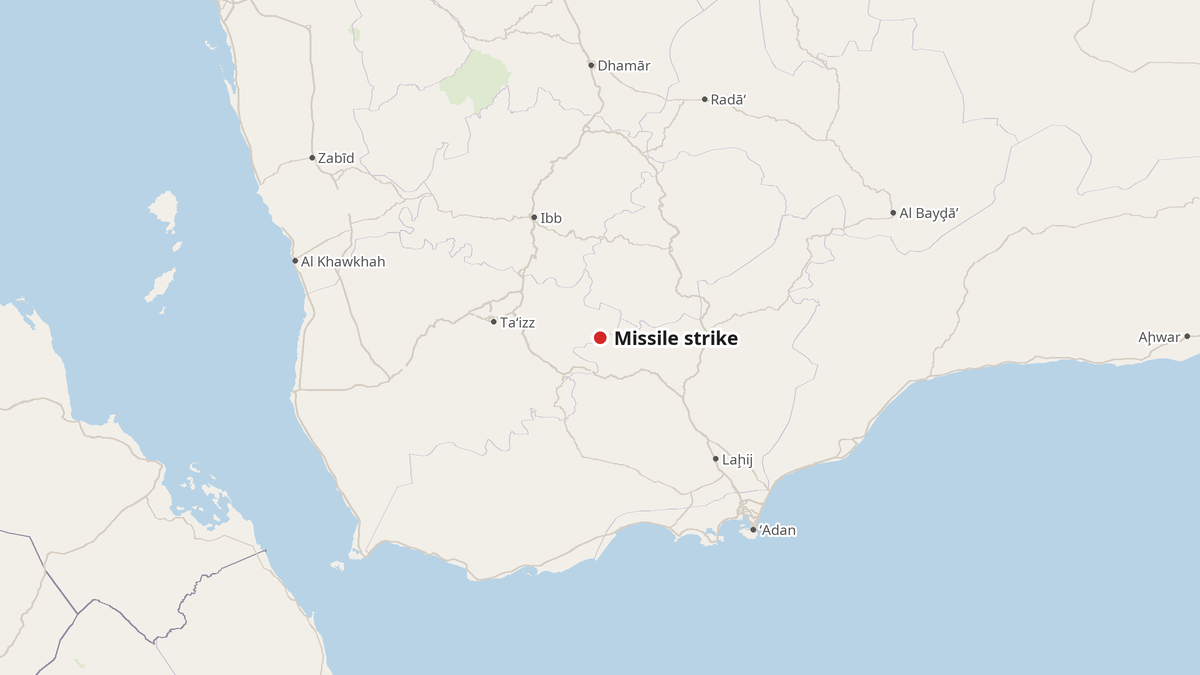
At least 53 people were killed and 200 injured on Monday, October 19, when three ballistic missiles fired by the Iran-aligned Houthis hit the Al Alam military training camp in Yemen’s Shabwa province, local authorities said, according to several reports. L'Orient Today gave a lower toll: more than 30 dead and at least 70 wounded. Shabwa authorities called their count preliminary and warned it could rise.
The victims were recruits. They were training to join internal security forces.
A Yemeni military official, speaking anonymously because he wasn't authorized to talk to the media, said the missiles landed as recruits lined up for a training session. Reuters-verified video from Shabwa showed injured people and bloodied bodies scattered across the ground. The Houthis acknowledged they had targeted the camp.
The Human Toll in Shabwa
Majed al-Nuzaili, spokesperson for the Yemeni armed forces, wrote on X that the "Houthi militia targeted Shabwa with three ballistic missiles," striking a training centre for security and police services. The provincial government called the strike an "extremely critical military escalation and a blatant aggression on the security and stability of Shabwa province." It urged Yemen's president, the Saudi-led coalition and the government to speed up air-defense and early-warning systems.
Rashad al-Alimi, head of Yemen's ruling Presidential Leadership Council, promised a "firm response." He said the attack reflected the Houthis' "approach of resorting to cowardly terrorist attacks whenever they face pressures or their Iranian-backed sabotage plots falter."
A military source in Shabwa told AFP the army feared the strikes could come before a ground offensive "similar to what happened in Mocha," the strategic port city near the Bab al-Mandab strait that the Houthis seized. The source said the Houthis cut a road on Sunday linking government-held Shabwa with Houthi-controlled Al-Bayda province. Locals said they couldn't use it.
Shabwa is an energy-rich province in south-central coastal Yemen, overlooking the Gulf of Aden. It’s home to the Balhaf liquefied natural gas facility, Yemen's largest industrial investment.
Civilians Caught on Both Sides of the Line
The Shabwa strike wasn't the weekend's only deadly episode. A separate airstrike blamed on Saudi-led forces killed at least nine people on Sunday in the Houthi-held northern province of Saada, the Houthi-run Health Ministry said. Five children and two women were among the dead. The rebels said several strikes over the weekend killed or wounded more than 30 people. Saudi Arabia made no immediate comment.
Those figures come from a party to the war, and they haven't been independently confirmed. Still, they point to a pattern: families far from any front line absorb the violence. Yemen was already facing one of the world's worst humanitarian crises, and aid agencies have warned that conditions are deteriorating rapidly.
A Truce Unravels
Daily Sabah described Monday's attack as one of the deadliest since fighting surged in the summer. It said the escalation had shattered a 2022 cease-fire that largely halted fighting in Yemen's civil war. L'Orient Today said the truce had largely held since 2022 before collapsing. The Daily Sabah account said it held until this year.
The war began in 2014, when the Houthis seized the capital, Sanaa, and drove the government south. A Saudi-led military intervention followed in 2015. The conflict settled into a bloody stalemate until the sides agreed to the 2022 truce, four years ago.
Fighting has intensified on several fronts. The Houthis advanced in September toward territory near the Bab el-Mandeb Strait, a shipping chokepoint at the mouth of the Red Sea. Government forces began a campaign this month to recapture Houthi-controlled areas and regain ground near the strait, while the Saudi-led coalition launched a major offensive this month to retake the Red Sea coast. Meanwhile, the Houthis besiege Taiz, the last major urban stronghold of anti-Houthi forces in Yemen's southern highlands.
A Regional War Widens
Reports describe the fighting as another front in a wider war involving the United States, Israel and Iran. The Houthis have repeatedly struck Saudi Arabia's main international airport, hundreds of kilometers away. They've also targeted Saudi airports, oil and military facilities, including the headquarters of state oil company Aramco. They have seized territory near the Bab el-Mandeb Strait, a shipping alternative to the Strait of Hormuz.
U.N. and other experts say Iran and its allies in Lebanon and Iraq provide the Houthis with expertise, training and sophisticated weapons. Iran denies arming the group, which would violate a U.N. embargo. The Houthis are a Shiite religious and political movement rooted in northern Yemen. Saudi Arabia, a Sunni kingdom that has long feared a well-armed ally of Shiite Iran on its border, joined the war in 2015.
Why This Matters: Eleven years after the Saudi-led intervention began, and 12 years after the Houthis seized Sanaa, the war is again killing people in large numbers. The 53 reported dead in Shabwa were young recruits. The nine killed in Saada included five children and two women. Neither side's account of its own conduct can replace independent verification of who died and how. The collapse of a truce that held for four years shows how quickly a fragile pause can disappear when regional powers and chokepoint geography enter the calculation. For Yemeni civilians already living through one of the world's worst humanitarian crises, a renewed ground offensive and expanding air campaigns mean more displacement and more deaths, while aid agencies warn conditions are already worsening. What’s missing from the picture is any visible diplomatic track capable of restoring the 2022 truce.
- houthis
- yemen
- shabwa province
- missile attack
- yemen civil war
- saudi-led coalition
- bab el-mandeb strait
- iran