
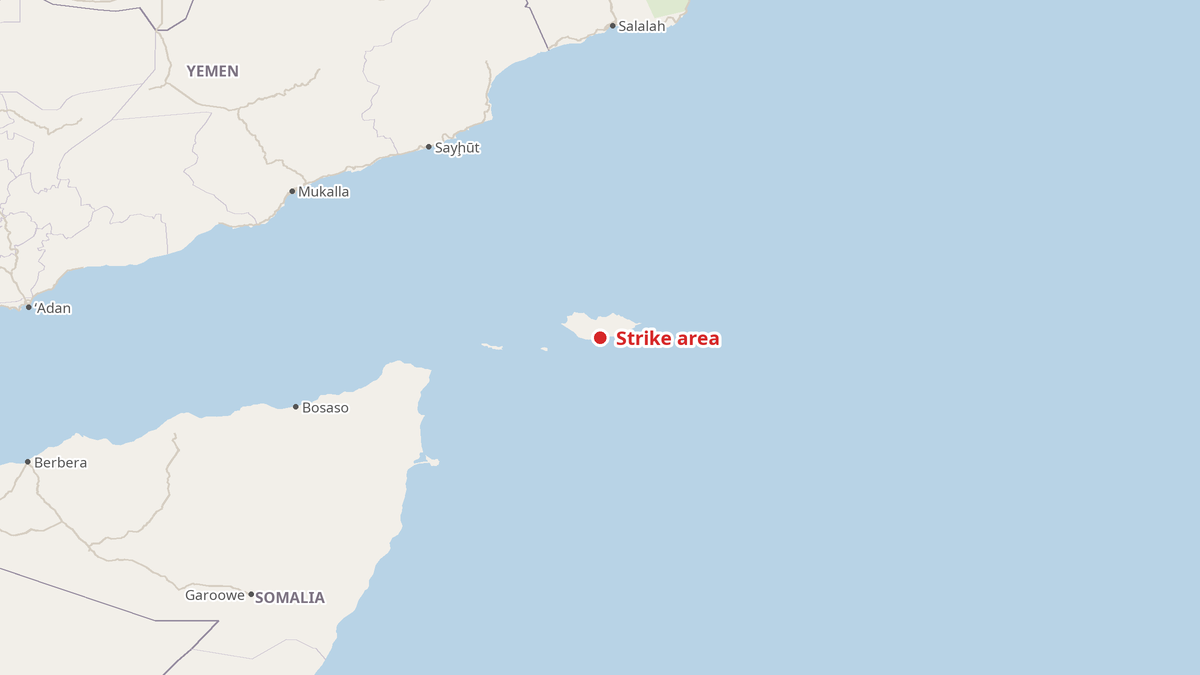
Sixty people, most new recruits who had lined up for a training session, were killed Tuesday when Houthi ballistic missiles struck a government military camp in southern Yemen, officials said. More than 200 others suffered wounds. At least a dozen people remained missing a day after the attack on the al-Alam training camp in Shabwa province, three officials said.
It was the deadliest attack since the fighting began escalating three months ago.
Civilian Toll
Videos that circulated online and were analyzed by The Associated Press showed motionless bodies scattered across the camp’s sandy ground. The officials spoke anonymously because they weren’t authorized to brief the media.
Several wounded people faced life-threatening conditions, a local government official said, and authorities transferred them to hospitals in other provinces. The strike also hit one community especially hard. At least 15 of the dead came from a single Yemeni tribe, one official said. Another official, describing the victims separately, said at least 15 recruits belonged to the Awlaki tribe, one of Yemen’s most powerful, centered in Shabwa and Abyan provinces.
Shabwa governor Awad Ibn al-Wazir said the dead were new recruits from across the province, training to provide security rather than fight. He made the comments in a televised interview aired by Saudi-owned Al Arabiya satellite news television. “These recruits have never before participated in any mobilization or on any front,” he said. “They have no connection to the front lines ... they were (part of) a non-offensive security force.”
The Houthis claimed responsibility, saying they had killed and wounded dozens, but offered no further details. The Shabwa provincial government said Monday that the rebels fired three ballistic missiles at the camp. Located in the Jardan district north of provincial capital Ataq, the camp had previously served a militia backed by the United Arab Emirates. It sits along a crucial supply line to Marib, a government-controlled province. Shabwa, Marib and neighboring Hadramawt form what’s described as the government’s “triangle of power,” home to the country’s oil and gas production.
A Ceasefire Broken
The attack came amid a surge in fighting that began in July, when forces from the internationally recognized government and the Saudi-led coalition launched airstrikes on Sanaa International Airport, which the Houthis hold. The strikes shattered a 2022 ceasefire deal that had largely halted fighting in the civil war. The truce had lasted four years.
The violence has crossed the border, too. The Houthis have fired missiles and drones at Saudi Arabia, which has struggled to stop the attacks despite its far superior U.S.-supplied arms. On Tuesday, Saudi authorities issued an attack warning for the capital area late in the morning. An explosion followed in northern Riyadh, where King Khalid International Airport is located. Saudi Arabia said it had intercepted a Houthi-fired ballistic missile, and authorities issued the all-clear a short time later. The Houthis had attacked the airport repeatedly this month, forcing it to suspend operations.
Twelve Years of War
Yemen plunged into civil war in 2014, when the Houthis seized Sanaa and much of northern Yemen, forcing the government into exile. A Saudi-led coalition intervened the next year to try to restore the government to power. Twelve years later, the conflict has created one of the world’s worst humanitarian disasters and killed more than 150,000 people.
Why This Matters: The al-Alam strike shows how quickly a collapsed truce can turn into mass casualties, with the dead here young recruits the governor says were meant for local security work, not the front lines. A four-year ceasefire had largely stopped the fighting and given Yemenis a period of relative calm, but its unraveling in July has brought violence back to a country already marked by one of the world’s worst humanitarian disasters. More than 150,000 people have died across twelve years of war, and each new escalation hits a population with little left to absorb it. The fighting is reaching Saudi Arabia as well, where missile alerts have disrupted a major airport. From a diplomatic standpoint, the strike underscores what’s lost when ceasefire arrangements aren’t defended: restoring one will now be harder than keeping it was.
- houthi rebels
- yemen
- missile strike
- al-alam training camp
- shabwa province
- yemeni civil war
- military recruits
- awad ibn al-wazir