
More than 333,000 people have been displaced in Yemen since the beginning of August, including more than 24,000 in the past week, according to the UN Office for the Coordination of Humanitarian Affairs. That was the figure sitting beneath Thursday's diplomatic theatre, while two armies, two capitals and one Security Council traded statements about pipelines.
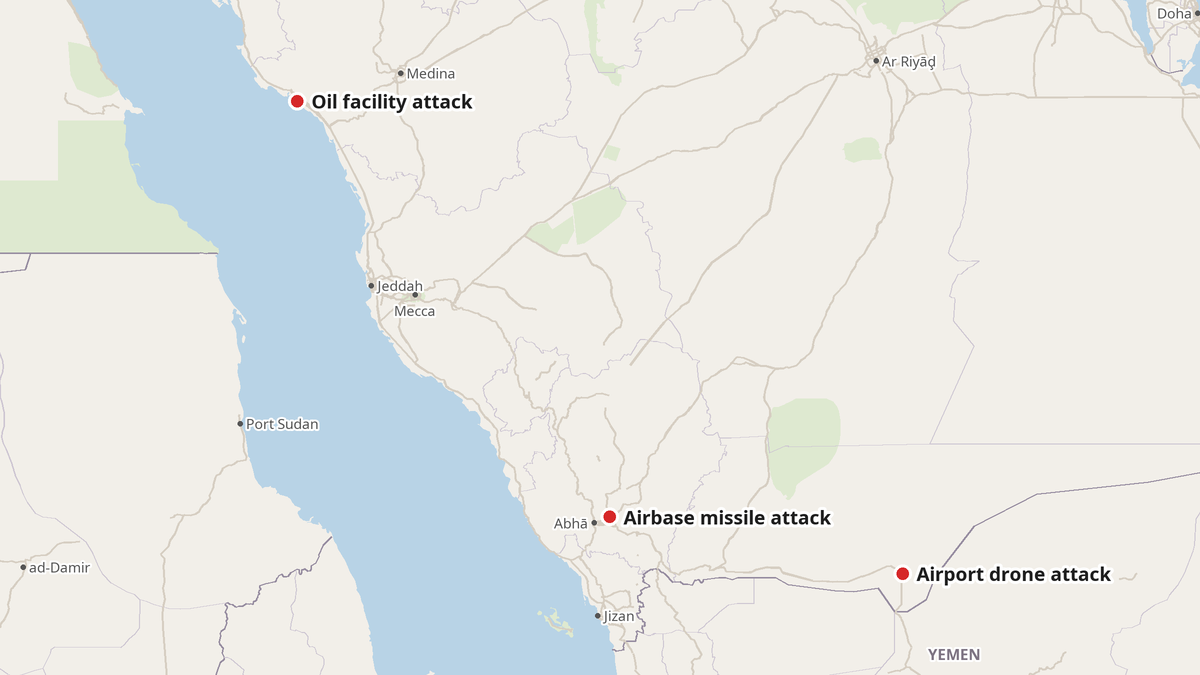
The Houthis, Iran-aligned and in control of Sanaa since 2014, said they had hit Pumping Station No. 7 on the Saudi East-West pipeline with a drone, the Yanbu oil facility with a ballistic missile, and an Aramco building in Riyadh. Military spokesperson Yahya Saree claimed all of it as a success, plus strikes on Sharurah airport and Khamis Mushait airbase, where he said a missile "scored a direct hit." He didn't say which day any of it happened. The Saudi-led coalition said it had intercepted and destroyed two drones, one over the Riyadh region and one over the Eastern Province. Riyadh didn't respond to a request for comment.
The State's Monopoly
Both sides claim the same night and tell it differently. Coalition spokesperson Major General Turki al-Maliki announced the interceptions through the Saudi Press Agency. Saree called the Saudi claim that the Houthis targeted Mecca a "grave falsehood." Missile debris, meanwhile, fell in the village of Sabouha, about 35 kilometres from the holy city, per Saudi civil defence. Nobody in the base reporting could say whether the interceptions matched the Houthi claims.
The pipeline is the prize. Riyadh says it has rerouted about 4 million barrels of crude per day through the East-West line to Yanbu, roughly 4% of global supply. That conduit has spared the kingdom the worst of the wartime Strait of Hormuz shutdown that has crippled its neighbours' exports. The war that began with the US and Israel attacking Iran in February, now in its ninth month, has turned a Yemeni civil war into a pressure point on global energy flows. Truce in 2022 froze the fighting. It thawed in July, about four months ago, and the displacement numbers have climbed since.
On the other side of the front line, Yemen's Defence Ministry, citing the Saudi-backed Presidential Leadership Council, said the battle was moving toward its "desired objectives." A ministry meeting in Marib governorate discussed coordination among units in the Dawn of Yemen offensive. Desired objectives, as ever, are the generals' own.
The Apparatus Speaks
The Security Council voted unanimously to extend Yemen sanctions another year, with asset freezes and travel bans, and renewed the Panel of Experts mandate. It condemned the Houthi escalation and demanded an end to attacks on Saudi Arabia, while backing the territorial integrity of both states. Council members urged "all parties to refrain from escalatory actions." China's ambassador Fu Cong offered the line of the day: "The council sanctions are merely a means, not an end in themselves." The measures, the statement said, "shall not apply to humanitarian assistance or supplies for basic needs of civilians." The carve-out for civilians arrives alongside a displacement count that keeps rising.
Riyadh, meanwhile, is lobbying Brussels. Saudi Arabia is pressing the European Union to adopt a Parliament resolution designating Ansar Allah a "terrorist organisation," Reuters reported, citing sources. European officials told Reuters they worry it could undermine a future peace process. EU spokesperson Anouar El-Anouni said the bloc is in regular contact with Riyadh but wouldn't discuss specifics.
Who Arms the Defence
Britain's Middle East minister Stephen Doughty told Asharq Al-Awsat the Houthi attacks were appalling and that firing at airports and places where civilians live and work was unacceptable. He said Britain had deployed air-to-air refuelling aircraft, fighter jets and military advisers to support Saudi defensive operations, adding that Saudi Arabia has the right to defend itself. Saudi Foreign Minister Faisal bin Farhan Al Saud, for his part, talked de-escalation with Chinese envoy Zhai Jun while the Houthis announced more strikes.
So the ledger reads: a de facto authority in Sanaa firing missiles, a monarchy backed by foreign jets and advisers, a Council that sanctions one side and backs both states' borders, a bloc weighing a terror label against the chance of peace talks. Over 333,000 people moved through all of it with whatever they could carry. None of the statements quoted here came from them.
- houthi
- saudi arabia
- aramco
- east-west pipeline
- yemen
- drone attacks
- un security council
- yanbu