
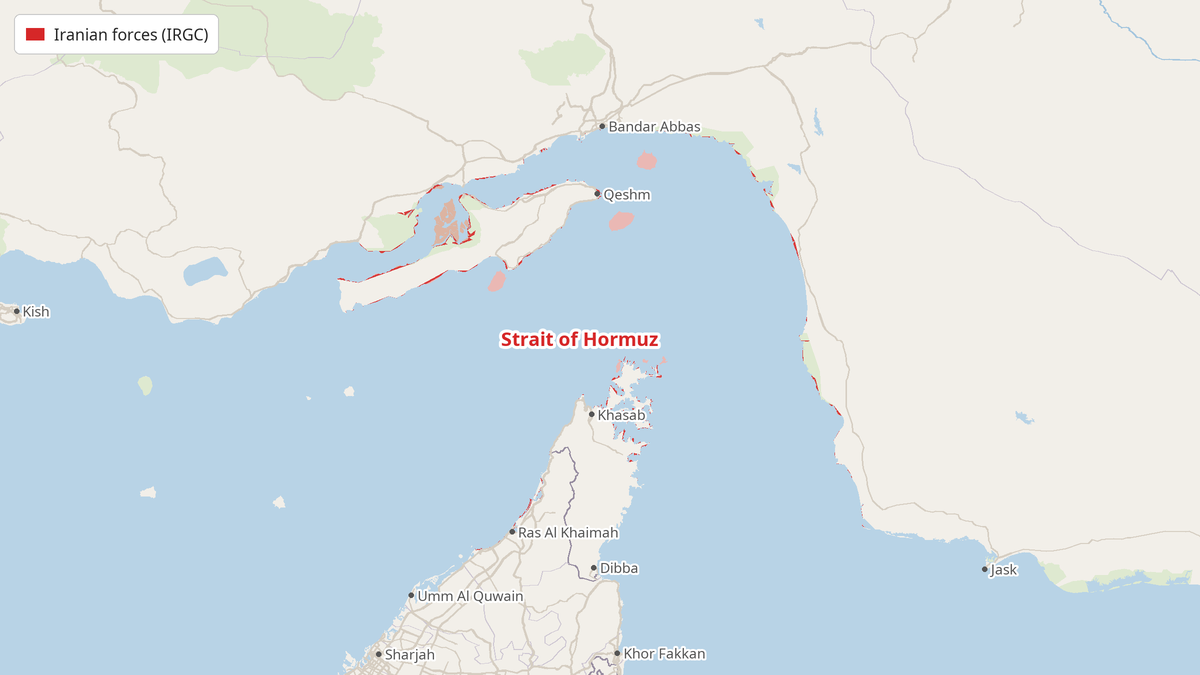
Mohsen Rezaei, secretary of Iran's Supreme National Security Council, put Europe on notice early Thursday, Tehran time. "If the US launches another war against Iran, every military base involved in the aggression — from West Asia to Europe — will be a legitimate target for Iran's lethal strikes," he wrote on X.
That's a notable widening of the target set. It reaches past the Gulf and into NATO territory.
The Security Picture
Rezaei's warning didn't arrive alone. Senior Islamic Revolutionary Guard Corps (IRGC) commander Mohammad Reza Naqdi said Wednesday that Supreme Leader Mojtaba Khamenei ordered the armed forces to prepare for operations "in any geographic area deemed appropriate," Iranian media reported. The phrasing is deliberately open-ended. It frames no limit on where Iran might strike.
The rhetoric sits atop a material buildup. Iran is rebuilding its missile capabilities and recently said it lifted self-imposed limits on the range of its ballistic missiles. Reporting suggests Tehran is seeking to rebuild and expand its missile program. A government that says it has removed its own range restrictions, while threatening bases on another continent, is telling its neighbors and adversaries what it intends to be able to reach.
Strikes on Shipping Infrastructure
The threats are landing against a backdrop of active incidents. Iranian state media claimed on Tuesday that the IRGC had carried out strikes destroying "enemy navigation systems" on Didamar island. Three sources with knowledge of the matter later confirmed to Reuters that Iran had attacked ship navigation systems on Didamar.
The target matters. Navigation systems underpin commercial and military movement through some of the world's most sensitive waterways, and an attack on them signals a willingness to put civilian-adjacent infrastructure in the crosshairs.
Separately, Iranian official sources said Sirik in the southern province of Hormozgan was hit by "an enemy" strike, state news agency IRNA reported on Thursday. IRNA said the strike was military in nature, without giving further details on damage or casualties. Tehran named no attacker and offered no evidence for its description.
The Regional Threat
Iran's posture can't be read in isolation. The same government now threatening European installations is the one rebuilding a missile arsenal and ordering its forces to prepare for operations anywhere it chooses. Rezaei's language is conditional, tied to a hypothetical new US attack. But the readiness order Naqdi described isn't conditional in tone, and the missile rebuild is already underway.
The base article doesn't specify which European installations Tehran has in mind, and Iran hasn't said what would constitute "involvement" in an attack. That ambiguity does work of its own. It leaves European governments guessing about their exposure while Tehran keeps its options open.
Why This Matters: Iran is explicitly extending its threat envelope to European soil while rebuilding the missile force that would make such threats credible. For European governments hosting US installations, the warning turns a distant Gulf confrontation into a direct security question. For Israel and its Gulf neighbors, a missile program freed of self-imposed range limits compounds a threat they already live under. From this perspective, deterrence depends on Tehran believing its threats carry costs, and rhetoric paired with rearmament is harder to dismiss than rhetoric alone.
- iran
- mohsen rezaei
- islamic revolutionary guard corps
- mojtaba khamenei
- mohammad reza naqdi
- us bases in europe
- iran missile program
- didamar island