
The United States has prepared options for renewed strikes on Iran while maintaining a naval counter-blockade on Iranian ports, and Tehran has threatened retaliation against U.S. bases, warships and civilian infrastructure. The competing military plans leave regional civilians facing the consequences as officials trade proposals, warnings and claims of control over the Strait of Hormuz.
The apparatus stays armed
The Hill reported, citing two people familiar with planning, that U.S. Central Command had follow-up strike plans ready, subject to White House authorization. Another source said multiple options were being presented to War Secretary Pete Hegseth. A Pentagon official described the department's role plainly: its “job is to develop and present military options to the President.” The Wall Street Journal reported that sailors were loading munitions and readying aircraft aboard U.S. warships, including the USS George Washington aircraft carrier strike group.
President Donald Trump said military action and an agreement were both possible. Asked about an attack, he told reporters Saturday: “Do you really think I'm going to tell you if I'm going to do it?” He added that “there's a possibility we'll have a nice big beautiful agreement.” Trump said he wanted a permanent solution to prevent Iran from developing a nuclear weapon, and argued that ending the military campaign after B-2 bomber strikes in 2025 would have allowed Iran to rebuild its nuclear capabilities.
Iran's Foreign Minister Abbas Araghchi said Sunday that another war with Israel and the United States would not change Iran's policies. He said the region should move towards “the complete absence of foreign forces.” Iran, meanwhile, has claimed control of the Strait of Hormuz since the war began and regularly targeted vessels attempting to cross without its authorization. Washington opposes that control and maintains its counter-blockade. Rival authorities announce their security doctrines; ships and civilians occupy the danger zone.
A proposal, denied
Iran's ambassador to Islamabad, Reza Amiri Moghadam, said Iranian officials told Pakistani mediators they were prepared to reopen the strait if Washington lifted its blockade of Iranian ports. He said the position had been conveyed during visits to Tehran by Pakistan's army chief, Field Marshal Asim Munir, and that Iran remained open to negotiations under a Pakistan-brokered interim agreement reached in June. Pakistan and Qatar helped broker that framework, which envisaged restoring shipping, lifting the blockade and beginning wider talks on Iran's nuclear program.
Al Arabiya separately reported that Iran was willing to resume negotiations with Washington and reopen the strait in exchange for lifting the blockade. But the IRGC-affiliated Tasnim news agency quoted an informed source rejecting that report as “lies and fantasy.” The source said Tehran had made no new proposal, did not accept an exchange linking the strait and blockade, and stood by seven conditions already conveyed through mediators. Tasnim's denial addressed Al Arabiya's report, not Moghadam's remarks as reported by the Associated Press.
The June memorandum of understanding later unraveled as each side accused the other of violating it. Negotiations had been deadlocked for months. The ceasefire between Iran and the United States ended the most intense fighting, apart from sporadic exchanges around the strait.
Threats reach beyond military targets
Iranian officials have also raised the prospect of retaliation against targets across the region. Mohammad-Saleh Jokar, head of the Iranian parliament's International Affairs Committee, called for authorities to allow “the use of deterrent weapons, including nuclear weapons, in the event of a US attack on Iran.” He also called for suspending Iran's cooperation with the Nuclear Non-Proliferation Treaty in that event. The Jerusalem Post, citing a Wall Street Journal report, said Tehran had threatened U.S. bases and warships as well as energy infrastructure, airports and other civilian targets.
Iranian Foreign Minister Abbas Araghchi wrote in the Financial Times that new attacks “will put civilian lives and the well-being of all regional states and the global economy at great risk.” Farzin Nadimi, a Washington Institute senior fellow, said Iran could damage regional energy and internet infrastructure, but would likely lose its own infrastructure in reciprocal attacks. Saeid Golkarat, an expert on the Revolutionary Guard, warned that Iran risked overreaching if it tried to carry out all its threats.
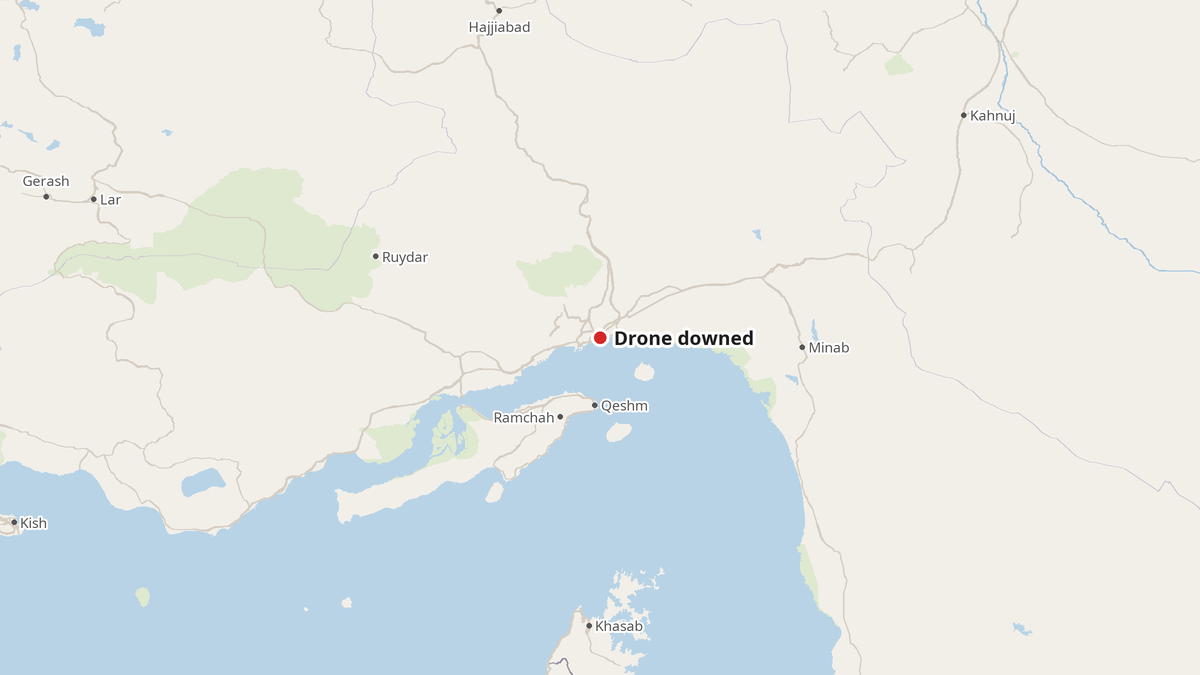
Iran's army said its air defense systems shot down a U.S. LUCAS drone over Bandar Abbas on Sunday, according to Tasnim. The report gave no further details. The announced strike options, the blockade and the threats against civilian infrastructure remain part of the same contest over who controls the region's routes, weapons and political terms. Officials keep the options open. The risks don't stay inside their briefing rooms.
- iran
- united states
- strait of hormuz
- donald trump
- iran nuclear program
- military strikes
- iran blockade
- pakistan