
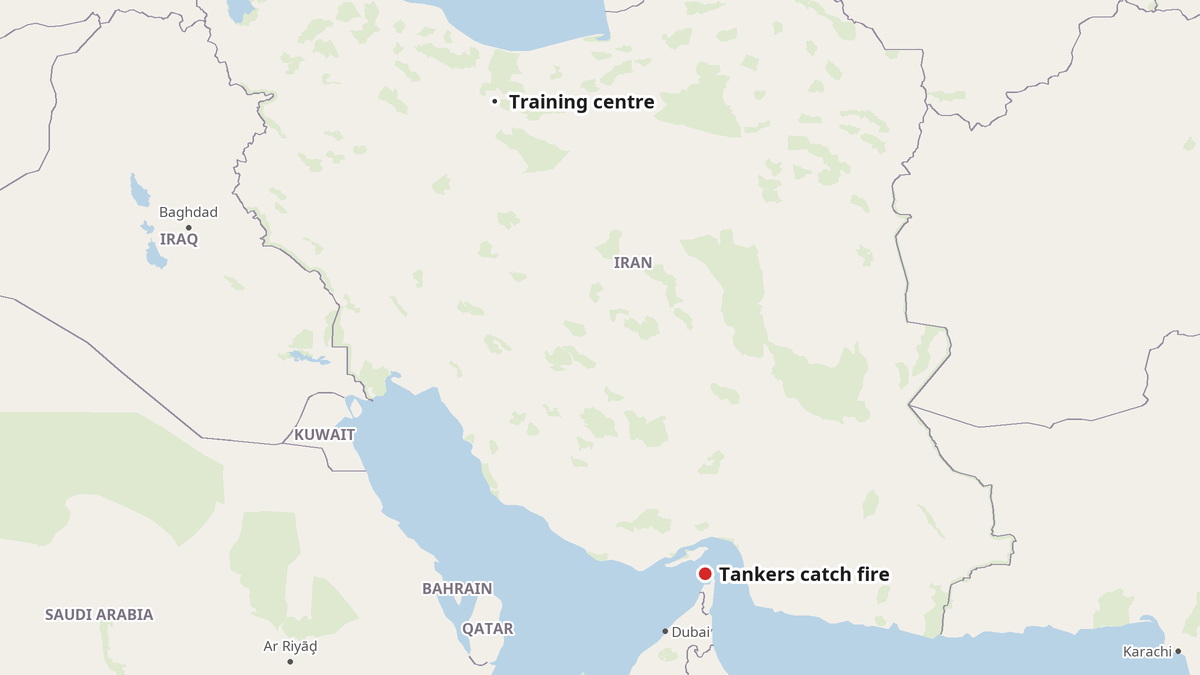
US forces struck an Iranian anti-aircraft facility on Qeshm Island near the Strait of Hormuz on Tuesday. Iran said naval mines destroyed four oil tankers and that authorities detained two other vessels. Reports couldn't independently verify the tanker claims. Shipping lanes in the waterway now face military threats, restrictions and rival claims of authority.
The State's Monopoly
President Donald Trump confirmed the strike, calling it a "minor attack" that "wasn't war." US officials described it as "defensive" and said it followed Iranian fire at an American aircraft. Trump said, "I'm not looking to ... kill lots of people," then added, "If we have to, we'll have to." His language is casual. The weapons aren't. He also said the United States might launch a major strike involving a "heavy hit," and insisted, "They will never have a nuclear weapon."
Iran's Supreme National Security Council secretary, Mohsen Rezaei, called Washington's response to Iran's conditions for reopening the strait "not convincing." Iran's proposal would reopen the waterway over two days if the United States met seven demands, including lifting sanctions and ending its naval blockade. Rezaei said Tehran would reopen the strait only if Washington addressed the conditions and acted on them. Majed al-Ansari, a spokesperson for Qatar's Ministry of Foreign Affairs, said both sides "remain committed to the negotiation process" and Qatar was facilitating a "real-time exchange of proposals."
Negotiations continue alongside military preparations. US media, citing officials, reported that Central Command had drawn up strike plans that could start as early as Wednesday, after the midterm elections, with three American aircraft carriers in the region. Reports described a possible short, intense campaign, but the United States hasn't confirmed an attack plan. CENTCOM commander Adm. Brad Cooper briefed Trump on options, reportedly including such a campaign.
Shipping Under Orders
The Islamic Revolutionary Guard Corps said four tankers caught fire after hitting naval mines while attempting to pass through a prohibited shipping lane south of the strait. It said authorities detained two other vessels for violating shipping restrictions and described the tankers as "non-compliant." Reports couldn't independently verify the incidents. Separately, the United Kingdom Maritime Trade Operations said two unidentified projectiles struck a tanker's engine room northeast of Oman's coastal village of Limah on Tuesday. No casualties were reported, and officials haven't verified a connection to the IRGC account.
The IRGC also said it shot down a US-made MQ-9 drone over the strait, calling it the 56th such aircraft it had downed. Iran's chief negotiator, Mohammad Bagher Ghalibaf, said the country was "ready for battle with its finger on the trigger." Deputy Foreign Minister Kazem Gharibabadi said Tehran retained a right to "legitimate self-defence" after the US strikes. Supreme leader Mojtaba Khamenei had ordered the military to respond immediately to any threat without geographical limits and update its target list.
These competing claims carry practical costs beyond the military apparatus. Etihad Airways extended the suspension of Abu Dhabi-Dammam and Abu Dhabi-Riyadh flights through November 19, affecting passenger and cargo operations. Selected Abu Dhabi-Jeddah services were scheduled to resume from November 6.
Votes, Weapons and Escalation
Trump acknowledged that rising petrol prices hurt Republicans in the midterm elections. After Democratic gains, Ghalibaf said Americans voted "NO TO WAR," writing, "Conscience or the cost of living, Americans said NO TO WAR, and we endorse this message." Trump said the Iran war played a role in the Republican defeat, but added that voters understood the importance of what he had done with Iran. The ballot sends a political signal. It doesn't remove the machinery already positioned around the strait.
Reports citing flight-tracking data described US military cargo flights landing at Ovda and Nevatim air bases in southern Israel. One report said at least 10 planes had landed, most departing from Fort Bliss in Texas. The Wall Street Journal reported the United States was sending a Patriot battery from Texas. The data didn't establish what the flights carried, and reports of an imminent attack came from open-source accounts, not US confirmation.
John Mearsheimer questioned whether another bombing campaign could achieve Washington's goals. He warned that Iranian retaliation could draw the United States into a longer confrontation and deepen damage to the global economy. His question was pointed: "If the 40-day bombing campaign didn't work, how is the three-day bombing campaign going to work?" Governments are weighing the answer in the strait. Shipping crews and passengers caught in the resulting restrictions don't get a seat at that table.
- strait of hormuz
- iran
- united states
- donald trump
- military strikes
- qatar
- commercial shipping
- iran-us tensions