
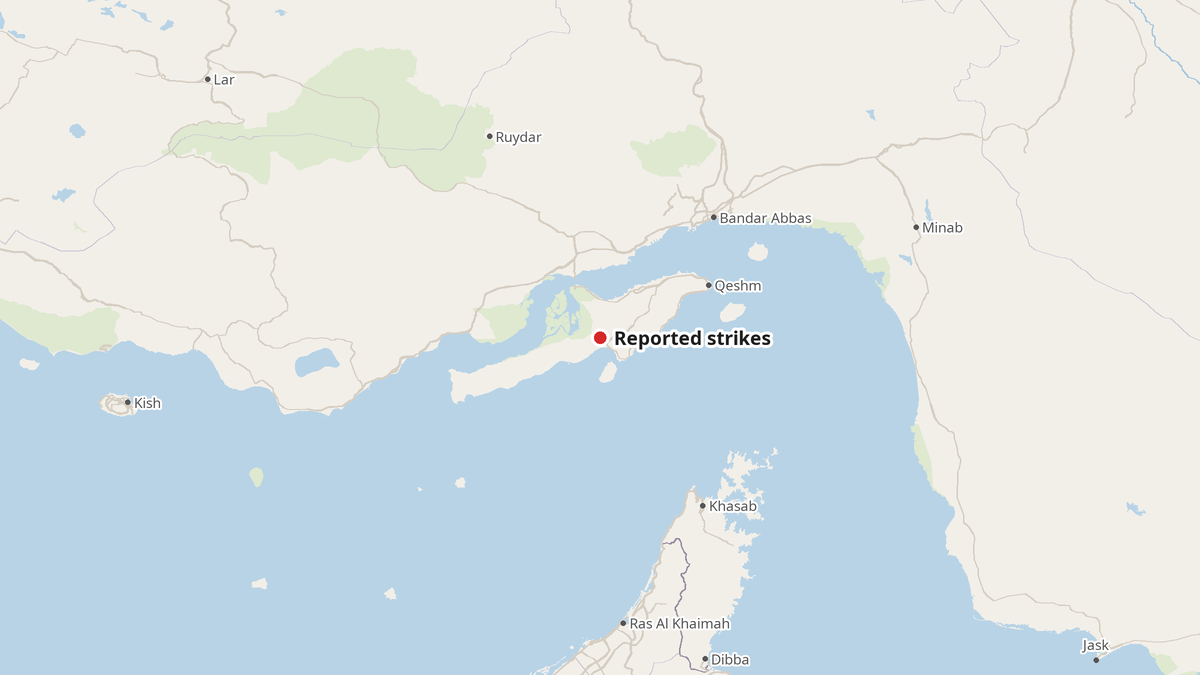
U.S. forces struck Iran’s Qeshm Island on Friday, the first reported strikes since the November 3 midterm elections, as President Donald Trump said Washington had made “a lot of progress” in talks with Tehran. Iranian state media reported two missile strikes in the Suza area of the island, which lies in the Strait of Hormuz, a crucial route for oil shipments. Trump described U.S. attacks as “minor” but didn’t specifically confirm that he meant Qeshm.
Strikes and competing accounts
“I don’t want to talk about it,” Trump told reporters when asked about the island. He said the United States had carried out “minor strikes” and knocked out an Iranian anti-aircraft device “in about 15 minutes, maybe five.” He separately said U.S. forces had disabled an Iranian air-defence device in about 15 minutes, maybe five.
Iranian state broadcaster IRIB reported that Iran’s army said its air-defence forces intercepted and destroyed an American MQ-9 drone over Qeshm. Tasnim, citing Reuters, also reported missile strikes on the island, while saying there was no official information about damage. U.S. Central Command, which oversees U.S. military operations in the Middle East, described the situation as “relatively calm” and told Al Jazeera it was aware of reports but had no further comment.
The United States had struck the same island on Monday. A U.S. official told MS Now that the earlier action was a “defensive measure.” The Friday strikes took place as Trump’s administration weighed whether to resume broader combat operations.
Unnamed Pentagon officials and military commanders told The New York Times that thousands of U.S. air and naval forces, aboard more than a dozen ships and at bases in the Middle East and the United States, were poised to resume major combat operations on Trump’s orders. NBC News reported that two U.S. officials said some of Trump’s advisers believed the window for restarting major operations was closing and urged a decision before a new Congress took office in January.
Negotiations and the Strait of Hormuz
Trump said Iran wanted “to make a deal very badly,” claiming: “They have 300% inflation. Their navy’s gone. Their airport, everything’s gone, and they want to make a deal.” The International Monetary Fund forecast in a report published October 13 that Iran’s consumer prices would rise by an average of 78.6% in 2026.
Iran said it wanted more than “paper commitments” before entering a new phase of diplomatic talks. Ali Bagheri Kani, deputy secretary of Iran’s Supreme National Security Council, told IRIB, according to Press TV: “We must see practical measures by the Americans.” Tehran has demanded that Washington meet seven conditions before Iran opens the Strait of Hormuz, including ending the war “on all fronts,” compensation, withdrawal of U.S. forces and lifting sanctions. The article said it was unclear whether the United States would accept those demands.
Iranian negotiators had shuttled between Tehran and Doha as Qatari mediators worked to bridge differences and reach an agreement that would trigger negotiations over Tehran’s nuclear program and end the war. Qatar said Trump called Qatari Emir Sheikh Tamim bin Hamad Al Thani to discuss de-escalation. On Saturday, Majed al-Ansari, spokesperson for the Qatari Ministry of Foreign Affairs, rejected reports that U.S.-Iran negotiations had failed, writing on X: “Promoting such false claims serves only those seeking to prolong the war and destabilise the region.”
Political pressure after the vote
Trump has alternated between threats and statements suggesting the conflict could be resolved. On Thursday, he said the United States might have to “destroy” the rest of Iran, adding: “I would rather not destroy the rest of the country if possible but maybe I’ll have to. You’ll know soon enough.” On Friday, he said his administration was talking to representatives from Tehran but offered no details about the progress he claimed.
Iranian hardliners called for Washington to make no compromises and pay a greater price for ending the conflict. Supreme Leader Mojtaba Khamenei warned against the “slightest inclination towards submission.” Raja News published a column saying the United States should not be given a “way out” before it “pays the price” for attacking Iran.
Trump acknowledged in a call with Fox News that the war was partly to blame for Republican midterm losses. Vice President JD Vance wrote on X on Wednesday: “the reason we lost is the war.” Hamidreza Azizi, a senior Iran analyst at the International Crisis Group, told CNN that Iranian leaders viewed the election results as vindication of their strategy and were likely to harden their demands. He said Tehran saw “no reason to offer Trump any nuclear concessions.”
- iran
- donald trump
- qeshm island
- united states
- iran war
- us iran talks
- strait of hormuz
- midterm elections