
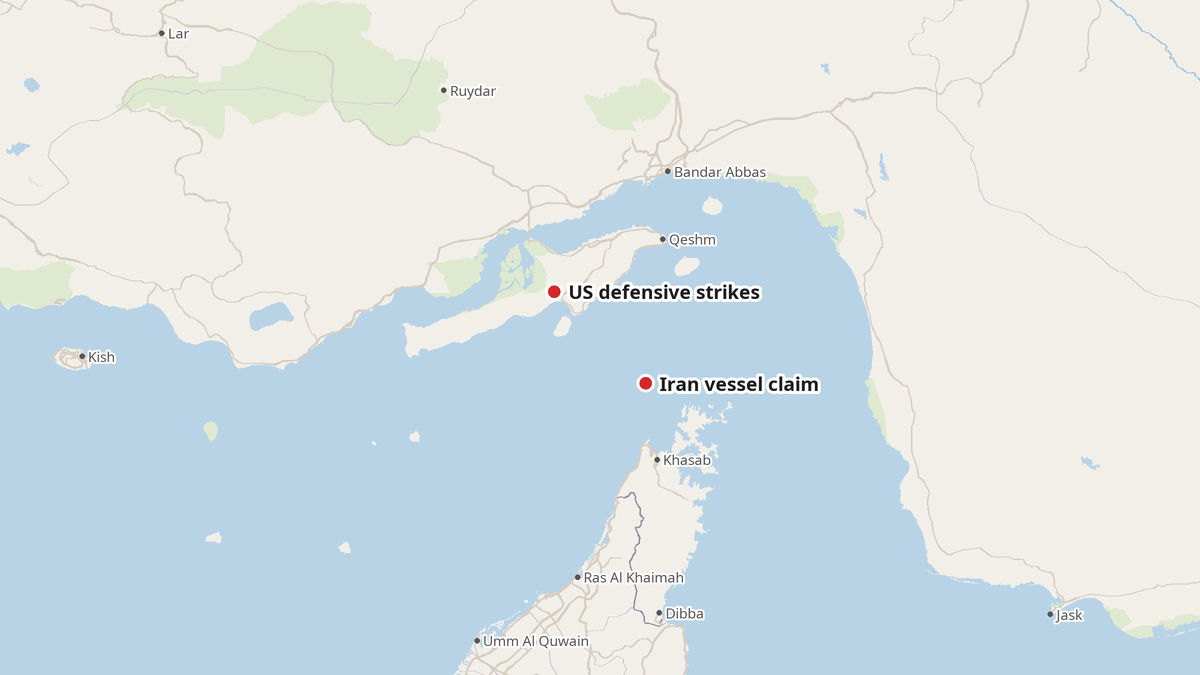
US forces struck Iran’s Qeshm Island on November 2 after Iranian Revolutionary Guard Corps personnel fired a missile toward an American aircraft over the Strait of Hormuz, US officials said. One official told The Jerusalem Post that the US acted “in self-defense.” Others described the operation as limited and defensive, not a return to major combat. The strikes came after the missile launch.
The Threat to Shipping and US Assets
A US official told Reuters that the strikes targeted Iranian activity involving surface-to-air missiles against US assets. RFE/RL reported that US officials said they aimed to protect American assets after Iranian fire targeted an aircraft. The Wall Street Journal first reported the strikes, citing US officials.
Qeshm sits at the mouth of the Strait of Hormuz, a major route for energy shipments. Iran’s largest island in the strait lies in Hormozgan Province. Citing the Wall Street Journal, RFE/RL reported that Qeshm has a large underground missile facility, a naval base and a major desalination plant. Reports did not independently confirm what caused the explosions, what they targeted or whether anyone was hurt.
Iranian state media outlet IRNA reported explosions on Qeshm on November 2. Gulf News and Daily Sabah reported five explosions in rapid succession, while residents reportedly saw two aircraft over the island. Fars also reported explosions in waters off Bandar Lengeh, but didn’t attribute a cause.
Security in the strait had already come under pressure. The UK Maritime Trade Operations center said a vessel transiting the strait was struck by an “unknown projectile” on Sunday off Oman’s coast, near the mouth of the waterway. The vessel and crew were safe, with no environmental impact.
Iran has claimed attacks on vessels it said used unauthorized routes, and said other ships struck mines laid in the early days of the war. The US military denied the naval-mine claims, saying US forces had cleared internationally recognized routes. The IRGC Navy said three oil tankers entered unauthorized lanes on Tuesday with navigation and identification systems switched off, struck mines and caught fire. No independent confirmation of those claims appeared in the material reported.
Competing Claims and Military Readiness
Iran’s Revolutionary Guards said their forces downed and captured a US MQM-170 drone near Qeshm. The Guards also claimed they destroyed an MQ-9 east of the strait and captured another MQM-170 south of Qeshm. Iranian media separately reported that Iranian forces destroyed an unmanned US vessel in the eastern Strait of Hormuz.
Those claims couldn’t be independently verified. US Central Command said all American unmanned surface vessels in the region were accounted for, US officials rejected other Iranian drone claims, and the Pentagon didn’t confirm the reports. Reuters reported that the Revolutionary Guards said they downed a US MQ-9 overnight east of the strait.
The Wall Street Journal described the Qeshm operation as the latest in a series of limited US strikes carried out secretly in recent weeks. RFE/RL reported that earlier US actions included strikes on missile-launch sites, an attack on a dhow and a strike on a commercial vessel that attempted to break the US blockade of Iranian trade. The Journal said the campaign stayed quiet to avoid signaling an intention to resume major combat operations.
Additional missile defenses and munitions had moved into the region in recent weeks, according to the Journal. Shortly after the election, US officials told Gulf countries to prepare for a short, intense military campaign. The administration had also debated further air strikes, tighter economic sanctions and an expanded blockade of Iranian trade.
Diplomacy Amid Iranian Threats
Iranian parliament speaker Mohammad Bagher Ghalibaf said Tehran was “ready for battle with its finger on the trigger” and had given Washington a “rational response.” He warned that Iran’s response to a US miscalculation would be unpredictable and disregard geographical constraints. A senior Iranian official told Reuters that Tehran would respond forcefully to US strikes “in the region and beyond.”
Iranian Foreign Minister Abbas Araghchi said indirect talks were underway, while Esmail Baghaei said “the ball is in the US court.” Iran has demanded that Washington accept a new route agreed by Iran and Oman for transit through the strait, remove recently imposed sanctions and reduce US troop numbers in the region. A senior Iranian official said Tehran would reopen the strait within two days if Washington accepted its longstanding demands.
President Donald Trump said, “Iran wants a settlement, as soon as possible,” and said a deal could prevent renewed fighting. Vice President JD Vance said Washington and Tehran had held “a number of good conversations” and that the administration would keep working toward a negotiated settlement. Qatari mediators traveled to Tehran on Monday night to discuss a draft US-Iran deal, though a senior Iranian official said the sides remained far from an agreement.
Jason Brodsky, policy director at United Against Nuclear Iran, said the US was aiming “to degrade Iranian capabilities to threaten the Strait of Hormuz” and deprive Iran of the ability to harass commercial ships. Gregory Brew, an oil expert and senior analyst at the New York-based Eurasia Group, said the strikes suggested Washington was contesting control of the strait by targeting Iranian coastal sites. The waterway’s security remains central to the military exchanges and negotiations.
- iran
- qeshm island
- united states
- strait of hormuz
- us airstrikes
- islamic revolutionary guard corps
- donald trump
- us-iran tensions