
U.S. officials are weighing a new assault on Iran as their naval blockade disrupts commercial shipping and Iranian leaders threaten American bases, Gulf energy infrastructure and undersea internet cables. An internal U.S. Maritime Administration alert warned that merchant ships face attacks from both sides, threatening insurance costs and tanker capacity.
The United States and Israel are considering military action, though it remains unclear whether President Trump will order it or what form it would take, sources familiar with the matter told CBS News. Israel worries Iran is rebuilding ballistic-missile manufacturing and moving military and nuclear infrastructure underground. Its military has prepared for renewed fighting and stands at peak defensive posture against an initial Iranian attack.
Security Threats and Strike Options
Iran has warned that its response to a new attack would go beyond previous actions. A statement attributed to Iran's Supreme Leader Ayatollah Mojtaba Khamenei said that, if open hostilities resume, “there would be no geographical limit for Iranian missiles.”
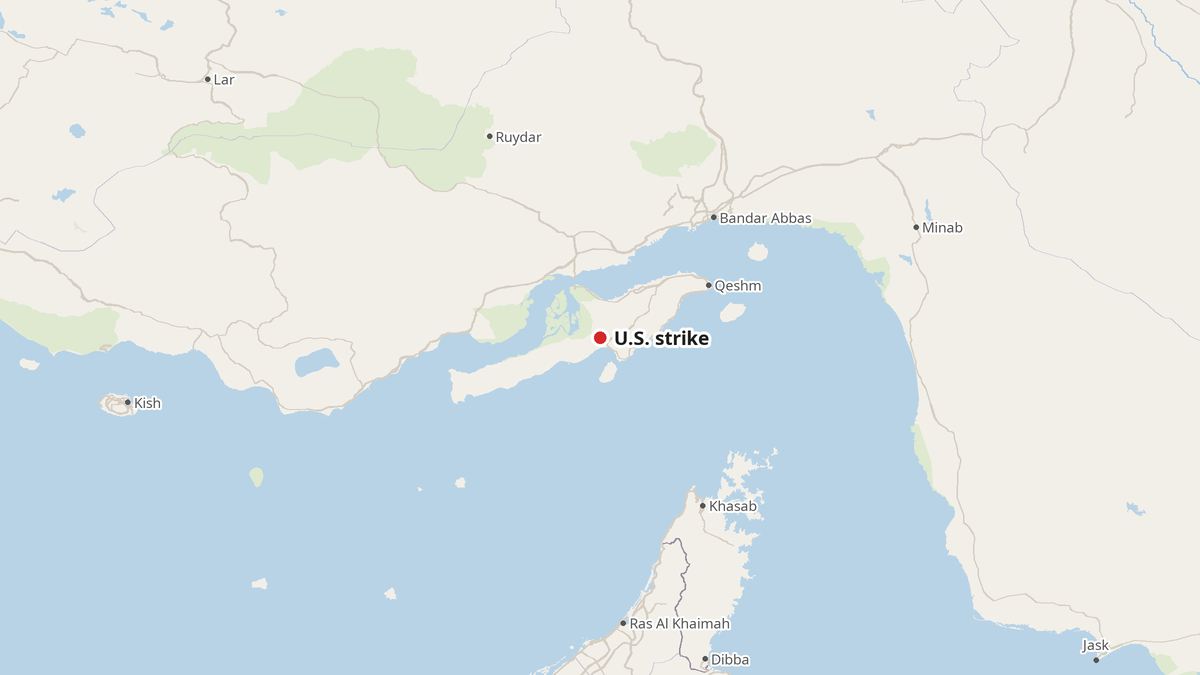
The U.S. struck Iran's strategic Qeshm Island in the Strait of Hormuz on Tuesday. American officials described the strike as self-defense after Iranian attacks on U.S. assets in Bahrain, which the U.S. military said it intercepted. Iran also struck Kuwait this week; officials said the attacks caused no damage.
The U.S. has tens of thousands of forces and two aircraft carriers, along with their associated strike groups, in the region, amounting to dozens of warships and aircraft. CBS News reported that those forces could mount a new offensive if ordered. Israel would prefer to join a U.S. operation.
U.S. Central Command chief Adm. Brad Cooper met senior Israeli security officials at Israel's defense ministry on Wednesday for what the Israeli military called a “joint, comprehensive situational assessment.” Israel's most senior general, Eyal Zamir, and Mossad director Roman Gofman attended. Gofman also met U.S. officials in Washington, including CIA Director John Ratcliffe, people familiar with the matter said.
Prime Minister Benjamin Netanyahu's administration has long accused Tehran of seeking nuclear weapons. Iran denies it wants to build them. International monitors believe Iran still has about 900 pounds of uranium enriched to 60% purity beneath the rubble of heavily damaged nuclear facilities, a short technological step from weapons-grade.
Trump said Iran may be seeking chemical or biological weapons, but offered no evidence for the claim. Iran's Foreign Ministry spokesperson Esmaeil Baqaei rejected the allegations and compared them with U.S. claims before the 2003 invasion of Iraq.
The New York Times reported that Trump was considering extensive strikes after Israel warned that Iran had succeeded in rebuilding missile and drone arsenals and advancing chemical and biological weapons programs. Axios reported that the White House sought Pentagon and intelligence assessments of how Iran might respond to U.S. military strike scenarios.
Blockade Enforcement and Market Costs
U.S. Central Command said Wednesday that ships receiving cargo through transfers from vessels loaded at Iranian ports or along Iran's coastline could count as blockade evaders, even if they hadn't entered those locations. CENTCOM said such ships may be stopped, boarded, diverted or captured, and warned that vessels that fail to comply could face enforcement action, including force.
Washington imposed the blockade on April 13, lifted it in June after an understanding with Tehran, then reinstated it on July 14 after the agreement collapsed. The measures target a route that has allowed some Iranian petroleum products to reach international markets.
Iran has bypassed parts of the blockade, though restoring large-scale crude exports would prove harder. Reuters reported Thursday, citing TankerTrackers.com, that a vessel was loading Iranian crude through a ship-to-ship transfer in the Gulf. If it reached its destination, it could be the first successful crude export since the blockade was reinstated; Iranian authorities hadn't confirmed the development.
Andreas Krieg, associate professor in Security Studies at King's College London, said Iran couldn't challenge the blockade directly in a sustainable way because of American naval superiority. But enforcement has limits. “Policing every shipment, intermediary and ship-to-ship transfer is considerably more complicated than stopping tankers leaving Iranian ports,” he said.
Krieg said new U.S. restrictions could create friction with Gulf partners whose commercial interests may not align with U.S. sanctions policy. He also warned that an attack on an Iranian vessel could prompt retaliation against Gulf energy infrastructure and draw neighboring countries further into the conflict.
The U.S. Maritime Administration alert said the threat had spread to Gulf anchorages and the Gulf of Oman, raising the likelihood of “further war-risk premium spikes, crew refusals and effective tanker capacity contraction.” Al Jazeera obtained the documents through a Freedom of Information Act request. MARAD did not respond to requests for comment.
OPEC said insurance for an oil tanker carrying crude from the Middle East to East Asia increased about 200-fold from January to the end of October, reaching $12.29 per barrel. Crude oil and fertilizer prices surged at various points during the war by as much as 60% and 112%, respectively.
The International Maritime Organization recorded about 130 attacks on vessels in the region since the conflict began, killing at least 25 seafarers. October marked the worst month for shipping, with 35 vessels targeted, the IMO said. CENTCOM has claimed responsibility for destroying or disabling at least two dozen vessels, some identified as belonging to the IRGC shadow fleet.
Ceasefire Demands and Political Pressure
Iran has refused to discuss its nuclear program unless the United States lifts its naval blockade and accepts six other key conditions. Tehran has also rejected a ceasefire to reopen the Strait of Hormuz unless Washington accepts seven demands, including ending hostilities on all fronts in the Middle East and lifting the blockade of Iranian ports and vessels.
Trump has renewed his threat to use force while also saying he isn't rushing a decision. “We've got time,” he told Reuters while traveling to Washington after a trip to China. In an interview that aired Thursday, he told Fox News, “We'll see what happens after January 1st.”
The war remains deeply unpopular in the United States, and CBS News reported it was a key factor in Republicans' midterm defeat. Democrats secured 56 of the 100 U.S. Senate seats and at least 257 of the 435 House seats. The GOP-led U.S. Senate rejected a measure aimed at curbing the war on Thursday.
Netanyahu, meanwhile, has argued that Israel needs a unity government to address security threats after losing his parliamentary majority. His political rivals have suggested he may be trying to return the country to war to avoid losing power; he could lose his position as prime minister.
Why This Matters: The blockade gives Washington a tool to restrict Iranian petroleum exports, but enforcement also brings costs for private shipping and risks for American forces and Gulf partners. OPEC's insurance figure, the attacks recorded by the International Maritime Organization and MARAD's warning point to consequences beyond Iranian ports. Iranian threats against U.S. military infrastructure and energy facilities also put security decisions at the heart of the dispute. Tehran is demanding an end to the blockade as Trump weighs further action, leaving the question of how Washington can maintain pressure without letting enforcement costs and retaliation widen the conflict.
- iran
- united states
- israel
- naval blockade
- strait of hormuz
- military strikes
- nuclear program
- ceasefire negotiations