
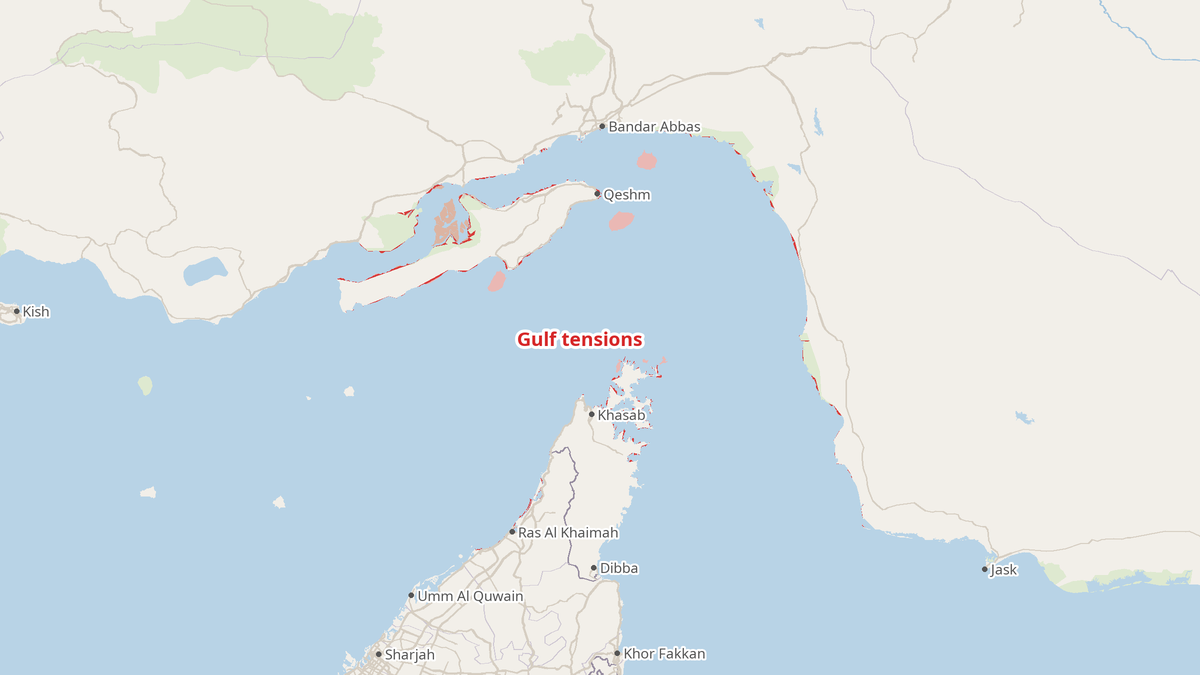
U.S. President Donald Trump threatened to sink Iranian vessels that try to breach the U.S. naval blockade, as attacks on oil tankers near the Strait of Hormuz raised the prospect of a wider confrontation.
Washington weighed whether to resume strikes on Iran or maintain pressure through the blockade, despite Israeli Prime Minister Benjamin Netanyahu’s push for military action. The Joint Maritime Information Centre said seven oil tankers had been hit in the area since November 16, including three struck near Oman’s coast between November 20 and 21.
Fox News chief foreign correspondent Trey Yingst asked Trump on Sunday, November 22, about reports that Iran was preparing to test the blockade. Trump replied: “I hope they do, they'll all be at the bottom of the sea like the rest of the navy.” Independent sources hadn’t confirmed the reported tanker movements.
Military pressure and shipping risks
Iran warned that attempts to stop its tankers would bring a “fierce military response” and immediate strikes on Gulf energy infrastructure. Iranian Deputy Foreign Minister Kazem Gharibabadi called the U.S. blockade an “act of war,” while saying negotiations with Washington continued and the window for diplomacy remained open.
The latest tanker attacks targeted outbound vessels 8 to 17 nautical miles from Khasab, Oman, according to the Joint Maritime Information Centre. The United Arab Emirates and Oman searched for a Jordanian sailor missing after an attack on an ADNOC Logistics and Services tanker in the strait.
Iran’s navy said two oil tankers caught fire after entering a “restricted area” east of the Strait of Hormuz, Iranian media reported. The strait connects the Arabian Gulf to international markets and serves as a major oil and gas transit route. Any disruption could affect shipping, oil supplies and energy markets.
A maritime security analyst reported that the United States had struck a tanker exporting Iranian oil as part of the blockade. Neither Washington nor Tehran officially confirmed the strike.
The United Kingdom Maritime Trade Operations agency separately reported a tanker incident involving “military forces” in the Gulf of Oman, east of the strait near the Iranian city of Chabahar. The agency didn’t identify the vessel or link it to a reported Iranian convoy.
Iranian reports said more than 14 tankers were gathering near Kharg Island, Iran’s main crude export terminal, for a possible attempt to breach the blockade. The reports cited satellite imagery and vessel-tracking data, but independent sources hadn’t confirmed the movements. It remained unclear whether the ships would try to cross.
Windward AI’s Maritime Intelligence Operations Centre identified 31 laden, sanctioned tankers positioned beyond the Strait of Hormuz between November 13 and 20, according to the maritime intelligence firm. Four were crude-oil tankers carrying an estimated 4.9 million barrels; the other 27 carried liquefied petroleum gas or refined petroleum products. U.S. Central Command enforced the blockade, with two U.S. carrier strike groups in the region.
Israel’s push and Washington’s choice
Netanyahu pressed Washington for a short, intensive campaign that he believed could severely weaken Iran’s government and potentially lead to its collapse. Trump’s advisers remained divided over whether another offensive would achieve that goal or whether the United States should continue relying on its economic blockade.
Ynet reported, citing U.S. administration officials, that Washington had decided for now to delay a potential attack. Yingst reported that Trump was inclined to resume strikes after the New Year if negotiations failed. A separate report said Israel and U.S. Central Command had agreed to develop joint plans for a possible escalation, but no decision to attack had been made.
U.S. Central Command remained at maximum readiness and favored a joint strike with Israel, i24NEWS reported, citing Israeli security officials. A U.S. source told the broadcaster CENTCOM wanted either to proceed with an attack or stand down rather than remain on heightened alert indefinitely. One Israeli source called it “anxious waiting.”
Trump said in a Truth Social post Sunday that Iran had intensified missile and drone attacks after the November 3 U.S. midterm elections. “Don't worry, they've all been knocked down, and done no damage,” he wrote.
An Associated Press report published November 17 documented renewed U.S.-Iran military exchanges, including Iranian attacks on U.S. military targets in Bahrain and a U.S. strike on an Iranian missile-launch site on Qeshm Island.
Iranian state media also said the country had a launcher capable of firing two liquid-fuel missiles at once and showed it inside an underground base. No independent source had verified the system’s performance.
Diplomacy under pressure
Trump said he wanted a permanent agreement but described Iran’s proposed terms as “unacceptable.” He called Iranian negotiators “professional tap dancers,” accusing them of prolonging discussions without meaningful concessions.
Iran presented a seven-point proposal reportedly transmitted through Qatar. Its conditions included lifting the U.S. blockade, easing oil sanctions and addressing other economic restrictions before further negotiations could progress. Tehran also wanted assurances against renewed hostilities and maintained its position on retaining its enriched uranium stockpile.
The United States sought an agreement addressing Iran’s nuclear program and regional military activities. Iran sought sanctions relief, an end to the blockade and assurances that Washington and Israel wouldn’t resume attacks.
A Qatari delegation visited Tehran on November 21 for discussions. Gharibabadi said Iran remained in contact with mediators, including Qatar. Egyptian Foreign Minister Badr Abdelatty said Egypt was working with Qatar, Turkey, Saudi Arabia and Pakistan to return Washington and Tehran to negotiations.
“I believe that there is a possibility for dialogue, for reaching a deal, and for reaching a compromise,” Abdelatty told CNN. Iranian Foreign Minister Abbas Araghchi told a cabinet meeting that “the path of diplomacy continues.”
Iranian Parliament Speaker Mohammad Bagher Ghalibaf said Iran couldn’t remain indefinitely in a state of “neither war nor peace” and called for “sustainable deterrence.” His remarks didn’t confirm that Tehran had decided to resume hostilities.
In Washington, incoming House Speaker Hakeem Jeffries said Democrats would seek to end the conflict when they take control of the House in January. “We need to end this reckless and costly war of choice in Iran that has skyrocketed gas prices, food prices, and diesel prices,” he told CBS News.
Why This Matters: The blockade gives Washington leverage as it seeks an agreement covering Iran’s nuclear program and regional military activities. Tehran, by contrast, wants the blockade lifted and oil sanctions eased before further negotiations can progress, while retaining its enriched uranium stockpile. The gap leaves the United States weighing military action against continued economic pressure as Israel presses for a campaign. Shipping already faces danger: seven tankers have been hit in the area since November 16, and Iran has threatened strikes on Gulf energy infrastructure if its tankers are stopped. The terms of any deal—and the security consequences of failing to reach one—remain unresolved.
- iran
- united states
- strait of hormuz
- oil tankers
- military blockade
- israel
- diplomacy
- gulf of oman