
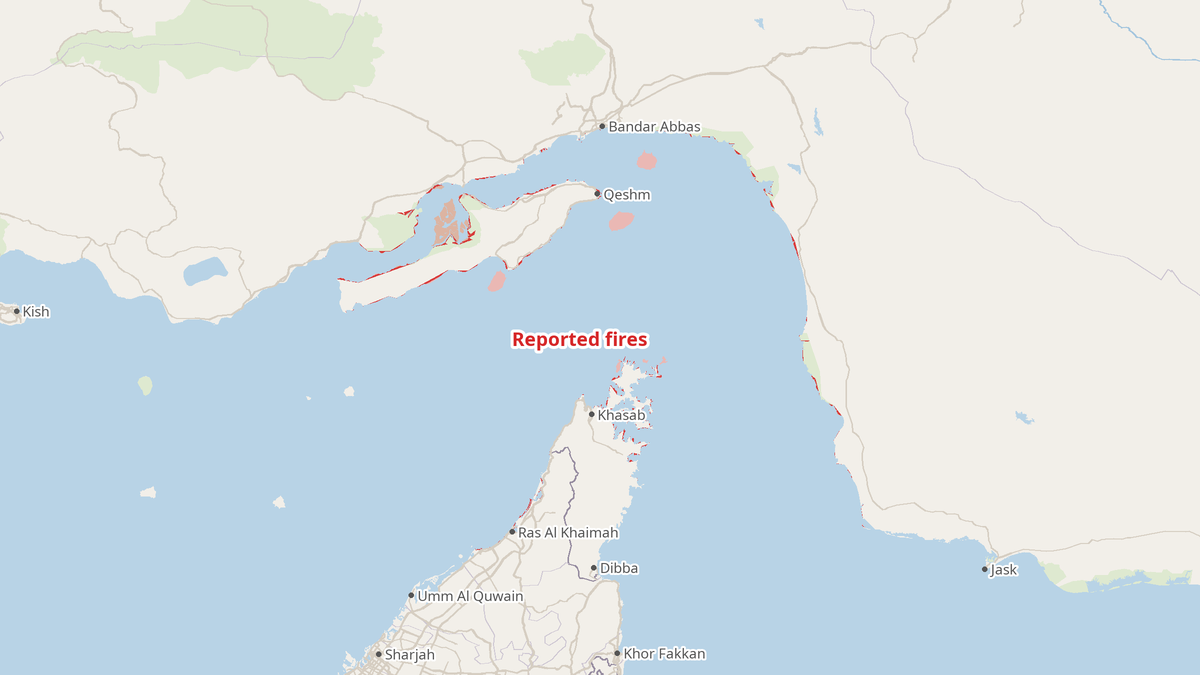
Iran's Islamic Revolutionary Guard Corps said two oil tankers and a tugboat caught fire in separate incidents in the Strait of Hormuz overnight, while the United States has imposed a blockade on Iranian ports and helped tankers travel through the strait. The Guards' account has not been independently verified in the fetched reports. The immediate facts describe a vital shipping route managed through competing state power: Iran says it has restricted traffic, and Washington says it has helped oil exports pass.
Claims, Fires and Control
The New Arab reported the Guards' account that a large oil tanker trying to use what the IRGC called an “illegal passageway” south of the Strait struck a mine, caught fire and was brought to a halt. The account did not independently establish who laid the mine or verify the reported sequence. The claim belongs to the Guards; the distinction matters when military institutions are also the principal narrators of events at a strategic waterway.
The IRGC told Fars news agency that another supertanker was stopped by a large fire while leaving the eastern Strait. A tugboat approaching to extinguish that fire also caught fire, according to the Guards. The reports describe vessels halted or disabled, but they don't provide independently verified details about the cause of either fire or the people aboard.
Fars also reported the IRGC's claim that its navy's electronic warfare unit took control of two LUCAS drones. The National said the Guards claimed to have seized two US Lucas-type drones after electronically taking control of them. LUCAS stands for Low-cost Uncrewed Combat Attack System, a US-developed model. The drone claims, like the reported fires, have not been independently verified in the fetched reports.
A Shipping Lane Under State Pressure
The New Arab reported that Iran had severely restricted traffic through the waterway since the war began on February 28. The Strait normally carries about one-fifth of global oil consumption. That makes restrictions and military claims more than a contest of official statements: state decisions over passage affect a route carrying a large share of the world's oil.
The United States imposed a blockade on Iranian ports and helped tankers travel through the Strait. US Central Command said the previous month that it had helped Gulf countries export 1.5 billion barrels of oil through Hormuz since the summer. Those figures come from the US military itself. The reports place US assistance to tanker movements alongside Iran's restrictions, with both governments presenting their actions through the language of control and security.
The Wider Conflict, Still Unverified
The National placed the reports amid heightened regional tensions and noted that renewed US military action could lead to wider conflict. That is a warning, not confirmation that further action will occur. The account available here does not establish responsibility for the fires, independently verify the drone claims, or report civilian casualties. Those gaps should remain gaps, not invitations to fill in a convenient story for either state's spokespeople.
The reported incidents come during the first year of the war, which began on February 28, according to the supplied account. For now, the public record consists of claims from the IRGC, reporting by The National and The New Arab, and the US military's account of oil exports it helped facilitate. Around the Strait, governments assert authority over ships, ports and passage; independent verification of the latest claims has not yet caught up.
- strait of hormuz
- iranian revolutionary guard corps
- oil tankers
- tugboat
- lucas drones
- ship fires
- iran
- oil shipping