
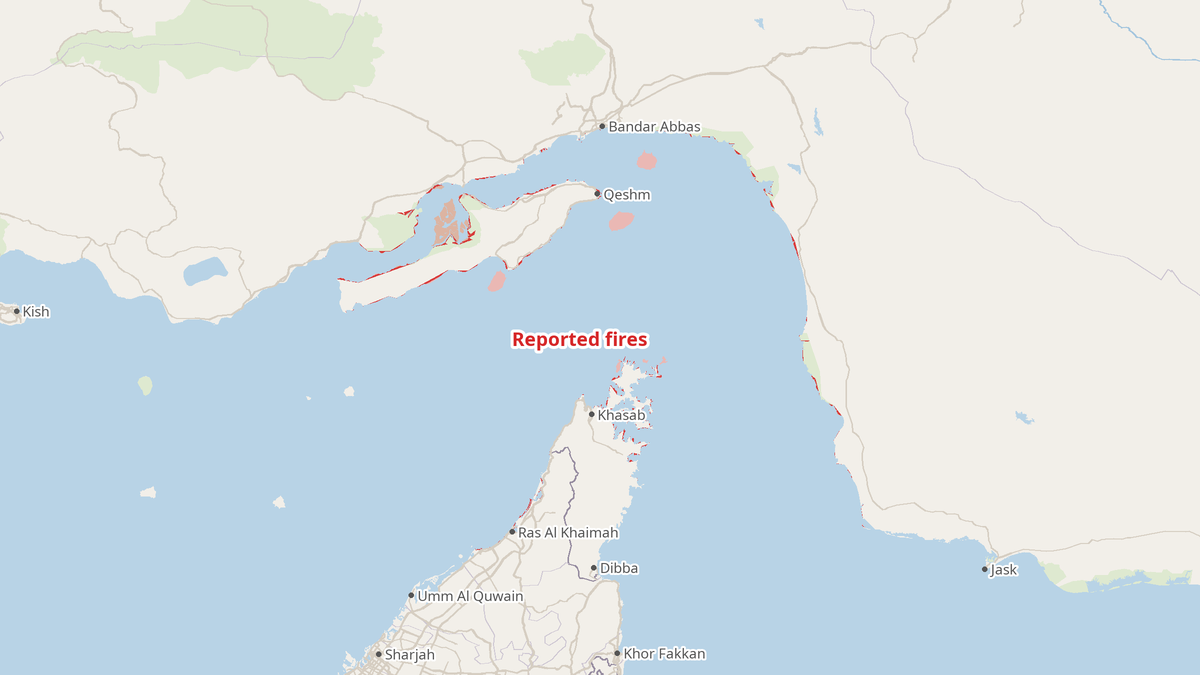
Iran’s Islamic Revolutionary Guard Corps says two oil tankers and a tugboat caught fire in separate incidents in the Strait of Hormuz overnight. The claims haven't been independently verified. If accurate, they describe a waterway where a vessel sent to fight one fire caught fire itself.
Fars news agency relayed the Guards' account, which The New Arab reported. A large oil tanker trying to use an “illegal passageway” south of the Strait struck a mine, caught fire and came to a halt, the IRGC said. A second supertanker encountered a large fire while leaving the eastern Strait. A tugboat that approached to help extinguish the blaze then caught fire too.
The reports don't say whether anyone was hurt or killed. They provide no details about the condition of the crews aboard the tankers or tugboat, and no casualty figures have been released. For the seafarers working those ships, that silence carries its own risk.
A Waterway Under Strain
The fires occurred in a strait that has been largely choked since the war began on February 28, now in its first year. The New Arab reported that Iran has severely restricted traffic through the waterway, which normally carries about one-fifth of global oil consumption. The United States has imposed a blockade on Iranian ports and helped tankers travel through the strait. Last month, US Central Command said it had helped Gulf countries export 1.5 billion barrels of oil through Hormuz since the summer.
Those numbers are large. But they describe a corridor kept open under military escort, not one operating normally. Each side claims control of the same narrow passage, while the people crewing commercial vessels have no say in that contest.
Drones and Disputed Claims
The IRGC also said it seized two US LUCAS drones after taking electronic control of them. Fars says the name stands for Low-cost Uncrewed Combat Attack System, a US-developed model. The Guards said the navy's electronic warfare unit carried out the operation. The National reported that this claim, like the others, hasn't been independently verified in the reports reviewed.
That status matters. Military bodies make wartime statements for more than one purpose, and the reports don't include confirmation from US officials or the shipping companies whose vessels were allegedly hit.
The Risk of Widening War
The National placed the claims amid heightened regional tensions and noted that renewed US military action could lead to a wider conflict. The New Arab's coverage described a moment when attention returns to Iran and Hormuz after the US midterms.
The warning reaches beyond the shipping lanes. Wider fighting in the Gulf would draw in more countries and civilians, in a region where people on every coast depend on the same water for fuel, food imports and work.
Why This Matters:
The Strait of Hormuz isn't a distant abstraction. One-fifth of the world's oil consumption passes through a single chokepoint. A mine strike or ship fire can reach household budgets far from the Gulf.
The reports leave major questions unanswered: whether crews survived, who laid the mines, and who bears responsibility for civilian mariners caught between a blockade and restricted traffic. Without independent verification, the claims remain just that. But the trajectory they describe—escalating incidents and a warning of renewed US action—points toward a wider war whose costs would fall hardest on people with no say in it. Diplomacy hasn't surfaced in these reports at all, and its absence is part of the story.
- strait of hormuz
- iranian revolutionary guard corps
- oil tankers
- tugboat
- lucas drones
- ship fires
- iran
- oil shipping