
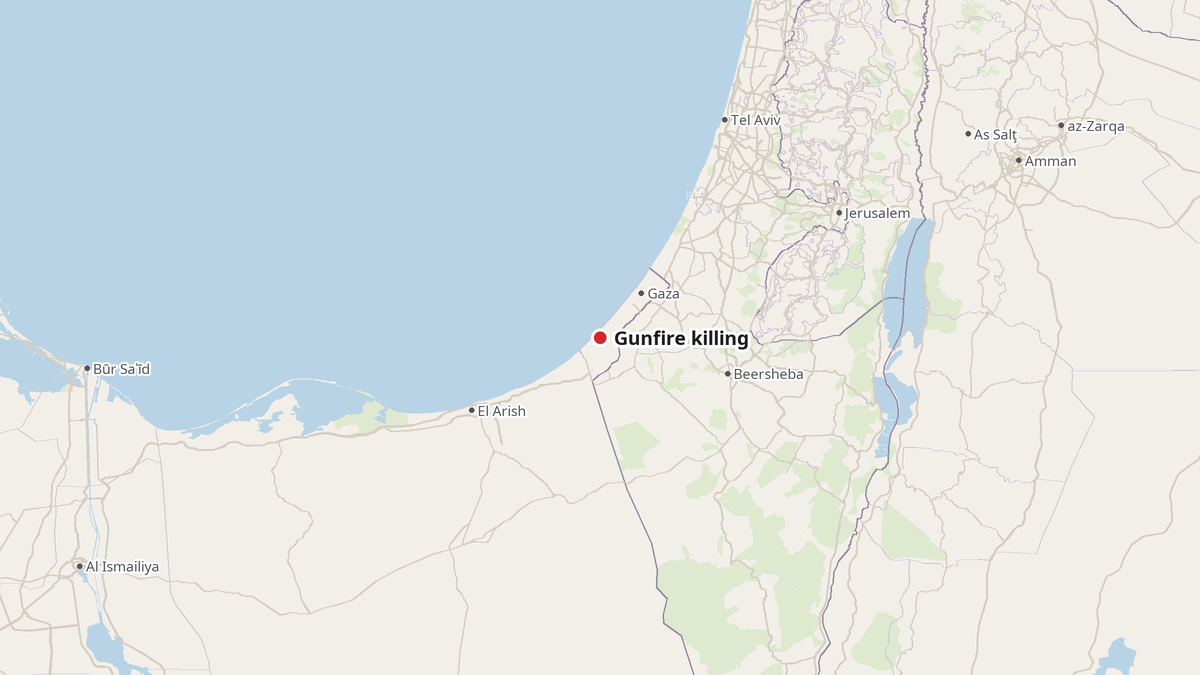
Fadi Rajab and his 13-year-old son, Abubakr, died together on Tuesday when an Israeli air strike hit a shelter for displaced people in Gaza city's Zeitoun neighbourhood, medics said. They were two of at least seven Palestinians killed across the Gaza Strip in a single day, Palestinian health sources and media reported, more than a year into a ceasefire that was supposed to end this kind of violence.
A shelter is where families go when their homes are gone. That a father and son were killed in one underlines how little safety the truce has delivered to people with nowhere else to live.
Civilian Toll
The other deaths were spread across the territory. A third Palestinian was killed in an Israeli air strike on the Ghubain family home in Gaza city's Daraj neighbourhood, according to media reports. In Khan Younis, in southern Gaza, a man was killed by Israeli gunfire. Three more people died in an air strike in the Sabra neighbourhood of Gaza city, the Wafa news agency reported.
A fire broke out at a nearby tent camp for displaced people after the Sabra attack. The base reporting doesn't say how many people were in the camp or whether anyone was hurt, but tents offer little protection from flames, and the people who live in them have already lost their homes once.
The Israeli military said it had struck militants in Zeitoun and Daraj. It gave no further details. It didn't immediately comment on the incidents in Khan Younis or Sabra, leaving unanswered who the men and women killed in those places were.
A Ceasefire in Name
The US-brokered ceasefire took effect in October 2025 and envisaged the eventual reconstruction of the Gaza Strip. Its first anniversary passed last month. Tuesday's killings are part of a pattern. According to the territory's health officials, at least 1,600 Palestinians have been killed in Israeli attacks since the truce began. Israel says four of its soldiers were killed in the same period.
The larger toll frames everything. More than 74,000 Palestinians have been killed in Israel's military offensive in Gaza, according to Palestinian authorities. That campaign began after Hamas-led fighters killed about 1,200 people in southern Israel on October 7, 2023, an atrocity whose third anniversary also passed in October. Israeli grief from that day is real. So is the scale of what followed in Gaza.
The Road to Peace
Negotiators haven't been able to agree on terms for Hamas to disarm or for Israel to withdraw its troops, who control about two-thirds of the territory. Residents have been ordered to leave areas under Israeli control, adding to the displacement that already defines life in Gaza.
The two sides tell different stories. Israel says Hamas is seeking to regroup and replenish its arsenal. Hamas says it remains committed to the ceasefire agreement and accuses Israel of undermining it. The base reporting doesn't resolve those competing claims, and the ceasefire's terms remain disputed. What it does show is a truce that hasn't stopped the killing, with civilians absorbing most of the cost.
Why This Matters: A ceasefire that allows air strikes on shelters and gunfire on civilians isn't delivering the protection it promised. With 1,600 Palestinians killed since it took effect, and talks stalled on both Hamas's disarmament and Israel's withdrawal, the reconstruction the agreement envisaged remains out of reach. Hundreds of thousands of displaced people live in tents and shelters that, as Tuesday showed, aren't safe. Israel's stated concern, that Hamas is rearming, is a genuine security question, but it sits alongside a mounting civilian toll that international law requires both sides to weigh. Until the disarmament and withdrawal disputes are settled, the cycle of strikes, disputed claims and civilian deaths looks set to continue, and the prospect of a durable political settlement recedes further with each one.
- gaza
- israel
- hamas
- ceasefire
- air strike
- palestinians
- zeitoun
- israeli military