
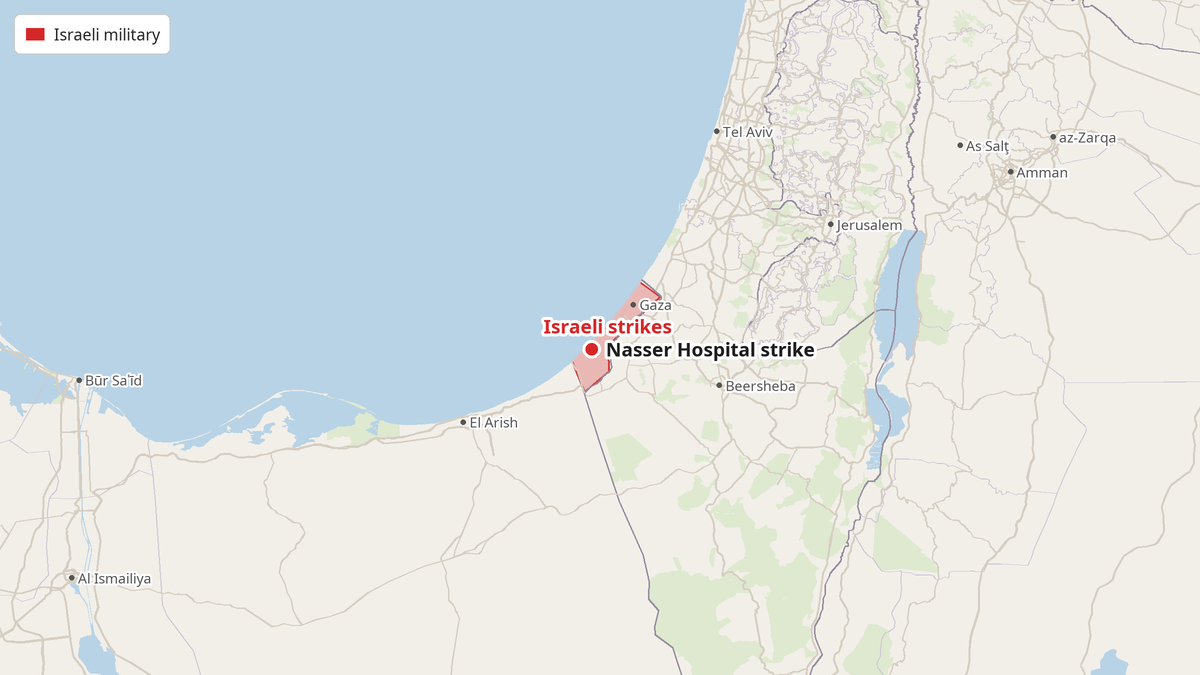
An Israeli strike on Nasser hospital in Gaza on Thursday killed six people, including a child and a surgeon, and injured dozens of others, Doctors Without Borders (MSF) and other organisations said. The strike hit the hospital's surgery building, the part of the facility where the wounded are operated on. A surgeon was among the dead.
Israel killed at least 10 Palestinians in Gaza that day, according to the base reporting, including at least six in the strike on the hospital. Nasser hospital is one of the places where Gaza's wounded are meant to find shelter from the war, not become casualties of it.
Voices From the Ground
MSF said in a statement that it "is utterly appalled and outraged" at the attack on the hospital's surgery building. The organisation, whose staff work inside Gaza's medical system, described the aftermath in clinical terms. "Among the injured, MSF has already treated two doctors and a third patient, all of whom required surgery, in a separate building," it said.
That detail carries weight. Doctors who normally operate on the wounded became patients needing surgery themselves, treated in a different building because the one built for the work had been struck.
MSF also placed Thursday's attack in a longer pattern. "Since October 2023, the hospital has been hit by at least six airstrikes, in addition to repeated ground incursions, shelling and gunfire ... In no conceivable circumstances can attacks on functioning hospitals in Gaza be treated as normal or acceptable," the organisation said.
The Humanitarian Picture
The head of the World Health Organisation, Tedros Adhanom Ghebreyesus, called for Gaza's healthcare infrastructure to be protected after the bombing. He wrote on X that "Since October 2023, WHO has documented 1056 attacks on healthcare in Gaza, resulting in 1010 deaths and 1725 injuries."
The figures describe a health system under sustained assault in the fourth year of the war. Every one of those attacks removed capacity from a place where people already struggle to get care. Each death among medical staff makes the next patient's survival less likely.
Tedros restated what he called an unchanged appeal. "Our call remains unchanged: allow unhindered humanitarian access and let more medical and humanitarian supplies enter Gaza," he wrote. He added: "Gaza's health facilities are lifelines for its people. They must be protected. They must never be militarised or attacked."
The WHO chief's phrasing is worth reading closely. Hospitals are protected under international humanitarian law, and the principle he invoked, that medical facilities must be neither attacked nor used for military purposes, applies to every party to the conflict. The base reporting offers no Israeli statement on the strike or its justification.
Why This Matters:
A surgeon and a child died in a hospital, and dozens more were hurt, in a facility that has now been struck at least six times since October 2023. When doctors become casualties, the people who depend on them pay the price in the days that follow, because fewer hands remain to operate on the next wave of wounded. The WHO's tally of 1,056 documented attacks on healthcare points to a pattern rather than a series of isolated incidents. The gap between the protections written into international law and what happens at a place like Nasser hospital is widening. Until hospitals are reliably off limits and medical supplies can enter Gaza without obstruction, the humanitarian cost will keep compounding. This perspective rests on the documented record: the casualty counts, the repeated strikes, and the appeals from MSF and the WHO go unanswered in practice.
- nasser hospital
- gaza
- israeli strikes
- doctors without borders
- world health organization
- tedros adhanom ghebreyesus
- attacks on healthcare
- humanitarian access