
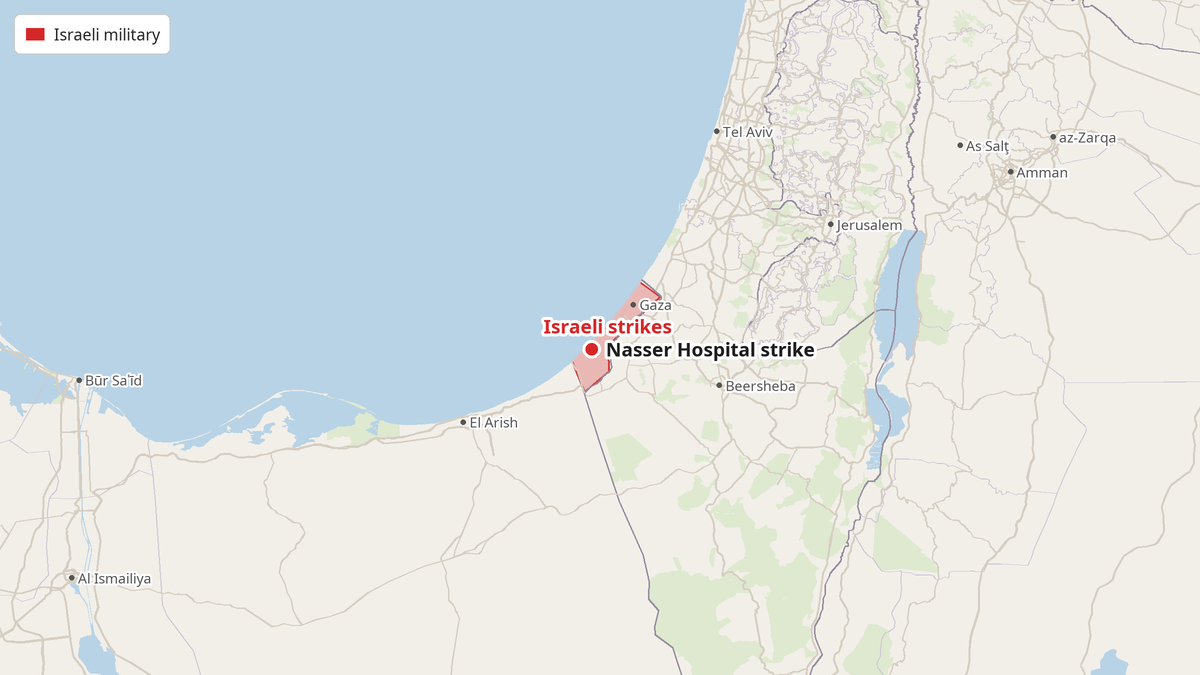
The head of the World Health Organisation has put a demand on the record that bears directly on how Gaza's war has been fought. "Gaza's health facilities are lifelines for its people. They must be protected. They must never be militarised or attacked," Tedros Adhanom Ghebreyesus wrote on X after an Israeli strike on Nasser hospital on Thursday, 12 November 2026.
Note the order of those words. Militarised comes first.
According to Doctors Without Borders (MSF) and other organisations, six people died in the strike, among them a child and a surgeon, and dozens were injured. At least 10 Palestinians were killed in Gaza that day, including at least six at the hospital. MSF said it was "utterly appalled and outraged" at the attack on the hospital's surgery building. The strike came in the fourth year of the war.
Civilian Infrastructure and the Militarisation Warning
The base reporting carries no Israeli statement on the strike. It doesn't say what the target was, what intelligence preceded it, or whether any warning was issued. Those are the questions any account of a hospital strike has to answer, and the reporting so far leaves them open.
The WHO chief's own phrasing, though, acknowledges the underlying issue. A health agency doesn't warn that facilities "must never be militarised" unless militarisation of medical sites is a recognised danger. Hamas has built its war around precisely that tactic: embedding fighters and weapons among civilians so that every strike becomes a casualty headline. Under the laws of armed conflict, a hospital used for military purposes can lose its protected status, which is why the WHO language matters. The agency's call is addressed, at least in part, to those who turn hospitals into assets of war.
The Casualty Ledger and Who Compiles It
The WHO says it has documented 1,056 attacks on healthcare in Gaza since October 2023, resulting in 1,010 deaths and 1,725 injuries. The figures are presented without any breakdown. The base reporting doesn't indicate how many of those attacks involved facilities where fighters or weapons were present, how many involved warnings to evacuate, or how the agency verified each incident. A tally that lumps every incident together cannot distinguish a strike on a functioning clinic from a strike on a command post operating beneath one.
MSF said Nasser hospital has been hit by "at least six airstrikes, in addition to repeated ground incursions, shelling and gunfire" since October 2023. The organisation declared that "in no conceivable circumstances can attacks on functioning hospitals in Gaza be treated as normal or acceptable." The qualifier is functioning. Israel's position through this war has been that Hamas turned hospitals into something else.
The Pressure Runs One Direction
Both statements end with demands on Israel: protect the infrastructure, allow "unhindered humanitarian access," let "more medical and humanitarian supplies enter Gaza." Neither, in the portions quoted, calls on Hamas to remove fighters and weapons from civilian sites, to stop firing from populated areas, or to release the hostages it took on 7 October.
That asymmetry is the double standard Israel faces in every international forum. A state is held to account for each strike. The armed movement that placed military assets among civilians, and whose stated aim is the destruction of the Jewish state, faces no comparable demand.
The dead at Nasser, a child and a surgeon among them, deserve a full accounting. So do the questions the statements leave unanswered: what stood in that building, who put it there, and why the agencies documenting every Israeli strike have so little to say about the group that made the hospital a target.
- nasser hospital
- gaza
- israeli strikes
- doctors without borders
- world health organization
- tedros adhanom ghebreyesus
- attacks on healthcare
- humanitarian access